
 24 Jun 2026









Culture as a Factor of Sustainable Economic and Political Development in Armenia
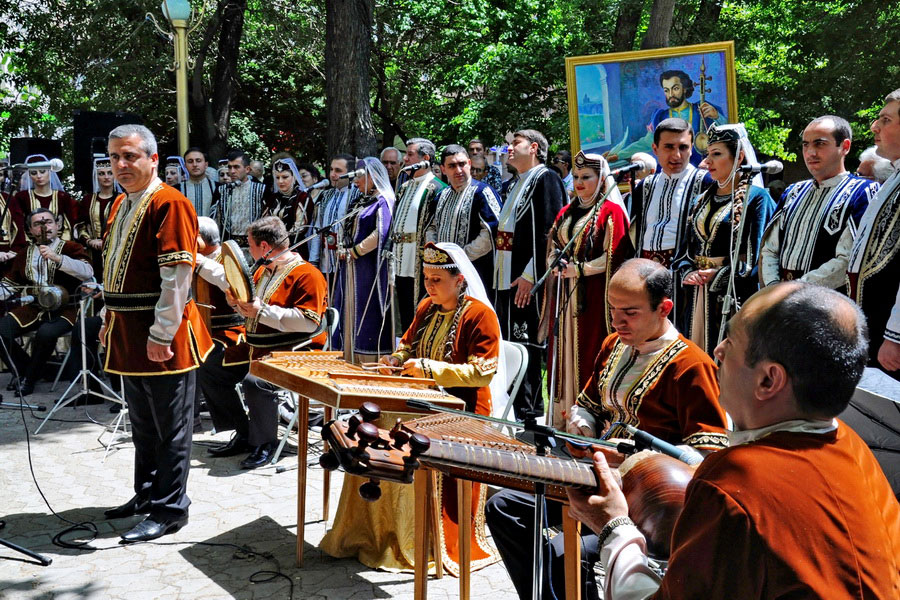
In contemporary studies of sustainable development, culture is increasingly viewed not as a secondary element, but as a foundational factor through which economic and political processes are shaped. In the case of Armenia, culture plays an integrative role by connecting everyday social practices with economic activity and institutional mechanisms. This implies that cultural influence operates through a sequential chain: cultural values shape economic behaviour, which in turn generates demand for specific political decisions and institutions.
First and foremost, culture determines the nature of economic activity through systems of values and norms. In Armenian society, education, professionalism, and intellectual labour have traditionally been highly valued. These orientations are reflected in the structure of the economy, particularly in the development of high-tech industries. In 2025, the information and communications technology sector demonstrated growth of approximately 18.6%, becoming one of the most dynamic sectors of the economy. This dynamic indicates that the cultural emphasis on education and engineering skills is being transformed into a sustainable economic resource.
The economic structure formed in this way, in turn, influences the political sphere. The growth of the technology sector and entrepreneurship requires a stable institutional environment, including the protection of intellectual property rights, transparent regulation, and predictable economic policies. Thus, culturally shaped economic processes generate public demand for effective state institutions. A similar relationship can be observed in the small and medium-sized enterprise sector, whose development is largely based on traditions of family entrepreneurship and social trust.
A significant role in this interconnection is played by cultural heritage, which is directly transformed into economic potential. Tourism is a clear example of how culture becomes a source of economic growth. In 2025, Armenia was visited by approximately 2.26 million tourists, representing an increase compared to the previous year. The growth in tourist flows stimulates the development of infrastructure, the hospitality sector, and services. In response, the state implements programs aimed at developing tourism, investing in infrastructure, and promoting cultural heritage at the international level. In this way, culture first generates economic resources and subsequently becomes an object of political regulation and strategic planning.
In addition, culture influences both the economy and politics through the mechanism of social cohesion. In Armenia, historical memory, language, and cultural traditions contribute to the formation of strong social ties. This reduces economic risks and creates a favourable environment for growth. In 2025, the country’s gross domestic product increased by approximately 7.2%, reaching more than 29 billion US dollars. Significant growth was observed in construction, the financial sector, and services, indicating broad-based economic development. This dynamic can be explained not only by economic policy measures but also by the cultural capacity of society to adapt to change and maintain internal stability.
The relationship between culture, economy, and politics becomes particularly evident in the context of external changes. For example, the structure of tourist inflows in 2025 demonstrated dependence on international mobility and external economic factors, with the majority of visitors coming from neighbouring countries. This requires flexible adaptation from both businesses and the state. However, the ability to adapt is largely determined by cultural openness and historical experience of regional interaction. Thus, culture influences not only internal processes but also external economic resilience.
It is important to emphasize that the impact of culture is not unidirectional. On the one hand, traditional norms may slow down institutional change and the adoption of innovation. On the other hand, Armenian society demonstrates a tendency to combine traditional values with modern economic and political practices. For instance, the development of high-tech industries proceeds alongside the preservation of cultural heritage and traditional forms of economic activity. This creates a more resilient development model in which modernization does not undermine the cultural foundation of society.
Therefore, culture in Armenia functions as a systemic element that connects the economy and politics. It shapes behavioural patterns that determine the structure of the economy, while economic activity in turn generates demand for appropriate political institutions. At the same time, culture ensures social stability, which is necessary for the functioning of the entire system. In this context, sustainable development should be understood as the outcome of the interconnected functioning of these spheres, where culture serves as a key integrating factor.
In conclusion, the future development of Armenia will largely depend on the ability to maintain a balance between cultural traditions, economic processes, and political institutions. The effective integration of cultural potential into economic strategies and governance structures provides the foundation for long-term sustainability and adaptation to global changes.
Political Analyst
Alexander LUNGU


 Latest news
Latest news
Latest newsUkraine’s Battlefield Experience Opens New Opportunities in Asia’s Drone Market
19.Jun.2026
Azerbaijan’s Oil Trap: Why the Economy Is Standing Still
18.Jun.2026
Motorcycle Noise Seen as Obstacle to Air Defense Operations in Crimea
17.Jun.2026
Rising Wages and Euro Integration: Bulgaria Enters a New Economic Era
17.Jun.2026
Armenia After June 7: Pashinyan Remains in Power, Moscow Unhappy
17.Jun.2026
$300 Billion Deal: Iran Poised to Receive the Largest Investment Package in Modern Middle Eastern History
16.Jun.2026
Infrastructure Pressure: Putin Acknowledges the Economic Impact of Ukrainian Attacks
15.Jun.2026
Kyiv and Moscow Trade Blame After Damage Reported at Kyiv Pechersk Lavra
15.Jun.2026
IMF Raises Georgia’s Economic Growth Forecast to 6.5% for 2026
15.Jun.2026
EU Opens the Door to Ukraine and Moldova as First Membership Talks Begin
14.Jun.2026