
 05 Jun 2026









Main result of Turkish President's visit to Azerbaijan
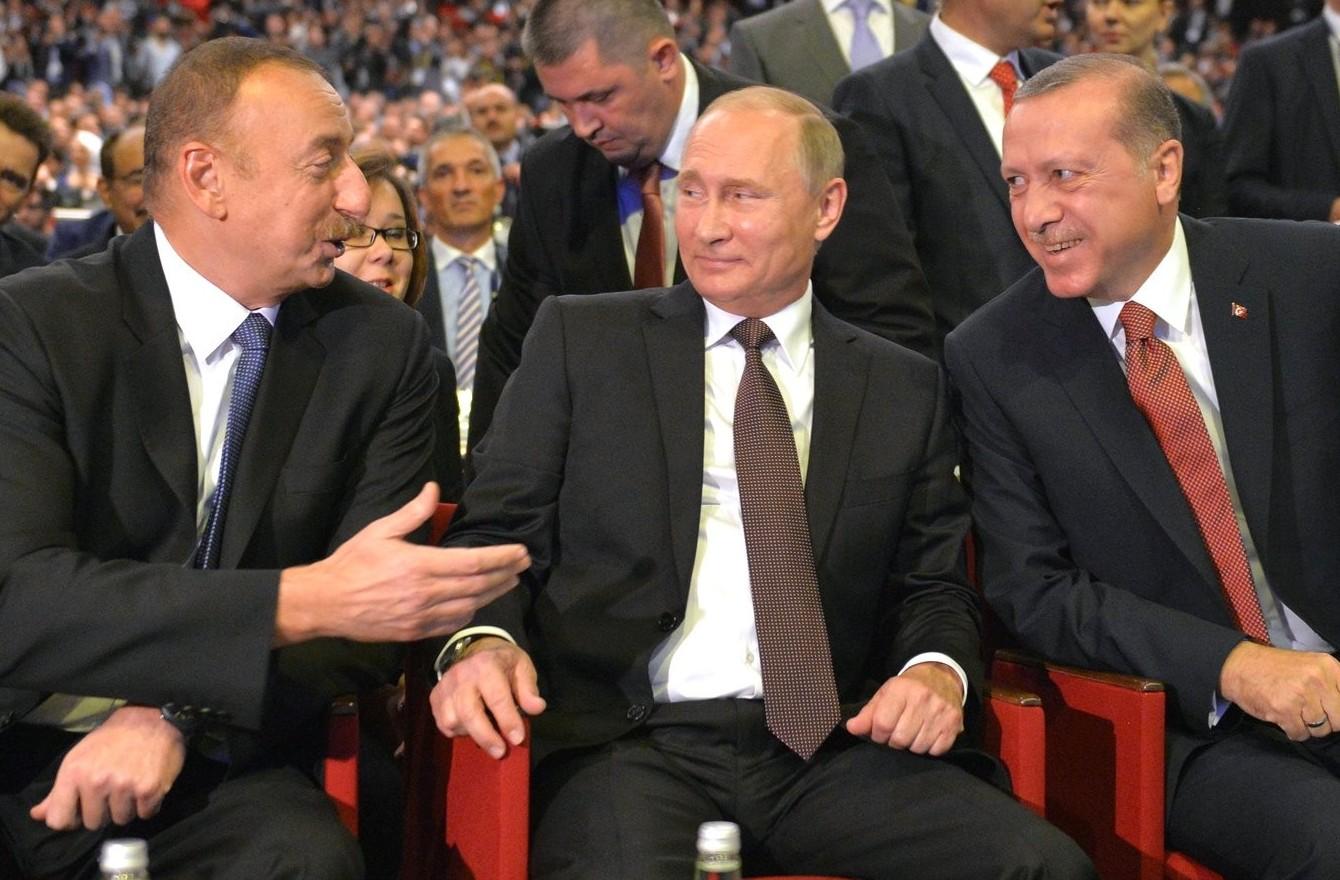
Russian President Vladimir Putin's approach and constant cooperation with Moscow played a very important role in the settlement process in Nagorno-Karabakh and the transition of the South Caucasus to peace, Turkish President Recep Tayyip Erdogan said, speaking about how the region's transition from a conflict state to a new stage of development.
Erdogan said that he was in constant contact with Putin during all 44 days of the Second Karabakh War. "After the start of the process, Mr Putin and I continued to hold meetings. At the same time, Foreign Minister Mevlut Cavusoglu conducted diplomatic work. I especially want to note that intelligence and counterintelligence continued to work on the military front," he said.
It was possible to force Armenia to peace and to ensure the implementation of the trilateral statement thanks to the Russian leader's attitude to a guaranteed cessation of hostilities in the South Caucasus. "I cannot toss away approaches of Mr. Putin. His positive attitude helped to steer this process towards a positive direction," the Turkish president stressed.
Thus, he confirmed that Russia and Turkey were in constant dialogue on Karabakh at all levels and acted together. That is why they managed to withdraw the extra-regional Western forces, which were blocking peaceful settlement, from the Nagorno-Karabakh process.
Erdogan also said that he had discussed with Azerbaijani President Ilham Aliyev the formation of an economic platform uniting six countries: Azerbaijan, Turkey, Russia, Iran, Georgia, as well as Armenia, if the republic expresses such a desire. " This would be good cooperation for the development of the region," he said, confirming that the countries of the Greater Caucasus have taken a course towards new formats of cooperation in the post-war world with open borders.


 Latest news
Latest news
Latest newsRussia Expands Trade Restrictions on Armenia, Targeting Fruit and Fish Imports
01.Jun.2026
Drones Over NATO: Moscow Warns Europe of More Incidents After Strike in Romania
31.May.2026
Thousands Rally in Ankara in Support of Ozgur Ozel as Turkiye’s Political Crisis Enters a New Phase
31.May.2026
Strike on Europe's Largest NPP: A New Round of Tension Around the Zaporizhzhia Station
30.May.2026
Democracy Despite Pressure: How Armenia Is Defending Its Right to an Independent Path
29.May.2026
Zelensky Warns of a New Large-Scale Russian Offensive: Kyiv Prepares for Possible Escalation of the War
29.May.2026
Drone Over NATO Territory: Strike on Residential Building in Romania Signals Dangerous Expansion of the War
29.May.2026
Putin in Astana: Nuclear Power Plant as a New Symbol of Strategic Partnership
28.May.2026
Thousands Take to the Streets of Tbilisi in Support of Georgia’s European Course
28.May.2026
Trump Supports Pashinyan’s Course Toward Stability and Armenia’s Development
28.May.2026