
 13 Oct 2026









Azerbaijan’s Eurasian Initiative: Ambitions, Challenges, and Doubts
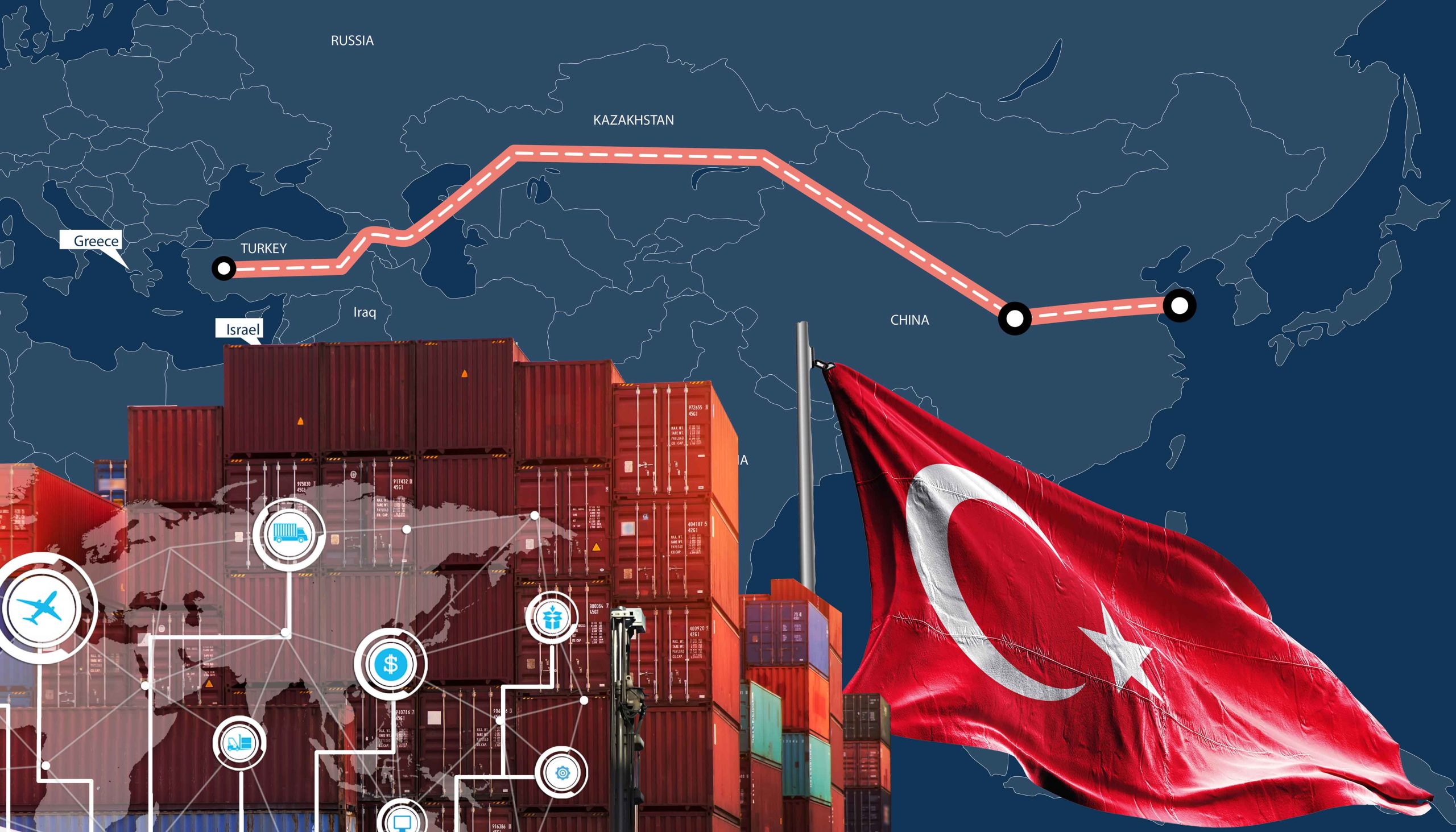
President
of Azerbaijan Ilham Aliyev has unveiled an ambitious initiative to create the
so-called “Turkic Trade
Corridor” — a transport and logistics
route intended to connect the resource-rich countries of Central Asia with
European markets, while strengthening Baku’s role as a key hub in Eurasian
trade networks. According to Aliyev, Azerbaijan’s geographic location allows it
to unify several transregional routes into a single corridor, providing a
direct and “reliable” path for exporting goods from Central Asia to Europe,
whereas alternative routes through Afghanistan, Iran, or Pakistan, in his view,
remain economically and politically unviable.
In December, Azerbaijan was officially included in the
annual council of the five Central Asian countries, transforming the previous
C5 format into C6. The president described this as a diplomatic victory that,
in his words, reshapes the geopolitical configuration of the region. Experts
have noted a rise in trade turnover between Azerbaijan and Central Asian
countries: in 2024, trans-Caspian shipments exceeded 3.5 million tons, and
trade with Kazakhstan tripled compared to the previous year. However, actual
volumes remain modest compared to the Northern Corridor through Russia and
Belarus, where well-established logistics networks have ensured stable freight
flows for decades.

The
Trans-Caspian International Transport Route (Middle Corridor) already underpins
regional strategies for geopolitical balancing
The project’s logistical infrastructure exists: the Port of
Baku has expanded its capacity, container throughput has increased by more than
70%, and the Baku–Tbilisi–Kars railway provides connections to Turkey and
Europe. Nonetheless, analysts point out critical bottlenecks: the corridor
suffers from inadequate coordination between countries, weak digitalization of
customs procedures, and a lack of integrated logistics services, increasing
transit time and costs compared to alternative routes.
Particular attention is drawn to the proposed inclusion of
the “Trump Route for International Peace and Prosperity” (TRIPP) through Armenian territory.
While an agreement between Baku and Yerevan has been signed, physical
construction has yet to begin, and the project remains not only an
infrastructure challenge but also a politically sensitive issue requiring
lengthy negotiations over control and sovereignty. The situation surrounding
these routes continues to be a subject of diplomatic consultations and could
delay implementation.
Beyond transportation issues, the president has proposed
expanding the role of the Organization of Turkic States (OTS) to include
defense initiatives. Aliyev emphasized that the international system is
experiencing a “crisis of legal regulation” and relies on power and cooperation
rather than universal norms. This framing raises caution among experts:
combining economic integration with defense cooperation may complicate
diplomatic relations with some neighbors and provoke suspicion among
international partners.
Economically, the corridor could indeed reduce Central
Asian countries’ dependence on traditional routes through Russia or Iran and
attract investment into transport infrastructure. According to analytical
reports from the World Bank and other international organizations, realizing
the corridor’s full potential requires investments not only in physical
infrastructure but also in “soft infrastructure” — digital platforms,
harmonized customs procedures, and the removal of bureaucratic barriers at borders.
However, the project faces significant challenges: it
requires substantial capital investment, coordination across multiple
countries, and the mitigation of political risks. Currently, the corridor is
only partially operational, and critics note that it remains far less
competitive than maritime routes through the Suez Canal or traditional northern
rail routes, where well-established processes ensure more predictable and
cost-effective logistics.
Although official comments from OTS leaders have yet to follow,
Kazakh President Kassym-Jomart Tokayev emphasized at an autumn meeting the need
for closer cooperation among Turkic states in the context of a complex
geopolitical environment. Skeptics, however, argue that the project’s success
depends not only on ambition and statements but also on tangible steps toward
infrastructure modernization, alignment of international regulations, and
elimination of existing logistical “bottlenecks”.
The “Turkic Trade Corridor” project represents an attempt to create a multidimensional geopolitical center of influence, combining transport, trade, energy, and security. If successfully implemented, it could indeed reshape the logistical landscape of Eurasia and enhance Azerbaijan’s role as a transit hub between East and West. However, it remains unclear to what extent the plan will be able to compete with established routes, given current limitations, the need for comprehensive reforms, and potential geopolitical obstacles.


 Latest news
Latest news
Latest newsGeorgia’s Constitutional Court Continues Case on Banning Opposition Parties: Political Pluralism at Stake
12.Oct.2026
Azerbaijan and Iran Step Up Security Contacts Amid Hijab Protests
12.Oct.2026
Personnel Shortages Complicate Ukrainian Forces’ Rotation: Ukraine Faces Long-Term Challenges on the Front Line
11.Oct.2026
Trump Eases Sanctions on Russian Fuel After Talks with Putin: Kyiv Fears Boost to Moscow’s War Revenues
10.Oct.2026
Putin Seeks to Strengthen Russia’s Influence in the Post-Soviet Space Through the CIS
10.Oct.2026
Russia and the South Caucasus: External Pressure, Political Competition and a Crisis of Trust
10.Oct.2026
Peaceful Settlement Between Armenia and Azerbaijan: Moving from Declarations to Implementation
10.Oct.2026
Moldova Ready to Accept as Many Ukrainians as Necessary if Situation Worsens This Winter
09.Oct.2026
Turkmenistan Turns Avaza into a Regional Diplomatic Hub as Caspian, Central Asian and CIS Agendas Converge
08.Oct.2026
Romania Scrambles Spanish F-18s After Aerial Targets Detected Near Ukrainian Border
07.Oct.2026
Berlin Deepens Defence Partnership with Kyiv: Germany to Provide Ukraine with €1 Billion in Military Aid
07.Oct.2026
European Parliament Against Georgian Dream: EU Prepares New Response to Tbilisi
06.Oct.2026
Bulgarian Foreign Minister to Discuss European Security and International Law in the Netherlands
05.Oct.2026
Rheinmetall in Bulgaria: Sofia Emerges as a New NATO Defence-Industrial Hub in the Balkans
05.Oct.2026
The Cost of a Long War: Moscow Expands Spending Plans Through 2029
05.Oct.2026