
 13 Oct 2026









Netanyahu Claims Iran's Move to Boost Uranium Enrichment Shows Intention to Develop Nuclear Weapons
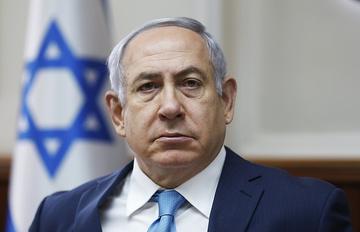
Israeli Prime Minister Benjamin Netanyahu said on Monday that Iran's decision to boost its nuclear programme means that the Islamic Republic plans to develop nuclear weapons, and he vowed to stop Tehran from doing this, Sputnik reports.
The International Atomic Energy Agency has previously confirmed that its inspectors were monitoring the activities at the Fordow facility and that the director-general, Argentina's Rafael Mariano Grossi, would submit a report to the organisation's member states later in the day.
Israel's response came in the wake of a report from Mehr, Iran's semi-official news agency, citing a government spokesman that Iran had resumed 20 percent uranium enrichment.
Iran's decision to boost enrichment was stipulated by the November bill dubbed "The Strategic Measure for the Removal of Sanctions", which boosted Iranian activities following the assassination of top nuclear scientist Mohsen Fakhrizadeh.
Tehran was allowed to enrich uranium up to 3.67 percent under the 2015 Joint Comprehensive Plan of Action (JCPOA), so the Islamic Republic significantly cut its nuclear material reserves. However, Iran made some changes to what it was allowed to do after the US left the accord in 2018, re-imposing sanction on Tehran.
Right before the US withdrew from the nuclear deal in May 2018, Netanyahu made a famous "Iran lied" presentation, claiming that Tehran tried to use its supposedly peaceful nuclear programme to weaponise research in a bid to create a nuclear bomb.


 Latest news
Latest news
Latest newsInflation in Romania Accelerates to 6.61%: Rising Prices Increase Pressure on Households and the Economy
13.Oct.2026
Can Europe Protect the International Criminal Court from Trump’s Sanctions?
13.Oct.2026
Georgia’s Constitutional Court Continues Case on Banning Opposition Parties: Political Pluralism at Stake
12.Oct.2026
Azerbaijan and Iran Step Up Security Contacts Amid Hijab Protests
12.Oct.2026
Personnel Shortages Complicate Ukrainian Forces’ Rotation: Ukraine Faces Long-Term Challenges on the Front Line
11.Oct.2026
Trump Eases Sanctions on Russian Fuel After Talks with Putin: Kyiv Fears Boost to Moscow’s War Revenues
10.Oct.2026
Putin Seeks to Strengthen Russia’s Influence in the Post-Soviet Space Through the CIS
10.Oct.2026
Russia and the South Caucasus: External Pressure, Political Competition and a Crisis of Trust
10.Oct.2026
Peaceful Settlement Between Armenia and Azerbaijan: Moving from Declarations to Implementation
10.Oct.2026
Moldova Ready to Accept as Many Ukrainians as Necessary if Situation Worsens This Winter
09.Oct.2026
Turkmenistan Turns Avaza into a Regional Diplomatic Hub as Caspian, Central Asian and CIS Agendas Converge
08.Oct.2026
Romania Scrambles Spanish F-18s After Aerial Targets Detected Near Ukrainian Border
07.Oct.2026
Berlin Deepens Defence Partnership with Kyiv: Germany to Provide Ukraine with €1 Billion in Military Aid
07.Oct.2026
European Parliament Against Georgian Dream: EU Prepares New Response to Tbilisi
06.Oct.2026
Bulgarian Foreign Minister to Discuss European Security and International Law in the Netherlands
05.Oct.2026