
 13 Oct 2026









U.S. envoy to Russia to leave for Washington
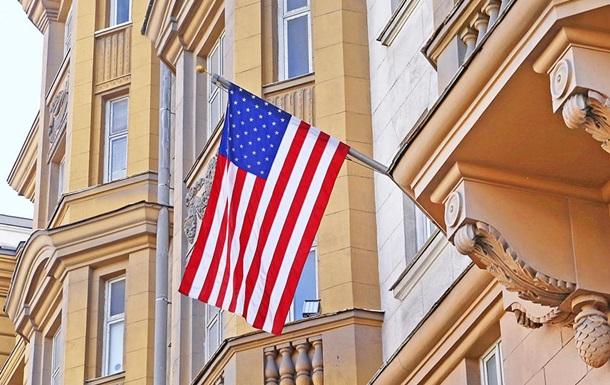
U.S. Ambassador to Russia John Sullivan will go to Washington this week for consultations with the Biden administration and will return to Moscow "in the coming weeks," the Axios portal reported citing a U.S. State Department spokesperson.
"Ambassador Sullivan will be returning to the U.S. this week to visit his family and meet with members of the new administration with whom he has not had a chance to consult since he agreed to continue serving in his post indefinitely," a State Department spokesperson told Axios.
"He will return to Moscow in the coming weeks," the spokesperson noted.
Earlier Axios reported that Sullivan was not planning to leave the country despite Moscow’s advice to go back to Washington for consultations. According to the report, Sullivan's view is that if Moscow wants him to leave, it has to "force" him.
Russian Foreign Minister Sergey Lavrov told a news conference on April 16 that Russian Presidential Aide Yuri Ushakov briefed Sullivan on Russia’s retaliatory measures at their meeting in Moscow. Ushakov advised Sullivan to go back to Washington for consultations. Lavrov noted that Russian Ambassador to the U.S. Anatoly Antonov was continuing his consultations in Moscow.
U.S. President Joe Biden on April 15 signed an executive order to impose sanctions on Russia. In part, the U.S. prohibits its companies from acquiring Russian debt liabilities issued by the Central Bank, the National Wealth Fund and the Ministry of Finance. Also, the Department of Commerce imposed sanctions on 16 organizations and 16 individuals, allegedly responsible for Russia’s rumored interference in U.S. elections. Besides, sanctions were introduced against eight individuals and legal entities related to Crimea. Also, the United States is expelling ten diplomats, who are deemed as "representatives of Russian intelligence services."
On April 16, Russia announced tit-for-tat measures. The U.S. ambassador was advised to head to Washington for consultations. Russia asked ten U.S. diplomats to leave Moscow and launched a procedure that stops the practice of hiring citizens of Russia and third countries by the U.S. diplomatic missions in Russia. Apart from that, Russia barred entry for eight incumbent and former U.S. high-ranking officials and figures, who have been involved in devising and pursuing the anti-Russian policy. Among them are the U.S. attorney general, the FBI director, the director of National Intelligence, the Secretary of Homeland Security and the director of the Federal Bureau of Prisons.


 Latest news
Latest news
Latest newsGeorgia’s Constitutional Court Continues Case on Banning Opposition Parties: Political Pluralism at Stake
12.Oct.2026
Azerbaijan and Iran Step Up Security Contacts Amid Hijab Protests
12.Oct.2026
Personnel Shortages Complicate Ukrainian Forces’ Rotation: Ukraine Faces Long-Term Challenges on the Front Line
11.Oct.2026
Trump Eases Sanctions on Russian Fuel After Talks with Putin: Kyiv Fears Boost to Moscow’s War Revenues
10.Oct.2026
Putin Seeks to Strengthen Russia’s Influence in the Post-Soviet Space Through the CIS
10.Oct.2026
Russia and the South Caucasus: External Pressure, Political Competition and a Crisis of Trust
10.Oct.2026
Peaceful Settlement Between Armenia and Azerbaijan: Moving from Declarations to Implementation
10.Oct.2026
Moldova Ready to Accept as Many Ukrainians as Necessary if Situation Worsens This Winter
09.Oct.2026
Turkmenistan Turns Avaza into a Regional Diplomatic Hub as Caspian, Central Asian and CIS Agendas Converge
08.Oct.2026
Romania Scrambles Spanish F-18s After Aerial Targets Detected Near Ukrainian Border
07.Oct.2026
Berlin Deepens Defence Partnership with Kyiv: Germany to Provide Ukraine with €1 Billion in Military Aid
07.Oct.2026
European Parliament Against Georgian Dream: EU Prepares New Response to Tbilisi
06.Oct.2026
Bulgarian Foreign Minister to Discuss European Security and International Law in the Netherlands
05.Oct.2026
Rheinmetall in Bulgaria: Sofia Emerges as a New NATO Defence-Industrial Hub in the Balkans
05.Oct.2026
The Cost of a Long War: Moscow Expands Spending Plans Through 2029
05.Oct.2026