
 13 Oct 2026









The South Caucasus in the Context of Expanding External Involvement
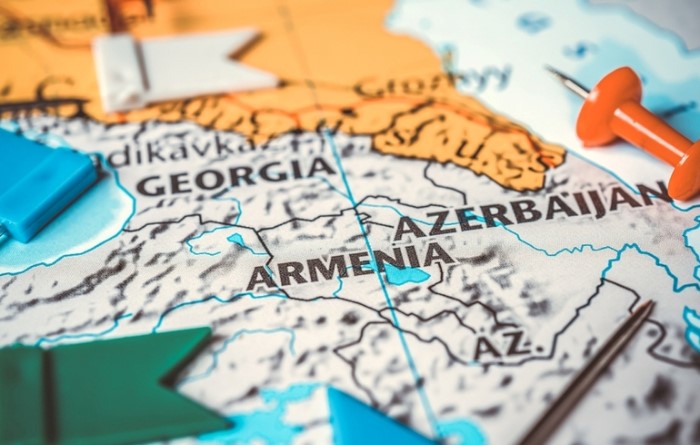
The South Caucasus has once
again found itself at the center of international attention — not because of
high-profile treaty signings or large-scale military deployments, but due to a
far subtler and more revealing factor: even unconfirmed military intentions
today are capable of radically reshaping states’ strategic calculations. This
logic, whereby expectations of future arms deliveries begin to influence
behavior long before their actual implementation, has long been characteristic
of other regions — from Eastern Europe to the Middle East — but in the South
Caucasus it takes on a particularly concentrated form.
Throughout
the summer, autumn, and even the early winter of 2025, reports circulated
actively about a possible Armenian purchase of Indian Su-30MKI fighter jets.
The first rumors emerged as early as June, and by October–November, according
to various sources, discussions involved 8–12 aircraft with a total value of up
to USD 3 billion. However, on 3 November 2025, Armenia’s Minister of Defense
Suren Papikyan publicly and unequivocally denied the existence of any such
agreements, stating that “no such deals exist”. This denial was promptly echoed
by both Armenian and Azerbaijani media and soon confirmed by statements from
Hindustan Aeronautics Limited.
 Su-30MKI is a multirole heavy fighter of the 4++ generation, developed by Russia’s Sukhoi Design Bureau specifically for the Indian Air Force
Almost
simultaneously, in early November, during preparations in Baku for a military
parade marking the fifth anniversary of victory in the Second Karabakh War,
video footage of Chinese HQ-9BE air defense systems appeared in the public
domain. On 8 November, these systems were officially displayed at the parade on
Azadlyg Square. Taken together, these two parallel developments — the denial of
Armenia’s aviation plans and the visible demonstration of Azerbaijan’s new
capabilities — produced a tangible effect: the regional balance began to shift
primarily at the level of perception, even without the actual emergence of new
aviation platforms in Armenia.
 The HQ-9BE is a Chinese long-range surface-to-air missile system — the latest export variant of China’s HQ-9 family
Under
such conditions, it is not the delivery itself that becomes decisive, but the
expectation of change. The South Caucasus has long operated within a logic of
preemptive reactions, where signals, interpretations, and demonstrations of
force often prove more influential than material reality.
Armenia’s
official position, articulated on 3 November 2025 and reaffirmed in the
following days, remains unequivocal: no contracts for the acquisition of
Su-30MKI aircraft exist. This fully corresponds both to SIPRI data for
2024–2025, which show no records of major aviation deliveries to Armenia, and
to the absence of the infrastructural or budgetary indicators that typically
accompany such deals.
At the
same time, Armenia is deliberately leaving room for maneuver. Formally, the
purchase has not been definitively rejected, yet neither has it been confirmed.
This caution may be explained by several factors.
First,
the 2025 conflict between India and Pakistan highlighted serious challenges for
Indian aviation. In confrontations with Pakistani JF-17 Block-3 fighters
equipped with Chinese systems, Indian Su-30MKIs and Rafales faced intense
competition in electronic warfare and weapons effectiveness. The outcome of
this confrontation, given the lack of comprehensive official data from India,
may have prompted Yerevan to reassess the associated risks.
 JF-17 Block-3 is a multirole light fighter of the 4++ generation, jointly developed by Pakistan and China
Second,
the financial dimension remains critical. The full packages of Rafale and Su-30
aircraft differ dramatically in cost, and the Indian-built Su-30MKI objectively
appears to be a more affordable option, especially given that the Armenian Air
Force already operates Russian-made Su-30SM fighters. Despite differences in
avionics and weapon systems, the Indian version is logistically compatible with
previously acquired platforms and, crucially, does not tie Armenia to Russian
supply chains — a matter of fundamental importance under current conditions.
An
additional factor is the broader deepening of Armenian-Indian
military-technical cooperation in 2023–2025, including deliveries of Pinaka
multiple-launch rocket systems, ATAGS artillery, radars, communications
equipment, and air defense systems. These steps created a stable logistical and
political foundation against which rumors of combat aircraft appeared a logical
continuation, even if they ultimately remained at the level of speculation.
 Pinaka is a long-range multiple launch rocket system developed by India
The
hypothetical appearance of heavy multirole fighters in Armenia could have
significantly altered operational calculations by expanding airspace control
and raising the cost of any force-based scenario for an adversary. However, without
deep integration with ground-based air defense and a modern command-and-control
system, such aviation risked remaining more of a political symbol than a
decisive military instrument.
Against
this backdrop, Baku’s actions look fundamentally different. Azerbaijan did not
confine itself to signals or leaks but publicly unveiled Chinese long-range
HQ-9BE air defense systems for the first time, becoming one of the few known
operators of this complex. Their appearance was not merely a technical update,
but a powerful strategic statement.
Azerbaijan
had already possessed a fairly modern and layered air defense system, ranging
from Soviet-era complexes to Israeli Barak systems and modernized Buk and S-300
variants. However, the key task for Baku became the diversification of arms
suppliers. Against the backdrop of shortages of Russian missiles and the heavy
burden on Russia’s defense industry due to the war in Ukraine, the Chinese
option emerged as a rational and timely solution.
 Barak systems are a family of Israeli air and missile defense systems developed by Rafael Advanced Defense Systems
Despite
the limitations of HQ-9BE effectiveness against certain threats revealed during
conflicts, for Azerbaijan this represents a serious step forward — both
militarily and politically. It symbolizes the expansion of the Asian vector,
readiness to integrate into new military-technological chains, and the ability
to respond to any potential shifts in the balance of power in a preemptive and
demonstrative manner. An earlier signal of the same kind was the induction of
JF-17 Block III fighter jets into service.
In the
absence of official confirmations, analysis inevitably relies on indirect
indicators: diplomatic activity, changes in infrastructure, and budgetary
signals. For the South Caucasus, this has long been the norm. The growth of
Armenian-Indian contacts in 2024–2025 created fertile ground for rumors, but in
itself did not imply the inevitability of an aviation deal.
Even
without contracts, several scenarios can be identified. The first is symbolic
deterrence, where deepening partnerships serve as a political signal without
immediate materialization. The second is Azerbaijan’s preemptive response in
the form of real acquisitions and demonstrations, which was precisely what
occurred in the autumn of 2025. The third is delayed implementation, whereby
today’s speculation may return to the agenda in several years under altered
financial or geopolitical conditions.
The
Caucasus remains an extremely compact region where any activity quickly becomes
visible. Armenia has already strengthened its defensive potential through
Indian supplies, yet it neither possesses nor seeks the capacity for external
expansion. In the long run, the outcome of potential conflicts is determined by
demographics and resources rather than by the sheer quantity of weapons.
The
story of aircraft that officially do not exist, combined with the simultaneous
demonstration of real Chinese air defense systems, vividly illustrates a key
feature of contemporary regional politics: the balance of power is shaped not
only by contracts and platforms, but also by expectations, rumors, leaks, and
public gestures.
The
South Caucasus is entering a phase in which a short video from a parade
rehearsal or a ministerial statement can trigger a chain of strategic
reactions. As traditional centers of influence weaken and the roles of India
and China grow, the management of perception becomes a tool comparable in
importance to the management of troops.
Azerbaijan’s
growing ambitions, reinforced by its alliance with Turkey, add further
complexity to the region’s security architecture and affect the position of
neighboring states, including Georgia. In the long term, resources and
demographics remain decisive, but in the short term it is precisely signals and
demonstrations that can heighten tensions or open space for diplomatic
maneuvering.
Ultimately, external actors —
India and China — influence the region not only through arms supplies, but also
through the redistribution of political weight. Managing expectations and
perceptions becomes no less powerful an instrument than the military systems
themselves, and it is within this intangible dimension that the future security
architecture of the South Caucasus is taking shape today.
Military analyst,
Nino Samadashvili


 Latest news
Latest news
Latest newsGeorgia’s Constitutional Court Continues Case on Banning Opposition Parties: Political Pluralism at Stake
12.Oct.2026
Azerbaijan and Iran Step Up Security Contacts Amid Hijab Protests
12.Oct.2026
Personnel Shortages Complicate Ukrainian Forces’ Rotation: Ukraine Faces Long-Term Challenges on the Front Line
11.Oct.2026
Trump Eases Sanctions on Russian Fuel After Talks with Putin: Kyiv Fears Boost to Moscow’s War Revenues
10.Oct.2026
Putin Seeks to Strengthen Russia’s Influence in the Post-Soviet Space Through the CIS
10.Oct.2026
Russia and the South Caucasus: External Pressure, Political Competition and a Crisis of Trust
10.Oct.2026
Peaceful Settlement Between Armenia and Azerbaijan: Moving from Declarations to Implementation
10.Oct.2026
Moldova Ready to Accept as Many Ukrainians as Necessary if Situation Worsens This Winter
09.Oct.2026
Turkmenistan Turns Avaza into a Regional Diplomatic Hub as Caspian, Central Asian and CIS Agendas Converge
08.Oct.2026
Romania Scrambles Spanish F-18s After Aerial Targets Detected Near Ukrainian Border
07.Oct.2026
Berlin Deepens Defence Partnership with Kyiv: Germany to Provide Ukraine with €1 Billion in Military Aid
07.Oct.2026
European Parliament Against Georgian Dream: EU Prepares New Response to Tbilisi
06.Oct.2026
Bulgarian Foreign Minister to Discuss European Security and International Law in the Netherlands
05.Oct.2026
Rheinmetall in Bulgaria: Sofia Emerges as a New NATO Defence-Industrial Hub in the Balkans
05.Oct.2026
The Cost of a Long War: Moscow Expands Spending Plans Through 2029
05.Oct.2026