
 22 Nov 2026









- To analyse the transformation
of the Black Sea security environment and the principal strategic threats
facing Georgia;
- To assess the main challenges
affecting Georgia’s defence planning, institutional organisation, and military
capability development;
- To determine the significance
of strategic intelligence and early warning in defence decision-making and
resource allocation;
- To examine contemporary trends
in military deterrence and defence modernisation through the lessons of the war
in Ukraine;
- To identify priority areas for
Georgia’s defence modernisation and develop an integrated analytical framework
for defence and strategic resilience.
Georgia’s Defence Capabilities in a Changing Black Sea Security Environment: Strategic Intelligence, Deterrence and Defence Modernisation
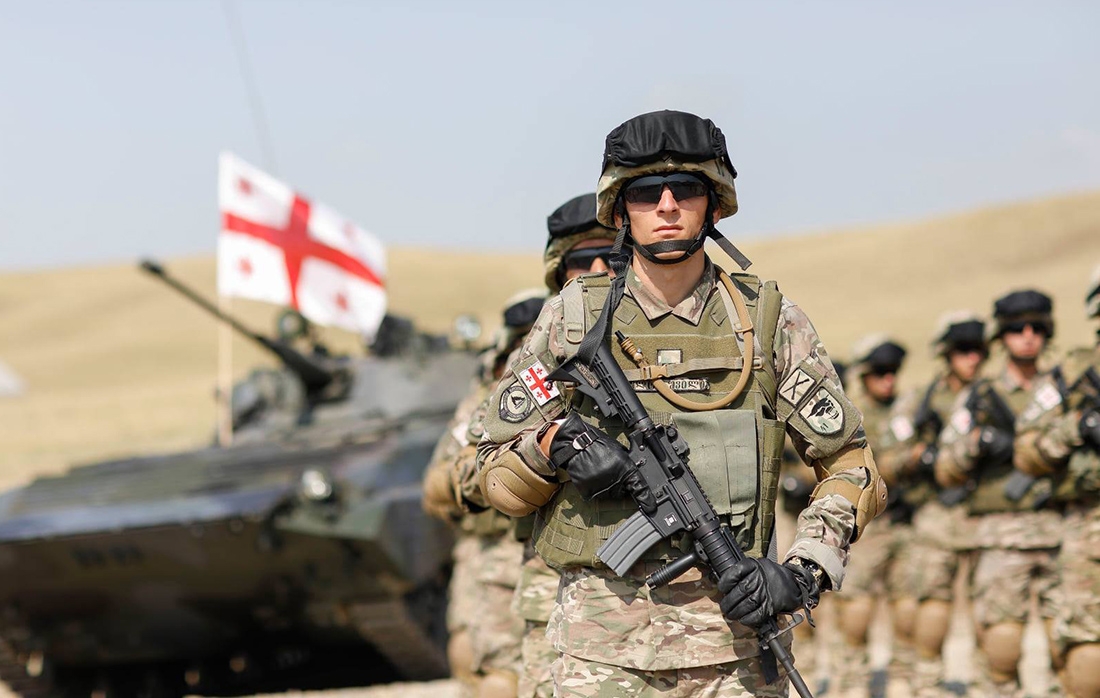
Abstract
The transformation of the
Black Sea security environment has presented Georgia’s defence policy with increasingly
complex challenges. Russia’s full-scale war against Ukraine, the expanding use
of unmanned aerial and maritime systems, advances in long-range
precision-strike capabilities, and hybrid operations targeting critical
infrastructure have altered the character of contemporary military
confrontation and traditional perceptions of regional security. Under these
circumstances, Georgia’s defence resilience can no longer be assessed solely in
terms of military resources or the possession of individual weapons systems.
Its effectiveness increasingly depends on the state’s ability to identify
emerging threats, assess their potential trajectories, determine national
vulnerabilities, and translate available resources into coordinated defence
capabilities.This article examines the principal strategic, institutional, and
military challenges facing Georgia’s defence system amid changes in the Black
Sea security environment and identifies priority areas for defence
modernisation. The research draws on the analysis of strategic documents,
institutional assessment, capability gap analysis, comparative analysis, and
scenario-based assessment. Particular attention is given to the role of
strategic intelligence and early warning in defence planning and decision-making.
The article introduces the
author-developed Integrated
Defence and Strategic Resilience Framework for Georgia (IDSR-G),
which brings together five interconnected dimensions: strategic intelligence
and early warning; military capabilities; institutional resilience; deterrence
and national resilience; and strategic partnerships. The central argument is
that Georgia’s defence effectiveness depends not merely on acquiring military
resources, but on the institutional capacity to connect threat assessment with
capability development, operational readiness, and national resilience.
Introduction
The Black Sea region has
become one of the strategically significant geopolitical spaces in contemporary
international security. Its importance derives not only from the geographical
position of its coastal states but also from the transportation, energy, and
trade routes connecting Europe and Eurasia, intensifying military and political
competition, and shifts in the regional balance of power. Russia’s full-scale
invasion of Ukraine on 24 February 2022 further exacerbated existing tensions,
demonstrating the close relationship between military deployments, the security
of maritime communications, the protection of energy infrastructure, and
regional deterrence.The war in Ukraine has exposed several defining
characteristics of contemporary military confrontation. These include the
extensive use of unmanned aerial and maritime systems, the growing importance
of intelligence and real-time data, the integration of electronic warfare and
cyber operations, advances in precision-strike capabilities, and attacks
targeting both military and civilian critical infrastructure. These
developments demonstrate that military effectiveness is increasingly determined
by factors beyond the quantity of conventional weapons. Interoperability, the
speed of information collection and processing, the quality of decision-making,
force survivability, and operational adaptability have become equally
important.
These changes carry particular
strategic significance for Georgia. Located at the intersection of the Black
Sea and the South Caucasus, the country forms part of the transit space
connecting Europe and Asia. The ports of Poti and Batumi, energy and
transportation corridors, and the development of regional connectivity enhance
Georgia’s economic and geopolitical significance. However, geographical
location does not automatically guarantee security. The growing importance of
strategic infrastructure and transit functions instead requires stronger
capabilities in maritime domain awareness, critical infrastructure protection,
cybersecurity, crisis management, and interagency coordination.
One of the principal
determinants of Georgia’s security environment remains Russia’s military
presence in occupied Abkhazia and the Tskhinvali region. The occupation, the
so-called borderisation process, illegal detentions, and security incidents
near the occupation lines create sustained strategic pressure. The Council of
Europe’s 2026 reporting referred to 21 incidents of so-called borderisation
reported by the Georgian authorities during the reporting period. It also noted
increased unmanned aerial vehicle activity observed by the European Union
Monitoring Mission (EUMM) beyond the administrative boundary lines, including
activity associated with mission patrols. These developments indicate that the
threats facing Georgia are not limited to the possibility of large-scale
military escalation. They also include persistent pressure, challenges to
incident management, and risks of destabilising the security
environment.Georgia’s broader international security position must also inform
any assessment of its defence policy. Cooperation with NATO provides
opportunities to strengthen defence capabilities, interoperability, military
education, institutional development, and national resilience. Practical
cooperation, including through the Substantial NATO–Georgia Package (SNGP),
remains an important element of this relationship. Nevertheless, Georgia is not
a NATO member and therefore does not benefit from the Alliance’s collective
defence guarantee. Partnership should consequently be understood as a resource
for developing national capabilities rather than a substitute for the country’s
own defence responsibilities.
Against this background, the
central research problem of this article is the extent to which Georgia’s
defence planning, institutional arrangements, and military capabilities
correspond to emerging threats in the Black Sea region, and which areas require
transformation to ensure effective deterrence and national resilience.The article
argues that Georgia’s defence challenge cannot be reduced to the limited
availability of military resources or deficiencies in individual technological
capabilities. A more fundamental issue concerns the state’s ability to
transform threat-related information into strategic assessments, translate
those assessments into defence priorities, and convert the resulting priorities
into tangible military and institutional capabilities. Defence transformation
should therefore be based on an integrated process linking intelligence, early
warning, capability planning, institutional resilience, and international
cooperation.The purpose of this research is to assess the strategic and
institutional capabilities of Georgia’s defence system in the context of
changes in the Black Sea security environment and to identify priority
directions for defence modernisation.
To achieve this objective, the
research addresses the following tasks:
The research is based on an
analysis of publicly available strategic and legal documents, reports issued by
international organisations, and academic literature. It employs strategic
threat assessment, institutional analysis, Capability Gap Analysis, comparative
analysis, and scenario-based assessment. The comparative dimension focuses
primarily on lessons drawn from Ukraine’s wartime experience, while
scenario-based assessment is used to examine their potential implications for
Georgia’s defence planning. Ukraine is not treated as a model that can be
directly replicated, but as an important source of insight into contemporary
military operations, technological adaptation, and defence resilience.
Changes in the Black Sea
Security Environment and Georgia’s Strategic Vulnerabilities
A defining characteristic of
the contemporary Black Sea security environment is the growing interdependence
of military, economic, and infrastructure-related interests. The regional
balance of power is shaped not only by the military capabilities of coastal
states but also by control over maritime communications, the protection of
energy routes, military presence, international partnerships, and
crisis-management capacity. The war in Ukraine has demonstrated that the
consequences of military confrontation in the Black Sea extend beyond the
immediate area of hostilities, affecting commercial shipping, port operations,
insurance risks, energy security, and the resilience of regional economic
connections.Russia’s military operations against Ukraine and Ukraine’s use of
asymmetric maritime capabilities have transformed traditional perceptions of
naval warfare in the Black Sea. Unmanned maritime systems, remotely operated
platforms, and coastal defence capabilities have demonstrated that an actor
with comparatively limited resources can restrict an adversary’s freedom of
maritime operations and inflict significant military or economic losses.
Maritime security is therefore no longer confined to naval operations. It also
encompasses the protection of ports, commercial vessels, maritime
communications, coastal infrastructure, and maritime domain awareness.
This development is
particularly relevant to Georgia. The country’s Black Sea ports and associated
land-based transportation networks constitute an important component of its
economic and regional role. Their security must be assessed not only in terms
of physical protection but also through the capacity to detect suspicious maritime
activity, exchange information promptly, respond to incidents, and maintain the
continuity of critical services.Georgia’s existing institutional mechanisms
provide an important starting point for this assessment. On 5 March 2026, a
meeting of the Interagency Maritime Security Council was held at the Joint
Maritime Operations Centre, with representatives of the Ministries of Defence,
Internal Affairs, Foreign Affairs, and other relevant institutions
participating. Discussions addressed the situation in the Black Sea, maritime
security risks, and the priorities of the Centre. The meeting indicates the
existence of a formal mechanism for interagency coordination. The central
analytical question, however, is not simply whether such a structure exists, but
how effectively it functions in practice. Relevant criteria include the speed
of information exchange, the ability to establish a common operational picture,
the effectiveness of response procedures, and interoperability among
participating agencies.
Georgia’s strategic
vulnerabilities are also associated with Russia’s military and political
position in the region. The Russian military presence in the occupied
territories remains a permanent factor in Georgia’s defence planning. At the
same time, developments along the occupation lines create an environment in
which the risk of military escalation coexists with forms of low-intensity,
intermittent, and difficult-to-predict pressure. Such circumstances require
sustained situational awareness, intelligence assessment, crisis communication,
and coordination with civilian institutions.It is important to distinguish
between the concepts of threat and vulnerability. Geographical location, the
presence of a port, or the operation of an energy corridor does not, in itself,
make a particular facility vulnerable. Vulnerability emerges when the
possibility of a specific threat intersects with the critical function of an
asset and existing protection, redundancy, or recovery mechanisms prove
insufficient. An assessment of Georgia’s strategic infrastructure should
therefore examine the criticality of individual assets, potential sources of
threats, existing protective measures, alternative routes, and recovery
capabilities.
Another important dimension of
Black Sea security concerns risks to commercial maritime shipping. Incidents in
the region have demonstrated the possibility of commercial vessels and maritime
infrastructure being exposed to the consequences of armed conflict. Assessments
must distinguish verified facts from assumptions regarding responsibility,
since the actors or intentions behind every incident have not been publicly
established. Nevertheless, the broader trend indicates that maritime security
planning must account for disruptions to commercial shipping, navigational
risks, temporary port restrictions, and interruptions to critical services.The
regional environment is further complicated by the diversity of hybrid threats.
Cyberattacks, disinformation, attempts to undermine public trust, covert activities
targeting critical infrastructure, and the exploitation of political
polarisation may serve as instruments of broader strategies of pressure.
However, attributing a particular cyber incident or information campaign to a
foreign state solely on the basis of political assumptions is methodologically
unsound. Such attribution requires the combined assessment of technical,
behavioural, and contextual evidence. Responses should therefore go beyond
monitoring the dissemination of information and systematically examine its
sources, objectives, distribution channels, target audiences, and anticipated
effects.For Georgia, the security of the Black Sea and the South Caucasus must
also be considered as part of an interconnected regional space. Transportation and
energy links, Armenian-Azerbaijani relations, Türkiye’s regional role, Russian
influence, and the interests of external actors create dynamics that extend
across national boundaries. Georgia’s defence planning must consequently
account not only for threats emerging directly along its borders but also for
regional developments that may affect its transit function, economic security,
international partnerships, and military-political environment.
Georgia’s strategic
vulnerability cannot therefore be determined merely by compiling a list of
threats. It requires an assessment of how individual threats may develop, their
potential impact on national interests, and the adequacy of existing protective
and response capabilities. This provides the analytical basis for establishing
priorities, identifying institutional requirements, and reducing risks through
national measures and international cooperation.
Georgia’s Defence
Capabilities: Strategic Planning and Institutional Challenges
The effectiveness of a
contemporary defence system depends on the extent to which strategic
objectives, threat assessments, military planning, resource allocation, and
performance monitoring are consistently connected. Capability development is a
long-term process requiring not only financial resources but also institutional
continuity, clearly defined priorities, professional personnel, and effective
decision-making.The importance of strategic planning is reflected in Georgia’s
publicly available defence policy documents. The Ministry of Defence’s Vision
2030 establishes long-term directions for institutional development, while the
Strategic Defence Review 2021–2025 was based on an assessment of the
operational environment, the identification of challenges facing the defence system,
and an examination of force structure and capability gaps. The document also
outlined development priorities, required resources, responsible organisational
units, and implementation timelines. This approach is important because it
seeks to link capability development to established strategic objectives rather
than treating defence development as a collection of isolated procurement
activities or short-term decisions.Nevertheless, the existence of a strategic
document does not, in itself, demonstrate that its provisions have been fully
implemented. The quality of planning must ultimately be assessed by examining
the extent to which identified priorities have been translated into funded
programmes, trained personnel, operational systems, and measurable results.
The implementation period of
the Strategic Defence Review 2021–2025 has concluded. Accordingly, in 2026,
particular importance should be attached to assessing how its priorities have
been carried forward, what results have been achieved, and whether developments
in the security environment have been reflected in subsequent planning cycles.
A definitive assessment requires examination of updated strategic documents,
implementation reports, and defence programmes. On the basis of publicly
available material, it would be inaccurate to claim that the planning process
does not exist. A more precise conclusion is that the resilience of Georgia’s
defence system requires continuous updating of strategic priorities and
systematic assessment of their implementation.One of the major institutional
challenges concerns defence resource management. An increase in the defence
budget may provide an essential precondition for capability development, but it
does not automatically translate into greater military effectiveness. Georgia’s
2026 state budget allocates GEL 1.89 billion to the Ministry of Defence.
Assessing this amount solely in nominal terms is insufficient. It is also
necessary to examine the distribution of resources among personnel training,
weapons and equipment modernisation, logistics, infrastructure, maintenance,
research and development, and the long-term sustainment of new capabilities.
Research on defence resource
management highlights the importance of data-driven analysis, organisational
capacity, and programme-based budgeting. Such studies can help identify
institutional challenges, although they should not be treated as exhaustive
descriptions of all ongoing processes. Their practical significance lies in
demonstrating the relationship between resource management and strategic
planning.Resource allocation must also account for the entire life cycle of
military capabilities. Procurement is only the initial stage. Effective use
requires trained personnel, spare parts, maintenance, appropriate infrastructure,
software, communications, ammunition stocks, and long-term funding for system
upgrades. Without these supporting elements, a state may acquire a modern
platform whose operational value remains limited.
A second major challenge
concerns institutional continuity. Defence planning cannot be effective if
strategic knowledge, experience, and priorities remain associated exclusively
with individual officeholders or temporary management teams. The defence system
requires institutional memory to preserve previous assessments, lessons
learned, planning assumptions, and the outcomes of implemented programmes.
Institutional continuity, however, does not imply resistance to change. It
means that reforms and organisational adjustments should be based on evidence,
clearly defined objectives, and performance monitoring.
A third challenge concerns
coordination between defence institutions and other state agencies. Most
contemporary threats extend beyond the mandate of a single institution.
Maritime security, cybersecurity, critical infrastructure protection, strategic
communications, crisis management, and civilian preparedness require
information exchange and coordinated action among defence, internal affairs,
state security, foreign affairs, and economic institutions.Interagency
coordination should not be evaluated merely through the existence of councils,
working groups, or meetings. Its effectiveness should be measured against
practical criteria: the speed of information sharing; the availability of a
common operational picture; the clarity of responsibilities; the regularity of
joint exercises; the effectiveness of crisis decision-making procedures; and
the extent to which identified deficiencies are addressed. The Joint Maritime
Operations Centre provides an important institutional foundation for
coordination in the maritime domain. Its effectiveness, however, should be
assessed through practical performance as well as its formal mandate.Human
resource management represents another important dimension. A contemporary
defence system requires not only sufficient numbers of military personnel but
also specialised expertise in cybersecurity, data analysis, unmanned systems,
electronic warfare, intelligence, logistics, military engineering, and
technical maintenance. Developing and retaining qualified personnel in these
fields is a long-term task. It requires professional development, transparent
career progression, practical training, and knowledge exchange between military
and civilian specialists.
An institutional assessment of
Georgia’s defence system should consequently focus not only on the number of
organisational structures or their formal responsibilities, but also on their
ability to implement strategic objectives. Defence effectiveness depends on the
combined performance of planning, resource management, human capital,
interagency coordination, and performance assessment.
Strategic Intelligence, Early
Warning, and Decision-Making
Strategic intelligence is one
of the essential foundations of contemporary defence planning and state
decision-making. Its function extends beyond information collection and the
preparation of analytical reports: it transforms data from different sources
into assessments that enable decision-makers to understand the nature of
threats, their potential trajectories, and their possible consequences.Its
importance becomes particularly evident when threats evolve rapidly, indicators
are fragmented, and the time available for an effective response is limited.
Military operations may be preceded by political pressure, information
operations, cyber activity, logistical movements, economic restrictions, or
suspicious activity targeting critical infrastructure. An individual indicator
may not, in itself, signal an imminent threat. The combined assessment of
several interconnected indicators, however, may provide the basis for early
warning.An effective analytical system should therefore integrate information
collection, verification, indicator monitoring, scenario development, and the
timely delivery of assessments to decision-making institutions. Relevant
sources may include open-source intelligence (OSINT), geospatial data, publicly
available economic and transportation information, media monitoring, and other
legally accessible material. Open-source analysis cannot replace other
intelligence capabilities; its value increases when combined with different
forms of data to produce a more comprehensive assessment.
For Georgia, a principal task
is the continuous monitoring of developments in the Black Sea and South
Caucasus. This requires attention not only to military activity but also to
regional political developments, military procurement, technological change,
infrastructure projects, maritime movements, and the information environment.
Such an approach makes it possible to examine individual developments within a
broader strategic context and assess their potential implications for national
interests.Early warning has practical value only when connected to
decision-making mechanisms. If an analytical assessment does not reach the
appropriate level of decision-making in time, or if it does not inform possible
courses of action, information collection cannot provide a genuine defence
advantage. The intelligence cycle should therefore culminate in decision
support rather than simply in the production of reports.For Georgia’s defence
system, an integrated threat-assessment cycle could consist of the following
stages:
Threat → Indicator →
Assessment → Scenario → Vulnerability → Capability Gap → Strategic Response
At the first stage, the
potential source and objectives of a threat are identified. The next stage
involves determining indicators that may signal its development. Information is
then verified and assessed, providing the basis for developing potential
scenarios. The analysis subsequently identifies the national interests,
infrastructure, or military capabilities that may be affected. Finally,
existing capability gaps are assessed and appropriate response options are
determined. Quality
control is essential throughout this process. Verified facts, source claims,
analytical assumptions, and forecasts must be clearly distinguished.
Decision-makers should understand not only the conclusions of an assessment but
also the reliability of its evidentiary basis, the uncertainties involved, and
the additional information that could alter the judgement. This reduces the
risks of both underestimating threats and exaggerating their significance.
The analytical process must
also inform defence resource planning. Threat assessments should help determine
which capabilities need to be developed, within what timeframe, with what level
of resources, and towards which intended outcomes. For example, if an
assessment identifies the growing importance of airspace monitoring, unmanned
systems, or critical infrastructure protection, these findings should inform
corresponding capability development programmes, including personnel training
and technical support requirements.Strategic intelligence should therefore not
be treated as a separate supporting function detached from the defence system.
It is a mechanism for connecting threat assessment with capability development.
The quality of this relationship determines how effectively a state can respond
not only to an unfolding crisis but also to the indicators that precede it.
Lessons from the War in
Ukraine and the Transformation of Modern Military Deterrence
Russia’s full-scale invasion
of Ukraine has highlighted several important lessons for contemporary military
theory and practice. The war demonstrates that military effectiveness is not
determined solely by heavy weaponry, manpower, or territorial control. The
interaction of intelligence, communications, air defence, unmanned systems, electronic
warfare, logistics, industrial production, and the speed of military
decision-making has become decisive.
One of the most significant
lessons concerns the expanding role of unmanned systems. Unmanned aerial and
maritime platforms are used for intelligence gathering, target detection,
strikes, disruption of maritime communications, and restrictions on an
adversary’s freedom of action. Their effectiveness, however, depends not only
on the technical characteristics of individual platforms but also on data
transmission, command systems, the ability to operate under electronic warfare
conditions, personnel training, and integration with other military
capabilities.
A second lesson concerns air
defence and airspace monitoring. Contemporary threats may originate from combat
aircraft and cruise missiles as well as relatively inexpensive unmanned aerial
vehicles. Air defence must therefore follow a layered approach in which
different detection and interception capabilities operate in coordination. Procuring
expensive systems alone is insufficient if a state lacks the capacity to detect
and respond to lower-cost threats through economically sustainable means.
A third lesson is the growing
importance of electronic warfare and cyberspace. Contemporary military
operations depend heavily on communication networks, navigation systems,
sensors, data exchange, and digital infrastructure. Disruption of these systems
can undermine the coordination of military units and slow decision-making.
Defence modernisation must therefore incorporate not only new technologies but
also their protection, backup capabilities, and continued functionality under
conditions of disruption.
The fourth lesson concerns
logistics and the sustainability of defence production. In a prolonged
conflict, military capabilities depend on the continuous supply of ammunition,
spare parts, fuel, maintenance, and personnel. Modern equipment cannot provide
a long-term advantage if a state is unable to sustain and operate it throughout
an extended crisis. Defence planning must therefore assess not only initial
procurement costs but also the full life-cycle costs of systems and the
resilience of supply chains.
Ukraine’s experience also
demonstrates that military and civilian resilience are closely interconnected.
The functioning of critical infrastructure, the restoration of energy supplies,
public information, the preparedness of local administrations, and the
continuity of state institutions directly affect a country’s defence capacity. National
resilience is therefore not merely a supporting mechanism for the armed forces;
it is an integral component of deterrence and defence.Applying these lessons to
Georgia requires caution. Georgia’s geographical, military, economic, and
political circumstances differ from those of Ukraine, making the mechanical
transfer of the Ukrainian model inappropriate. Its relevance lies instead in
identifying principles that can inform Georgia’s defence planning:
strengthening early warning, developing unmanned-system capabilities, improving
airspace monitoring, enhancing electronic and cyber resilience, ensuring
logistical sustainability, protecting critical infrastructure, and
strengthening military-civilian coordination.The concept of modern deterrence
has also expanded in response to these developments. Traditionally, deterrence
was understood as the ability to impose military costs on an adversary
sufficient to make aggression unacceptable. This remains important, but it is
now complemented by the ability to detect threats in a timely manner, maintain
command and communication systems, protect critical infrastructure, withstand
cyber and information pressure, and restore damaged capabilities rapidly.
For Georgia, deterrence should
be based on a realistic objective: reducing the conditions favourable to
potential aggression and increasing its anticipated costs and consequences.
This does not imply that the country can independently neutralise every
possible military threat. Rather, it entails building a defence system that
complicates aggression planning, reduces the element of surprise, preserves
essential state functions during a crisis, and enables coordinated action with
international partners.
Priority Areas for Georgia’s
Defence Modernisation
Georgia’s defence
modernisation should be guided by threat assessment and systematic capability
gap analysis. The objective should not be to acquire every available technology
simultaneously or to create the broadest possible list of military
capabilities. Under conditions of limited resources, priorities must be clearly
established, implemented in stages, and assessed against measurable outcomes.
First priority —
Strengthening strategic intelligence and early warning.
Georgia requires continuous analytical assessment of the Black Sea and South
Caucasus security environments, integrating military, political, economic,
technological, and informational data. Particular importance should be attached
to indicator-based monitoring, scenario development, and the timely delivery of
assessments to decision-makers. Open-source intelligence, geospatial data,
digital data-processing tools, and interagency information exchange are
particularly important in this regard.
Second priority —
Airspace monitoring and layered air defence. The
proliferation of unmanned aerial vehicles, cruise missiles, and other airborne
threats requires an integrated system for detection, identification, tracking,
and response. Priorities should include radar coverage, mobile sensors, passive
detection capabilities, and interoperability among different classes of air
defence systems. The economic efficiency of response mechanisms must also be
considered to avoid the unnecessary use of expensive systems against
comparatively low-cost threats.
Third priority —
Unmanned systems and counter-unmanned capabilities.
Georgia should develop indigenous unmanned capabilities for intelligence and
other mission-specific purposes, alongside the means to detect, track, and
counter adversarial unmanned systems. Emphasis should be placed on system
integration, personnel training, data exchange, operation under electronic
interference, and local maintenance. Development should extend beyond platform
procurement to include the necessary doctrinal, organisational, and training
arrangements.
Fourth priority —
Cybersecurity and electronic resilience. The digital
transformation of the defence system creates opportunities to improve
effectiveness but also introduces new vulnerabilities. Military
command-and-control systems, communication networks, logistics databases, and
the digital management of critical infrastructure require continuous
protection. Essential measures include network security audits,
incident-response procedures, backup communication channels, and the maintenance
of operational continuity during cyber incidents.
Fifth priority —
Maritime domain awareness and critical infrastructure protection.
Georgia should strengthen its capacity to collect, analyse, and share
information concerning maritime activity. Cooperation between the Joint
Maritime Operations Centre and relevant institutions should be deepened through
improved information-sharing procedures and joint exercises. The protection of
ports, energy facilities, transportation hubs, and communication networks
should be based on risk assessment, integrated physical and digital security,
alternative capabilities, and recovery plans.
Sixth priority —
Territorial defence and national resilience.
Georgia’s defence system should incorporate civilian preparedness, the
functioning of local administrations, public information during crises, and the
continuity of critical services alongside military operations. Territorial
defence capabilities should be linked to clearly defined responsibilities,
training systems, logistical support, and central military command. National
resilience must be reflected in practical plans, exercises, and response
procedures rather than remaining a declarative principle.
Seventh priority —
Human capital and the defence technology ecosystem.
Military modernisation requires the training and retention of specialised
personnel. Professional expertise should be developed in cybersecurity, data
analysis, unmanned systems, electronic warfare, military engineering, technical
maintenance, and logistics. Cooperation with universities, research centres,
and the private technology sector is particularly important. The development of
domestic technological capabilities should be based on realistic assessments,
clearly defined requirements, and quality control.
Eighth priority —
Defence resource management and performance assessment. Every
major defence programme should be linked to an identified threat, a specific
capability gap, an implementation timeframe, and measurable outcomes. It is
essential to account for the full life cycle of procurement, assess programme
implementation periodically, and align resource allocation with strategic
priorities. The effectiveness of the defence budget should be measured not
merely by expenditure or the quantity of equipment acquired, but by the extent
to which the country’s actual readiness to address identified threats has
improved.
Implementation of these
priorities should follow a phased approach. In the short term, priority should
be given to auditing existing capabilities, updating threat assessments,
mapping critical infrastructure risks, and reviewing interagency response
procedures. In the medium term, attention should focus on integrating
intelligence and sensor capabilities, improving responses to air and unmanned
threats, training specialised personnel, and conducting joint exercises. In the
long term, priorities should include developing the technological ecosystem,
strengthening defence-industrial and logistical resilience, institutionalising
military-civilian coordination, and continuously updating defence planning.
Georgia’s Integrated Defence
and Strategic Resilience Framework (IDSR-G)
The challenges outlined above
demonstrate the need for an integrated analytical framework that connects
threat assessment, military capability development, and national resilience. To
address this need, the article introduces the author-developed Integrated Defence and Strategic
Resilience Framework for Georgia (IDSR-G). Its purpose is to
assess Georgia’s defence system not only through its individual components but
also through the relationships among them.The framework is based on the
assumption that contemporary defence effectiveness depends on the coordinated
functioning of five principal dimensions.
First dimension —
Strategic intelligence and early warning. This
component encompasses threat detection, information collection and
verification, indicator monitoring, scenario development, and the provision of
timely assessments to decision-makers. Its evaluation criteria include
information reliability, analytical speed, interagency information exchange,
forecasting quality, and the ability to translate assessments into practical
decisions.
Second dimension —
Military capabilities. This dimension encompasses the readiness
of the armed forces, command-and-control systems, intelligence and monitoring
capabilities, air and coastal defence, unmanned systems, cyber and electronic
resilience, logistics, and personnel training. The central assessment question
is not simply which systems the country possesses, but whether they can operate
in an integrated manner under specific threat conditions.
Third dimension —
Institutional resilience. This component refers to
continuity in strategic planning, clear allocation of responsibilities,
effective resource management, retention of professional personnel, development
of institutional memory, and interagency coordination. It ensures that defence
capabilities do not depend exclusively on individual officeholders or temporary
organisational arrangements.
Fourth dimension —
Deterrence and national resilience. This dimension integrates
military deterrence, critical infrastructure protection, civilian preparedness,
continuity of state functions, crisis management, and the ability to restore
damaged capabilities. Its objective is to reduce the anticipated benefits of
aggression for an adversary while strengthening the state’s ability to
withstand pressure and maintain essential functions.
Fifth dimension —
Strategic partnerships. This component includes
cooperation with NATO, bilateral partners, and regional actors; military
education; exercises; interoperability; technological exchange; and defence
capability development. Partnerships are regarded as a means of strengthening
national capabilities through knowledge, experience, and interoperability, but
they cannot replace the state’s own defence responsibilities.The five
dimensions are interdependent. Strategic intelligence identifies threats
requiring particular attention; military capabilities provide the means to
respond; institutional resilience establishes the organisational basis for
planning and employing those capabilities; national resilience helps maintain
essential state functions during a crisis; and strategic partnerships strengthen
national capabilities through knowledge, experience, and interoperability.
IDSR-G is designed as an
interconnected assessment cycle rather than a linear sequence of independent
components. This makes it possible to evaluate deficiencies in one dimension in
relation to their effects on the overall defence system.The framework can be
used for periodic assessments of Georgia’s defence capabilities. Each dimension
should be evaluated against predefined indicators. Strategic intelligence, for
example, could be assessed through the frequency of threat-indicator updates,
the accuracy of analytical assessments, and the time required to deliver
information. Military capabilities could be examined through readiness levels,
system interoperability, personnel training, and technical support.
Institutional resilience could be evaluated through the continuity of the
planning cycle, clarity of responsibilities, and programme implementation.
National resilience could be assessed through continuity plans for critical
services, joint exercises, and recovery capabilities. Strategic partnerships
could be measured through the outcomes of joint exercises, interoperability
levels, and the capabilities developed through cooperation.The practical value
of IDSR-G lies in its ability to turn defence assessment into a process for
identifying specific deficiencies and development priorities. If threat
assessments are of a high standard but the corresponding military capabilities
are absent, the problem cannot be addressed exclusively within the intelligence
domain. If modern equipment has been procured but personnel training and
technical maintenance have not been ensured, the capability gap lies in
institutional and resource management arrangements. Similarly, if critical infrastructure
protection plans exist but information exchange and joint agency responses
remain insufficient, the problem must be assessed in terms of coordination and
national resilience.
The framework therefore
focuses not on the formal existence of individual components but on their
functional interconnection. It does not constitute an officially approved
doctrine of Georgia’s defence system or an existing state policy. Rather, it is
an analytical framework proposed by the author. Its further development and
practical application would require detailed indicator definitions, the
systematisation of publicly available data, and periodic assessments of defence
capabilities.
Conclusion
The transformation of the
Black Sea security environment has presented Georgia’s defence policy with new
strategic and institutional challenges. The war in Ukraine, the extensive use
of unmanned systems, the diversification of threats in the air and maritime
domains, growing cyber and information pressure, and the increasing importance
of critical infrastructure protection have demonstrated that contemporary
defence effectiveness cannot be determined solely by the quantity of military
resources.For Georgia, the central challenge is to develop a defence system
capable of responding to its strategic geographical position, regional transit
function, and complex security environment. Such a system must support timely
threat assessment, military readiness, institutional continuity, and the
uninterrupted functioning of essential national services. Russia’s military
presence in the occupied territories and persistent security challenges along
the occupation lines remain enduring factors in defence planning. At the same
time, the growth of military and commercial risks in the Black Sea requires
stronger maritime security, critical infrastructure protection, and interagency
coordination.
The research demonstrates that a principal prerequisite for defence transformation is the integration of strategic intelligence and early warning into military planning and resource allocation. Threat assessment acquires practical defence value only when it leads to the identification of specific capability gaps, corresponding development programmes, responsible institutions, and performance criteria. Without this connection, strategic documents risk remaining declaratory, while procurement may develop into a series of disconnected projects.The analysis identifies several priority areas for Georgia’s defence modernisation: strengthening strategic intelligence and early warning; developing airspace monitoring and layered air defence; integrating unmanned systems and counter-unmanned capabilities; ensuring cybersecurity and electronic resilience; improving maritime domain awareness and critical infrastructure protection; developing territorial defence and civilian preparedness; retaining specialised personnel; and establishing results-oriented defence resource management.Cooperation with NATO and other partners remains an important foundation for developing Georgia’s defence capabilities. Partnership facilitates military interoperability, professional development, institutional reform, and the exchange of experience. Nevertheless, in the absence of NATO membership and the associated collective defence guarantee, the development of national capabilities and domestic resilience assumes particular importance. International support should complement national defence capacity rather than replace it.
The article’s proposed Integrated Defence and Strategic Resilience Framework for Georgia (IDSR-G) brings together five interconnected dimensions: strategic intelligence and early warning; military capabilities; institutional resilience; deterrence and national resilience; and strategic partnerships. Its principal analytical contribution lies in assessing the defence system not through individual resources or organisational structures in isolation, but through their interaction and their contribution to an integrated strategic outcome.Ultimately, Georgia’s defence transformation should be understood not as a process of accumulating military assets, but as the development of an integrated national capacity to anticipate threats, deter aggression, sustain essential state functions, and adapt to an increasingly complex regional security environment.
Military Analyst
Tatia KHUNTUA


 Latest news
Europe Prepares a Military Mission for Ukraine: 2800 Troops Rehearse Post-War Deployment Scenarios
22.Nov.2026
Russian Missiles and a Drone Fall on Polish Territory: NATO Faces New Threats on Its Eastern Flank
21.Nov.2026
Russia Strikes Kyiv Bridges Following Ukraine’s Attack on the Crimean Bridge: Transport Infrastructure Becomes a New Front in the Escalation
20.Nov.2026
The "Coalition of the Willing" Discusses Security Guarantees and Continued Support for Kyiv
19.Nov.2026
Tanker Sinks off Bulgaria After Being Hit Four Times: All 19 Crew Members Rescued
18.Nov.2026
Europe Accelerates Defence Integration: EU Identifies 8 Priorities for Joint Weapons Development
17.Nov.2026
Bulgaria and North Macedonia Plan to Begin Construction of New Border Crossing in October 2027
17.Nov.2026
Central Asia Accelerates Digitalisation of the Trans-Caspian Transport Corridor
16.Nov.2026
Bulgaria, Romania and Turkiye Deploy Naval Assets in BETUL 8 Rescue Operation
16.Nov.2026
Armenia Becomes the EU’s Leading Partner in the South Caucasus: Georgia Loses Influence in Europe’s Regional Strategy
15.Nov.2026
Ukraine Expands Its Campaign Against Russia’s Strategic Infrastructure
15.Nov.2026
Defence Partnerships without a Common Strategy? Turkiye Expands Military Ties with Qatar, Saudi Arabia and Pakistan
14.Nov.2026
Kobakhidze Says Georgia is Ready to Restore Political Dialogue with the European Union
14.Nov.2026
European Leaders Warn of Growing Russian Pressure on Armenia and Pledge Support to Yerevan
14.Nov.2026
Beyond Washington and Moscow: Europe Seeks a Seat at the Ukraine Negotiating Table
13.Nov.2026