
 22 Nov 2026









Azerbaijan, Georgia, Turkiye and Bulgaria Agree on Strategic Partnership in Clean Energy
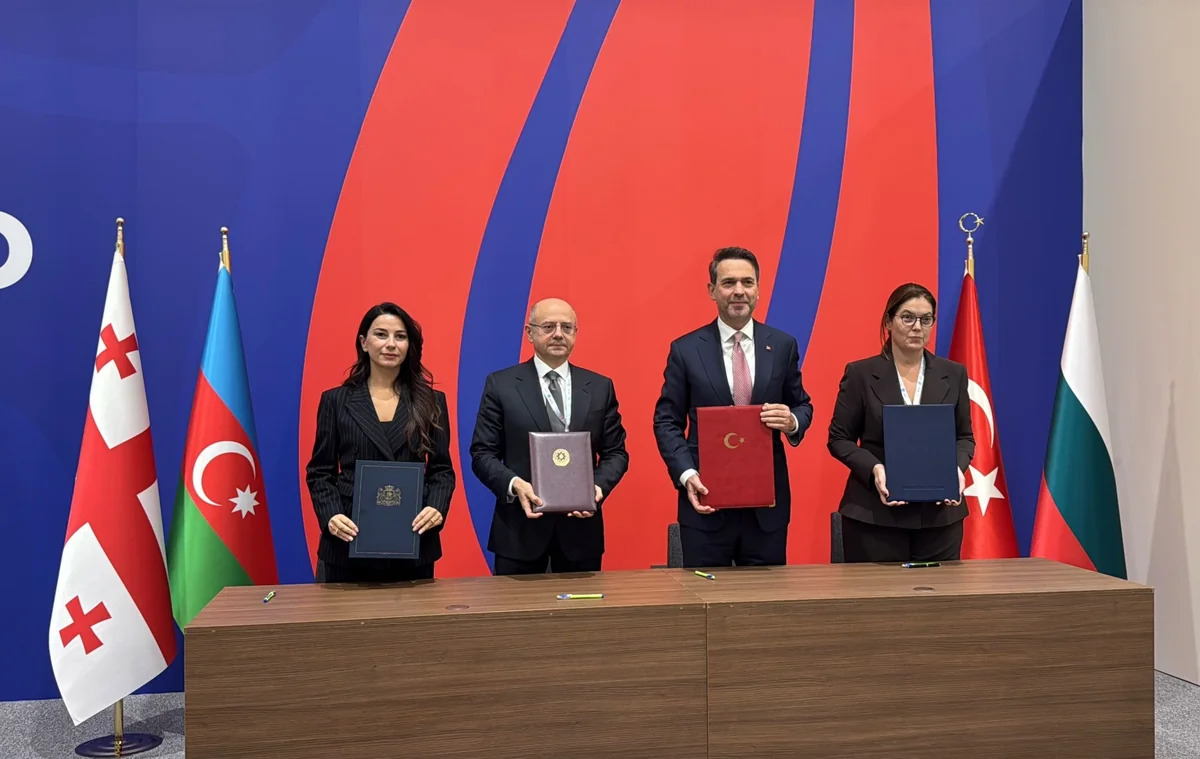
Baku, Tbilisi, Ankara and
Sofia have agreed to develop cross-border infrastructure for transmitting
electricity generated from renewable sources to European markets. The new
intergovernmental agreement provides for the establishment of a green energy
corridor, the expansion of existing power transmission lines and the creation
of a joint company to implement the project. The corridor is expected to have a
transmission capacity of at least 2,000–3,000 MW.
On 10 November 2026, on the
sidelines of the 31st United Nations Climate Change Conference (COP31) in
Antalya, Azerbaijan, Georgia, Turkiye and Bulgaria signed an Agreement on
Strategic Partnership in the Field of Clean Energy. The document was signed by
Azerbaijan’s Minister of Energy Parviz Shahbazov, Turkiye’s Minister of Energy
and Natural Resources Alparslan Bayraktar, Georgia’s Deputy Prime Minister and Minister
of Economy and Sustainable Development Mariam Kvrivishvili, and Bulgaria’s
Minister of Energy Iva Petrova.
The agreement aims to develop
the Azerbaijan–Georgia–Turkiye–Bulgaria green energy corridor, strengthen
regional energy connectivity and diversify electricity transmission routes. The
parties intend to expand cooperation in the generation, transmission and trade
of electricity produced from clean energy sources, as well as establish the
technical and infrastructure conditions required for its safe and uninterrupted
transportation.
One of the key provisions of
the agreement concerns the development of cross-border energy infrastructure.
The parties envisage expanding existing power transmission lines and
constructing new interconnections between the electricity systems of the four
countries. In addition, they intend to identify transmission system operators
that will participate in a joint venture. This entity will be responsible for
developing and implementing green energy corridor projects.
According to Georgia’s 1TV
broadcaster, the expected transmission capacity of the energy corridor will be
at least 2,000–3,000 MW. The implementation of the project will enable Georgia
to diversify its electricity import and export routes and expand opportunities
for supplying electricity generated from renewable sources to European markets.
The agreement also places
particular emphasis on the development of digital infrastructure. It provides
for the improvement of fibre-optic communications and data transmission systems
required to coordinate national energy networks and ensure the reliable
operation of cross-border connections. Thus, cooperation will cover not only
physical electricity transmission infrastructure but also technological
solutions for managing energy flows.
The signing of the agreement
marks the next stage in cooperation among the four countries, which has been
developing since 2024. The first ministerial meeting on the project was held in
Istanbul in November 2024. On 4 April 2025, the parties signed a memorandum of
understanding in Baku on cooperation in the transmission and trade of green
electricity. In May 2026, at the third ministerial meeting in Istanbul, they
agreed to establish a joint venture involving all four countries.
The implementation of the
initiative will depend on the technical readiness of national energy systems,
the alignment of regulatory and commercial arrangements, the mobilisation of
investment and the construction of the necessary cross-border interconnections.
Therefore, the signing of the intergovernmental agreement should be regarded as
an institutional foundation for the project's further development, rather than
evidence that the energy corridor has already been established or reached its
projected transmission capacity.
In the broader regional
context, the agreement reflects the four countries' intention to develop
alternative energy supply routes and strengthen connectivity between the
markets of the Caspian region, the South Caucasus and Europe. If successfully
implemented, the green energy corridor could become an additional component of
Europe's energy diversification efforts and expand the role of the South
Caucasus in the development of new cross-border energy links.


 Latest news
Europe Prepares a Military Mission for Ukraine: 2800 Troops Rehearse Post-War Deployment Scenarios
22.Nov.2026
Russian Missiles and a Drone Fall on Polish Territory: NATO Faces New Threats on Its Eastern Flank
21.Nov.2026
Russia Strikes Kyiv Bridges Following Ukraine’s Attack on the Crimean Bridge: Transport Infrastructure Becomes a New Front in the Escalation
20.Nov.2026
The "Coalition of the Willing" Discusses Security Guarantees and Continued Support for Kyiv
19.Nov.2026
Tanker Sinks off Bulgaria After Being Hit Four Times: All 19 Crew Members Rescued
18.Nov.2026
Europe Accelerates Defence Integration: EU Identifies 8 Priorities for Joint Weapons Development
17.Nov.2026
Bulgaria and North Macedonia Plan to Begin Construction of New Border Crossing in October 2027
17.Nov.2026
Central Asia Accelerates Digitalisation of the Trans-Caspian Transport Corridor
16.Nov.2026
Bulgaria, Romania and Turkiye Deploy Naval Assets in BETUL 8 Rescue Operation
16.Nov.2026
Armenia Becomes the EU’s Leading Partner in the South Caucasus: Georgia Loses Influence in Europe’s Regional Strategy
15.Nov.2026
Ukraine Expands Its Campaign Against Russia’s Strategic Infrastructure
15.Nov.2026
Defence Partnerships without a Common Strategy? Turkiye Expands Military Ties with Qatar, Saudi Arabia and Pakistan
14.Nov.2026
Kobakhidze Says Georgia is Ready to Restore Political Dialogue with the European Union
14.Nov.2026
European Leaders Warn of Growing Russian Pressure on Armenia and Pledge Support to Yerevan
14.Nov.2026
Beyond Washington and Moscow: Europe Seeks a Seat at the Ukraine Negotiating Table
13.Nov.2026