
 20 Sep 2026









Rainer Saks: Russia сould lose its influence in Armenia, just as it did in the Baltics
The
Rīga Conference 2026, held on September 10–11 in Riga, brought together
policymakers, diplomats, security experts and representatives of the
international community to discuss the changing European security environment,
Russia’s war against Ukraine, NATO’s eastern flank, hybrid threats and the
resilience of European societies.
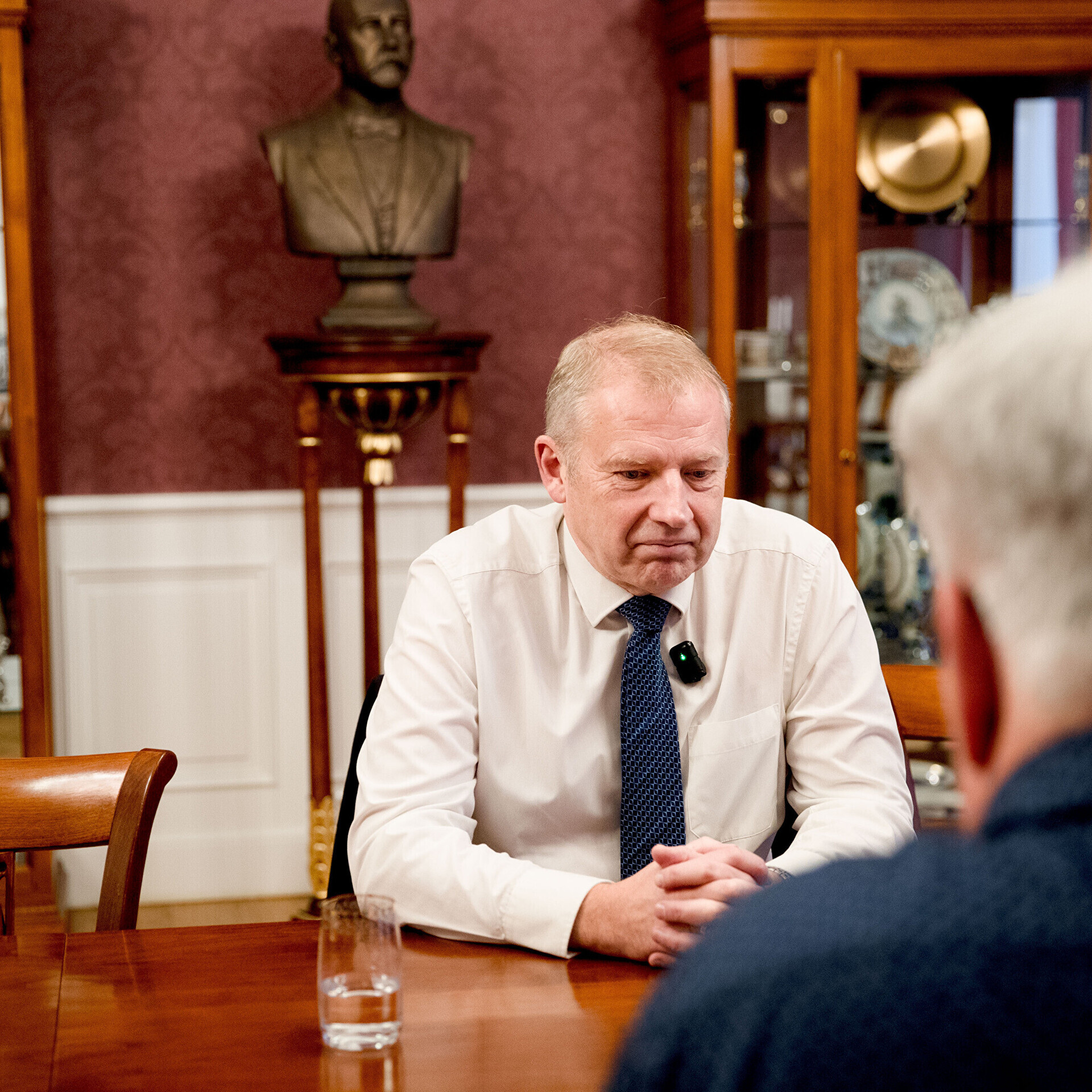
During the conference, CCBS News
journalist Marine Kharatyan conducted an exclusive interview with Rainer Saks,
a security and intelligence expert at PractNet and former head of the Estonian
Foreign Intelligence Service, discussing Russia’s hybrid tactics, information
warfare, the role of the media, NATO’s eastern flank, and the lessons Armenia
can learn from Estonia’s experience.
CCBS News: Russia
is using various forms of hybrid warfare against the Baltic states. What are the main techniques
being used, and which of them could also be applied against small and
strategically vulnerable countries such as Armenia?
Rainer Saks: If we compare the situation in
Armenia and Estonia, the geopolitical locations of the two countries are
completely different. Russia knows your country very well, just as it knows
Estonia quite well. When dealing with these two countries, Russia uses what we
could call tailor-made approaches. It does not simply copy and paste what it is
doing in Armenia and apply the same methods in Estonia, or vice versa. What
works in Estonia does not necessarily work in Armenia.
However,
there is one aspect of hybrid warfare that I would like to stress because it is
always very important: hybrid warfare
starts with information warfare. If there is no information warfare, there is
no hybrid warfare.
What
I can see as similar when comparing the current situation in Armenia with
Estonia is that both countries have faced strong information pressure from
Russia and permanent information attacks.
There
is another similarity. If I compare Armenia today with Estonia in the past, the
economic pressure Russia applied to Estonia in the 1990s reminds me, to some
extent, of what Russia is doing to Armenia at the moment.
I
consider this a strategic mistake. If you cut economic ties with Armenia and
try to blackmail Armenia, you should remember that Armenians have survived for
thousands of years. They will survive today as well. They will find solutions
and new opportunities, and eventually Russia may simply lose its influence in
the country.
This
happened in Estonia. When Russia punished us with different sanctions in the
1990s, it actually pushed us to accelerate our cooperation and integration with
Europe. I think something similar may eventually happen in Armenia as well.
CCBS News: Does
Russia finance any media outlets in Estonia today?
Rainer Saks: No, we don't have that kind of
situation. But, of course, there is a large Russian-speaking population in
Estonia — about 25% of the population. They can access Russian media on the
internet.
I
have not seen any reliable polls showing how many Russian-speaking people in
Estonia follow Russian media via the internet. We do not have retransmissions
of Russian television channels at the moment. However, it appears that quite a
lot of people still follow Russian news directly from officially produced
Russian sources.
Social
media can also be manipulated quite effectively. So this is a significant
challenge for the government: how to deal with this information environment and
everything related to it.
CCBS News: In
Armenia, Russia finances a wide range of media outlets. How do you see this difference
between Armenia and Estonia?
Rainer Saks: Yes, I know. There is a slight
difference. Estonia has a Russian-speaking population, but Estonians generally
do not follow Russian news.
In
the past, people of my generation — older people — might have followed
entertainment programmes on Russian television channels. But that has now
completely stopped.
In
Armenia, I know that Russia is really trying to produce news and media content
directly dealing with Armenia. So that is one of the differences.
We
also do not have a large diaspora in Russia — only relatively small groups of
people who are still living there.
CCBS News: Russia
portrays the strengthening of NATO's military presence on its eastern flank as
a threat. How seriously do you assess this as a potential military threat?
Rainer Saks: It is correct that Russia views the
presence of NATO on its western border as a potential threat to Russian
security. Russia has been stressing this especially since Vladimir Putin became
president of the Russian Federation in 2000. But even before that, figures such
as Yevgeny Primakov and others were making similar statements in the mid-1990s.
Russia was opposed to NATO enlargement even in the early 1990s. So this is a traditional position
that goes back to the Soviet period.
Russia
looks at the potential threat on two levels. One is the ideological and global
level. Russia does not see NATO as something that can simply change and no
longer represent a threat to it. That is why Russia seeks to undermine NATO,
paralyze its decision-making process and create divisions inside the alliance.
But
in the short term, at the current moment, Russia does not appear to see NATO as
an immediate military threat to the Russian Federation.
We
have seen Russia deploy its available combat-capable troops to fight in
Ukraine. As a result, Russian garrisons in areas such as Pskov, St. Petersburg,
Karelia and Kaliningrad have been significantly depleted.
Kaliningrad
is particularly sensitive in terms of Russian military planning because it is
surrounded by NATO countries. The situation in the region has also changed
dramatically since Sweden and Finland joined NATO.
This
means that Russia's direct border with NATO has been extended by around 1,300
kilometres through the Finnish-Russian border. Russia has not, however,
deployed significant new military capabilities to the region.
If
the military conflict in Ukraine ends, Russia could begin doing so. But at the
moment, I would say that Russia does not see an imminent threat from NATO and
does not expect NATO to attack Russia militarily.
CCBS News: Is
there fear in Estonia of a possible Russian invasion?
Rainer Saks: Of course, some people are genuinely
concerned about it. There are also very different analyses of Russian
capabilities.
NATO
operates on the basis of deterrence, including nuclear deterrence. Russia still
believes that a military conflict with a NATO member could potentially lead to
a global nuclear war involving the United States. In that sense, deterrence is
operational.
What
we do not see is practical preparation by Russia for a conventional military
conflict in this region. At the moment, they simply do not have the military
capabilities and resources for such an operation.
Much
depends on how the war in Ukraine ends. Depending on the conditions, Russia
could deploy troops in other directions, or it could have to keep them in
Ukraine even after a ceasefire. There are many possible scenarios.
At
the moment, however, Russia does not have this kind of military capability. As for hybrid warfare, Russia can
organize sabotage, cyber attacks
and other activities. It does this partly because Western governments have
sometimes struggled to respond to such actions effectively.
Russia
may calculate that these activities can influence public opinion in European
countries and weaken support for Ukraine.
However,
I do not think that these activities necessarily mean that they will
automatically escalate into real military action. Ultimately, much depends on
European countries themselves and on whether they create the perception that
they would be unable to respond effectively to a military invasion.
If
such a perception were created, the situation could change in the future.
CCBS News: How
do you assess the readiness of NATO's eastern flank to respond to the current
threats, particularly in light of the strengthening of Poland's and Germany's
defense capabilities?
Rainer Saks: If I compare the defense
capabilities of Poland and Ukraine, I would say that the Polish army is much
more powerful.
If
Russia is not capable of dealing with the Ukrainian army, it would face an even
greater challenge in dealing with the Polish military.
But
if we look at Poland and Russia simply in bilateral terms, any Russian military
operation against Poland would carry a very high risk for Russia.
The
second point is that Russia would lose access to the Atlantic Ocean through the
Baltic region if such a conflict developed. That access could be blocked.
And
the third point is that Poland would not be fighting alone. American troops are
stationed in Poland, German troops are stationed in Lithuania, many nations
have troops stationed in Latvia, while the United Kingdom and France have
forces in Estonia.
This
means that Russia could not attack Poland without risking a confrontation
involving the broader alliance. This is
the biggest deterrent we have at the moment.
CCBS News: How
does Estonian society react to the country's support for Ukraine?
Rainer Saks: I think that in Estonia more than
70% of the population still supports assistance to Ukraine. In different
countries, the situation may be different.
Psychology
is very important here. The war has now been lasting for four and a half years,
which is a long and exhausting period for economies and societies.
But
I don't see a decline in the Polish economy, for example. Poland's economy has
continued to grow since 1991, which is quite remarkable. It has not had a year
of negative growth during that period.
So
this is more of an emotional and psychological issue. Europe has not fully
exploited the capabilities it has, and I consider that a mistake.
Unfortunately, Ukraine has a huge deficit of air defence and other
capabilities.
I
am really surprised that the United States and some of the major European
countries have not been able to build up a more effective defence industry
during these four years, at least to produce the necessary equipment at the
required scale. That is the negative side. Nevertheless,
Russia remains heavily engaged in Ukraine. I don't currently see a major
problem arising from another conventional military front. Of course, as long as a war continues, there
can be incidents that accidentally lead to escalation.
CCBS News: Finally,
what lessons can Armenia learn from the Baltic states' experience in countering
hybrid threats, disinformation and foreign interference?
Rainer Saks: I can speak primarily about Estonia,
of course. I think we have made relatively successful progress in internal
security in Estonia. If you compare the situation with the 1990s, it was a
nightmare. There were many problems, including bombings and serious security
threats.
There
are two critically important elements. The
first is corruption. You have to deal with corruption in law-enforcement
systems. If law enforcement is corrupted, you will never have success. That is
impossible.
The
second is organized crime. You have to deal with organized crime because it can
become a gateway for Russian special services. If you can handle these two
elements, you already have a good basis for success. Finally, I think the
communication factor is extremely important. You have to provide a real,
positive agenda for your people and create a sense that society is building its
own future.
I
would say to Armenia that this does not necessarily mean that you will have a
beautiful life simply because you become a member of the European Union. There
are different possibilities, and there are also challenges. But the European Union
gives you very good access to a large and wealthy market.
It
is not easy. There are challenges as well. But if you want to survive as a
nation, as you have done throughout your history, I think you have to keep your house clean.
That
is the most important thing. Then people will have the willingness to invest in
the economy and build the future if they see that their government is
protecting their property and creating a secure environment. That psychological
approach is very important.
Journalist
Marine
KHARATYAN


 Latest news
Latest news
Latest newsUS Sanctions Target Russias Main Pillar as Moscow Faces New Pressure on Oil Revenues
19.Sep.2026
Russia Begins State Duma Elections Amid War in Ukraine
18.Sep.2026
Bulgaria Strengthens Protection of Strategic Infrastructure Against Drones and Other Threats
18.Sep.2026
Georgia and Enka: How the Namakhvani Dispute Could Affect the Investment Climate
17.Sep.2026
Una Aleksandra Bērziņa-Čerenkova: After Russia’s Invasion, Latvia Began Banning Russian-Language Media
17.Sep.2026
Rainer Saks: Russia сould lose its influence in Armenia, just as it did in the Baltics
16.Sep.2026
Russian Drones Violated Moldovan Airspace Twice During Zelenskys Trips
16.Sep.2026
Operation Vivaldi: Ukraine Reports Advances Near Lyman as Fighting Intensifies
16.Sep.2026
Kazakhstan and South Korea Elevate Ties to Comprehensive Strategic Partnership
16.Sep.2026
Armenia Energy Diversification: Testing the Limits of Dependence on Russian Gas
15.Sep.2026
Tbilisi Distances Itself from Brussels as Kobakhidze Intensifies Criticism of European Policy
14.Sep.2026
Russia Fuel Crisis Gives the US a New Diplomatic Leverage Tool
14.Sep.2026
Trump Calls on Zelenskyy to Stop Strikes on Russian Oil Infrastructure
13.Sep.2026
Ukraine Expands Pressure on Russia’s Shadow Fleet: Moscow’s Oil Logistics Under Threat
13.Sep.2026
The Riga Conference: Europe Prepares for Long-Term Confrontation with Russia and Reshapes Its Security Architecture
12.Sep.2026