
 29 Nov 2026









Ukraine Deploys Laser Weapon against Russian Jet-Powered Drone for the First Time: a New Stage in Air Defence Development
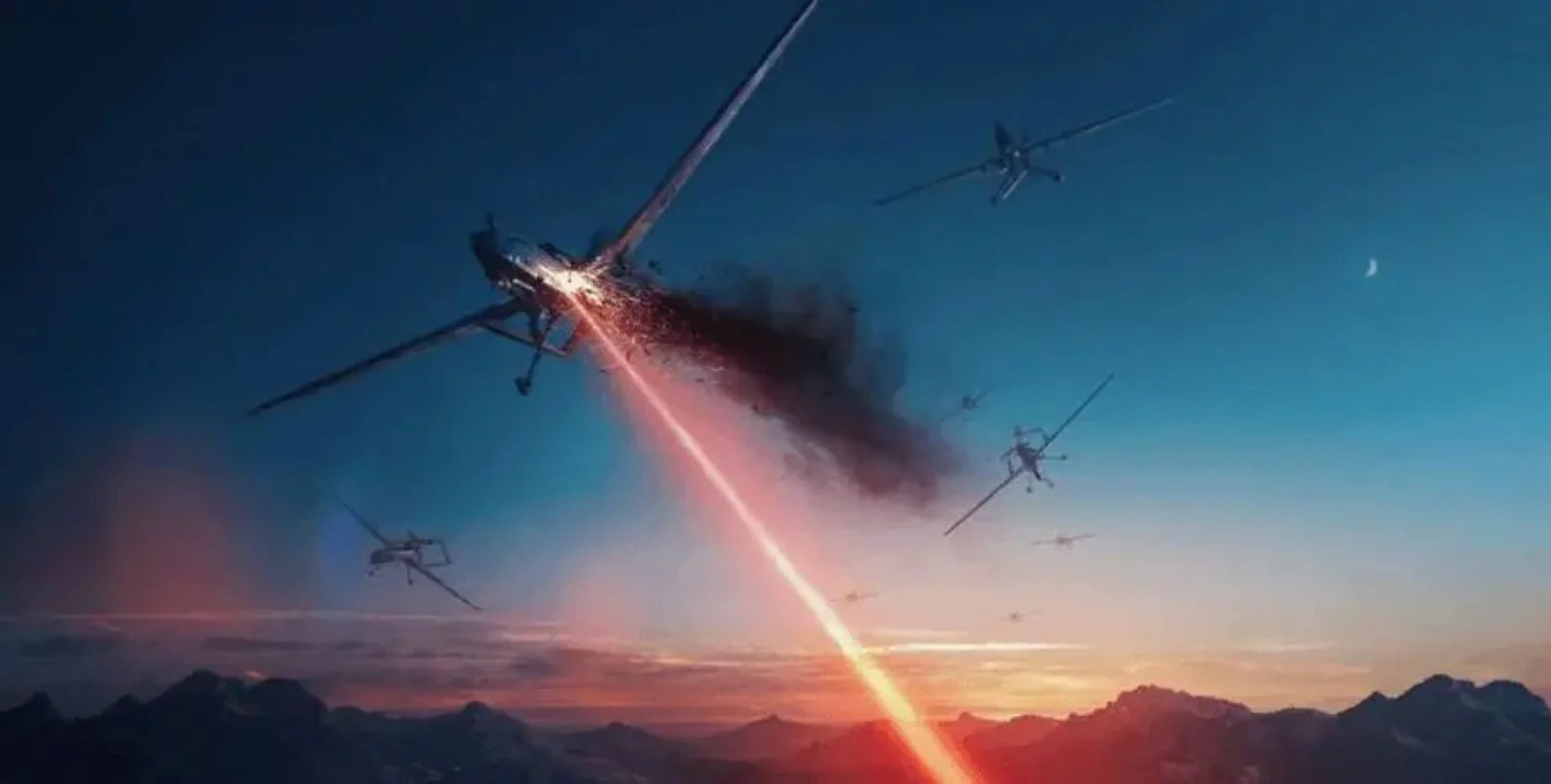
Ukraine has announced the successful combat use of a domestically developed laser system against a Russian jet-powered drone of the Geran type. The system, known as Blysk, was developed by the Ukrainian company Carmine Sky and deployed to protect critical infrastructure. The reported achievement could mark a significant technological milestone for Ukraine’s defence sector, particularly amid Russia’s increasing use of high-speed attack drones. Nevertheless, the system remains at an experimental stage, and its capabilities and effectiveness under conditions of large-scale aerial attacks require further evaluation.
On 25 November 2026, Serhii Beskrestnov, an adviser to the President of Ukraine on defence technology, known by the callsign Flash, announced the successful interception of a Russian jet-powered drone using the Blysk laser system. According to him, the installation, developed by Carmine Sky, was deployed to protect a critical infrastructure facility. The Ukrainian side described the incident as the first confirmed case of a jet-powered attack drone being destroyed by a combat laser.
The use of the new technology was also confirmed by Brave1, Ukraine’s defence technology cluster. According to the information released, the laser installation was operated by a private air defence unit as part of a government programme aimed at developing non-state air defence capabilities. However, the specific location and exact time of the interception have not been publicly disclosed.
The technical specifications of Blysk indicate an output power of approximately 4 kW and a stated engagement range of up to one kilometre against aerial targets. The operating principle of such systems is based on directing a concentrated energy beam at a specific section of a drone’s fuselage or structural components for a sustained period. The resulting heat can damage the external structure, internal components and control systems, potentially disabling the aircraft and preventing it from continuing its flight.
 Ukraine’s Blysk Laser Air Defence System
The development is particularly significant in the context of the changing nature of Russian aerial attacks. In recent months, Russia has increasingly employed jet-powered variants of the Geran family of attack drones, which operate at higher speeds than conventional piston-engine models. This reduces the response time available to Ukrainian air defence units and makes interception more challenging for mobile fire groups and certain types of interceptor drones.
Under these circumstances, laser technologies are being considered by Kyiv as an additional means of countering the growing drone threat. One of the potential advantages of such systems is the relatively low cost of each engagement compared with the use of surface-to-air missiles. Provided that a reliable power supply is available, a laser installation can engage targets without expending conventional ammunition. This is particularly important for Ukraine amid the high intensity of aerial attacks and the limited availability of expensive air defence interceptors.
Nevertheless, the deployment of laser weapons involves significant technical limitations. The effectiveness of an energy beam depends on weather conditions, atmospheric clarity, cloud cover and fog. Another challenge is the need to accurately track a moving target and maintain the laser beam on a specific section of the drone. Faster jet-powered platforms place additional demands on detection, targeting and automated tracking systems.
The Ukrainian side does not yet consider Blysk a weapons system ready for mass production. Representatives of Brave1 emphasise that a successful initial interception does not necessarily indicate that the technology has reached the required level of maturity. Testing is ongoing, while laser installations are being used to protect critical infrastructure under operational conditions. According to available reports, several Ukrainian technology teams are also working on the development of similar solutions.
The development of Blysk is being pursued within the framework of the government’s Private Air Defence programme, with support from the Brave1 defence technology cluster. This model involves engaging private companies in the development of additional air defence capabilities under the operational coordination of the Ukrainian Air Force. Such an approach allows Ukraine to expand its air defence technology base through cooperation between government institutions, defence companies and the private sector.
According to the CCBS assessment, the successful deployment of the Blysk laser system against a jet-powered drone demonstrates Ukraine’s efforts to diversify its air defence capabilities and reduce its dependence on expensive missile interceptors. Such technologies could offer particular advantages in protecting energy facilities, industrial enterprises, transport hubs and other critical infrastructure regularly targeted by drone attacks.
Nevertheless, it is too early to conclude that a fully developed new capability within Ukraine’s air defence system has emerged. A single successful interception is insufficient to assess the system’s reliability under conditions of mass drone attacks, its effectiveness against different types of aerial targets or its ability to operate in adverse weather conditions. Before becoming a viable military capability, the technology will need to demonstrate reliability, maintain a stable power supply and be integrated into the broader air defence detection and command-and-control network.
In the broader military-technological context, the development of Blysk reflects a growing trend towards alternative methods of countering unmanned aerial systems. Laser weapons have the potential to change the economics of air defence by significantly reducing the cost of engaging individual aerial targets. However, their deployment is unlikely to completely replace conventional missile- and artillery-based air defence systems.


 Latest news
Ukraine Deploys Laser Weapon against Russian Jet-Powered Drone for the First Time: a New Stage in Air Defence Development
28.Nov.2026
Ukraine Proposes Black Sea Ceasefire: Maritime Security Becomes Part of Diplomatic Negotiations
28.Nov.2026
EU Accelerates Defence Readiness 2030: Brussels Seeks to Remove Obstacles to Military Mobility
27.Nov.2026
Bulgaria Intercepts Boat Carrying 35 Migrants in the Black Sea
27.Nov.2026
Pro-European Protests Continue in Georgia as Opposition Calls for Large-Scale March in Tbilisi on November 28
27.Nov.2026
Bulgaria Strengthens Its Air Defence: Sofia to Acquire Five Additional IRIS-T SLM Systems for €925.9 Million
26.Nov.2026
Armenia Seeks to Assume Full Responsibility for Border Security as Yerevan Strengthens National Sovereignty
26.Nov.2026
Russian State Duma Approves Increase in Defence Spending for 2027: One in Every Three Rubles to Go Towards the War
25.Nov.2026
Armenia Revises Its Constitution: Pashinyan Proposes a New Stage of State Development and a Peace Agenda
25.Nov.2026
EU Presents 22nd Sanctions Package Against Russia: Restrictions to Target Banks, Shadow Fleet and Participation in European Sports
24.Nov.2026
Latvia and Armenia: Cautious Support for a European Path
24.Nov.2026
Two Commercial Vessels Attacked in the Black Sea off Bulgaria
23.Nov.2026
EU Allocates Another €1 Billion to Ukraine: European Military Support Takes on a Long-Term Dimension
22.Nov.2026
Europe Prepares a Military Mission for Ukraine: 2800 Troops Rehearse Post-War Deployment Scenarios
21.Nov.2026
Russian Missiles and a Drone Fall on Polish Territory: NATO Faces New Threats on Its Eastern Flank
21.Nov.2026