
 13 Oct 2026









Commissioner: EU-Azerbaijan talks on trade chapter of new agreement are very advanced
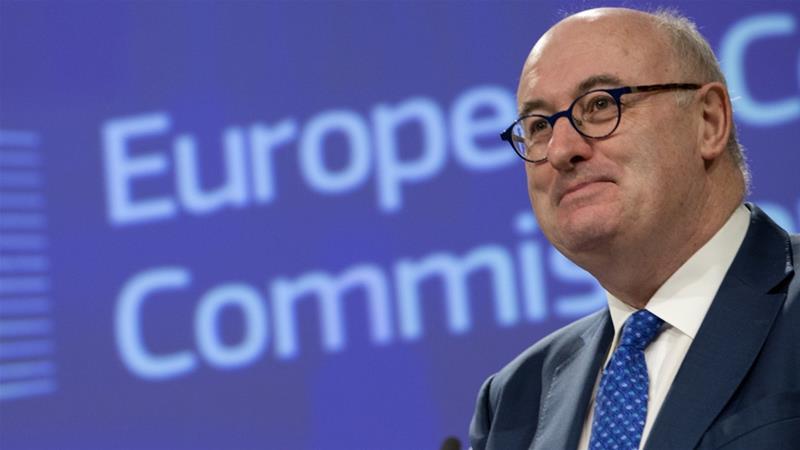
The negotiations between the European Union (EU) and Azerbaijan on the trade chapter of the new partnership agreement are very advanced, EU Commissioner for Trade Phil Hogan told Trend.
"EU-Azerbaijan trade relations are based on a Partnership and Cooperation Agreement which has been in force since 1999. The EU and Azerbaijan launched negotiations for a new comprehensive agreement in February 2017. The negotiations include talks to enhance the EU-Azerbaijan trade cooperation. After 7 trade rounds, the negotiations of the trade title of the new Agreement, including also a chapter on trade and sustainable development as well as on energy and raw materials, are now very advanced. The aim is to further expand EU-Azerbaijan trade relations and to support Azerbaijan's future WTO membership," he said.
The commissioner noted that in the EU, Member States are responsible for trade promotions in countries outside the EU.
"As the Commission we provide tools for importers and exporters to make it easier for them to do trade between the two sides. These are the Trade Helpdesk (for exporters into the EU) and the Market Access Database (for exporters from the EU to third countries)," added Hogan.
The European Council adopted a mandate for the European Commission and the high representative for foreign affairs and security policy to negotiate, on behalf of the EU and its member states, a comprehensive agreement with Azerbaijan in November 2016.
The new agreement should replace the 1996 partnership and cooperation agreement and should better take account of the shared objectives and challenges the EU and Azerbaijan face today.
The agreement will follow the principles endorsed in the 2015 review of the European Neighborhood Policy and offer a renewed basis for political dialogue and mutually beneficial cooperation between the EU and Azerbaijan.
Currently, bilateral relations between the EU and Azerbaijan are regulated on the basis of an agreement on partnership and cooperation that was signed in 1996 and entered into force in 1999.


 Latest news
Latest news
Latest newsGeorgia’s Constitutional Court Continues Case on Banning Opposition Parties: Political Pluralism at Stake
12.Oct.2026
Azerbaijan and Iran Step Up Security Contacts Amid Hijab Protests
12.Oct.2026
Personnel Shortages Complicate Ukrainian Forces’ Rotation: Ukraine Faces Long-Term Challenges on the Front Line
11.Oct.2026
Trump Eases Sanctions on Russian Fuel After Talks with Putin: Kyiv Fears Boost to Moscow’s War Revenues
10.Oct.2026
Putin Seeks to Strengthen Russia’s Influence in the Post-Soviet Space Through the CIS
10.Oct.2026
Russia and the South Caucasus: External Pressure, Political Competition and a Crisis of Trust
10.Oct.2026
Peaceful Settlement Between Armenia and Azerbaijan: Moving from Declarations to Implementation
10.Oct.2026
Moldova Ready to Accept as Many Ukrainians as Necessary if Situation Worsens This Winter
09.Oct.2026
Turkmenistan Turns Avaza into a Regional Diplomatic Hub as Caspian, Central Asian and CIS Agendas Converge
08.Oct.2026
Romania Scrambles Spanish F-18s After Aerial Targets Detected Near Ukrainian Border
07.Oct.2026
Berlin Deepens Defence Partnership with Kyiv: Germany to Provide Ukraine with €1 Billion in Military Aid
07.Oct.2026
European Parliament Against Georgian Dream: EU Prepares New Response to Tbilisi
06.Oct.2026
Bulgarian Foreign Minister to Discuss European Security and International Law in the Netherlands
05.Oct.2026
Rheinmetall in Bulgaria: Sofia Emerges as a New NATO Defence-Industrial Hub in the Balkans
05.Oct.2026
The Cost of a Long War: Moscow Expands Spending Plans Through 2029
05.Oct.2026