
 13 Oct 2026









Cavusoglu: opportunities emerge to ensure lasting peace in Karabakh
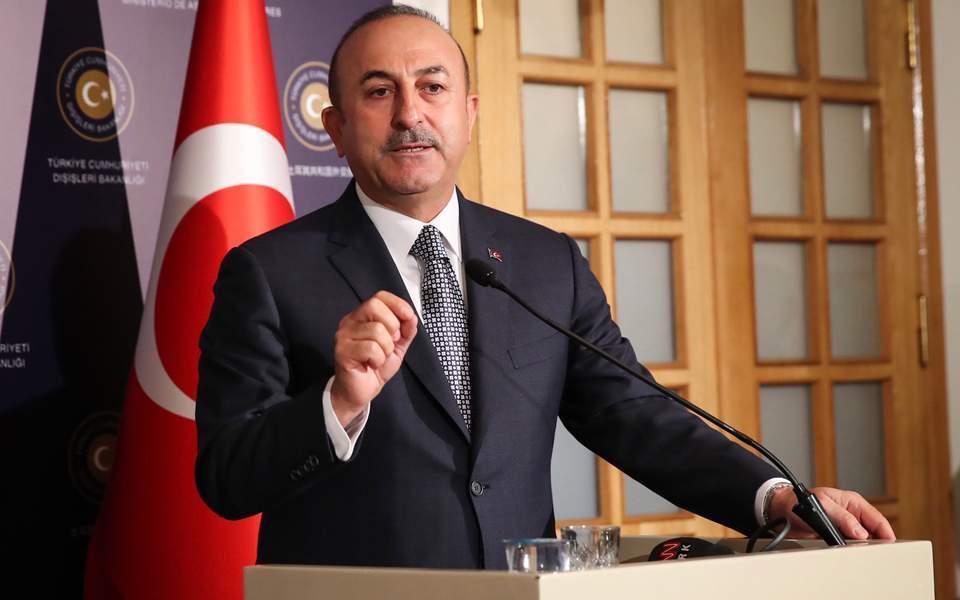
The cause of the Armenia-Azerbaijan Nagorno-Karabakh conflict was the occupation of the territory of one country by other country, its open violation of international law, Turkish Foreign Minister Mevlut Cavusoglu said in an interview with local media.
"Despite all Armenia’s attacks, Azerbaijan eventually regained control over its occupied territories," Cavusoglu said.
"The conflict ended 44 days after its aggravation as a result of signing of a joint statement on ceasefire and cessation of all hostilities in the Nagorno-Karabakh region dated November 9, 2020,” the foreign minister added. “The statement first of all emphasizes the belonging of Nagorno-Karabakh region to Azerbaijan. The document reflects the views and proposals of the OSCE Minsk Group. It can still play a role in this process. The OSCE Minsk Group co-chairmen must be more constructive and learn from their past activity.”
The minister added that great opportunities have emerged to ensure lasting peace in the region.
"In response to Azerbaijan's invitation, we will continue to work to enforce the ceasefire regime and carry out reconstruction work. We have established a joint ceasefire monitoring center with Russia. The ceasefire is extremely important and it must be observed," the diplonat concluded.


 Latest news
Latest news
Latest newsInflation in Romania Accelerates to 6.61%: Rising Prices Increase Pressure on Households and the Economy
13.Oct.2026
Can Europe Protect the International Criminal Court from Trump’s Sanctions?
13.Oct.2026
Georgia’s Constitutional Court Continues Case on Banning Opposition Parties: Political Pluralism at Stake
12.Oct.2026
Azerbaijan and Iran Step Up Security Contacts Amid Hijab Protests
12.Oct.2026
Personnel Shortages Complicate Ukrainian Forces’ Rotation: Ukraine Faces Long-Term Challenges on the Front Line
11.Oct.2026
Trump Eases Sanctions on Russian Fuel After Talks with Putin: Kyiv Fears Boost to Moscow’s War Revenues
10.Oct.2026
Putin Seeks to Strengthen Russia’s Influence in the Post-Soviet Space Through the CIS
10.Oct.2026
Russia and the South Caucasus: External Pressure, Political Competition and a Crisis of Trust
10.Oct.2026
Peaceful Settlement Between Armenia and Azerbaijan: Moving from Declarations to Implementation
10.Oct.2026
Moldova Ready to Accept as Many Ukrainians as Necessary if Situation Worsens This Winter
09.Oct.2026
Turkmenistan Turns Avaza into a Regional Diplomatic Hub as Caspian, Central Asian and CIS Agendas Converge
08.Oct.2026
Romania Scrambles Spanish F-18s After Aerial Targets Detected Near Ukrainian Border
07.Oct.2026
Berlin Deepens Defence Partnership with Kyiv: Germany to Provide Ukraine with €1 Billion in Military Aid
07.Oct.2026
European Parliament Against Georgian Dream: EU Prepares New Response to Tbilisi
06.Oct.2026
Bulgarian Foreign Minister to Discuss European Security and International Law in the Netherlands
05.Oct.2026