
 14 Oct 2026









EU, US ambassadors send joint open letter to activists injured during June 2019 anti-occupation protest
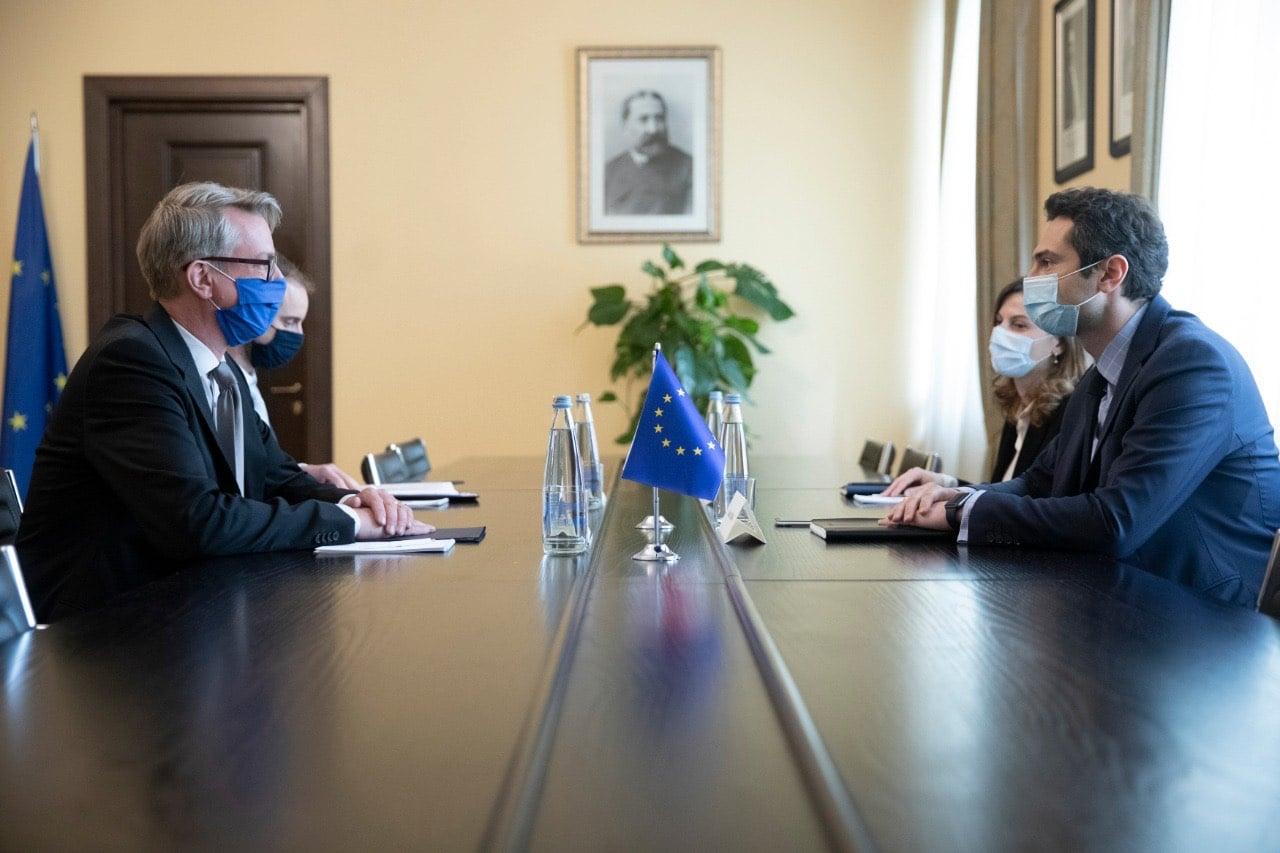
Ambassadors of the European Union and the United States Carl Hartzell and Kelly Degnan have sent a joint letter to the civil activists injured during June 20, 2019.
Hartzell and Degnan say that as Georgia’s partners, they have worked ‘to help end an extended political crisis emanating from the parliamentary elections 2020'.
The 19 April Agreement was a compromise brokered through a challenging mediation process and its contents are fully owned by Georgia’s political leaders. Under its first article, the agreement outlines a commitment to address cases of perceived politicized justice”, the joint statement reads.
Based on this commitment, it is up to the political parties represented in the Parliament to determine the exact modalities of these obligations, including an amnesty law that meets the intended objectives of the Agreement and respects Georgian laws, the European Convention of Human Rights, as well as all other pertinent international conventions to which Georgia is a member”, it also says.
The joint letter of the ambassadors is the response to the civil activists who have addressed Hartzell and Degnan on May 14 requesting to help the country ‘come out of the political crisis’.
The activists have also expressed their protest to the amnesty bill which aims to pardon ‘all violations and convictions stemming from the 19-21 June 2019 protests’, including the law enforcers who have violated their duties during the June anti-occupation protest.
In their response earlier today, Carl Hartzell and Kelly Degnan also say that ‘in such a polarised environment, an inclusive process in Parliament is needed to foster reforms that will prevent a recurrence of such tragic events and bring greater transparency and accountability’.


 Latest news
Latest news
Latest newsInflation in Romania Accelerates to 6.61%: Rising Prices Increase Pressure on Households and the Economy
13.Oct.2026
Can Europe Protect the International Criminal Court from Trump’s Sanctions?
13.Oct.2026
Georgia’s Constitutional Court Continues Case on Banning Opposition Parties: Political Pluralism at Stake
12.Oct.2026
Azerbaijan and Iran Step Up Security Contacts Amid Hijab Protests
12.Oct.2026
Personnel Shortages Complicate Ukrainian Forces’ Rotation: Ukraine Faces Long-Term Challenges on the Front Line
11.Oct.2026
Trump Eases Sanctions on Russian Fuel After Talks with Putin: Kyiv Fears Boost to Moscow’s War Revenues
10.Oct.2026
Putin Seeks to Strengthen Russia’s Influence in the Post-Soviet Space Through the CIS
10.Oct.2026
Russia and the South Caucasus: External Pressure, Political Competition and a Crisis of Trust
10.Oct.2026
Peaceful Settlement Between Armenia and Azerbaijan: Moving from Declarations to Implementation
10.Oct.2026
Moldova Ready to Accept as Many Ukrainians as Necessary if Situation Worsens This Winter
09.Oct.2026
Turkmenistan Turns Avaza into a Regional Diplomatic Hub as Caspian, Central Asian and CIS Agendas Converge
08.Oct.2026
Romania Scrambles Spanish F-18s After Aerial Targets Detected Near Ukrainian Border
07.Oct.2026
Berlin Deepens Defence Partnership with Kyiv: Germany to Provide Ukraine with €1 Billion in Military Aid
07.Oct.2026
European Parliament Against Georgian Dream: EU Prepares New Response to Tbilisi
06.Oct.2026
Bulgarian Foreign Minister to Discuss European Security and International Law in the Netherlands
05.Oct.2026