
 07 Nov 2026









Israel says ready to cooperate with Turkey on east Med gas
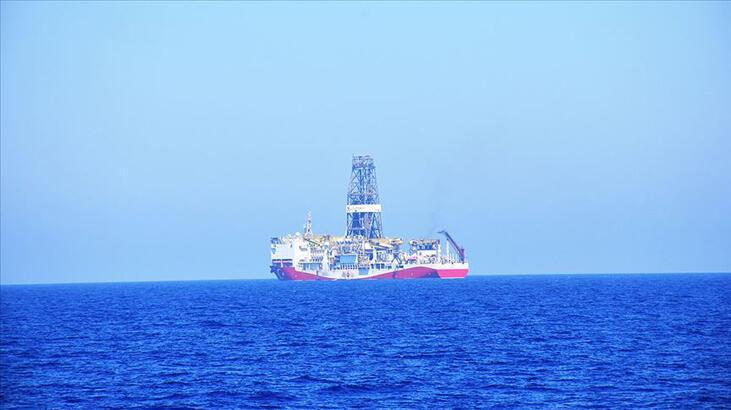
Israel's energy minister said on March 9 that Tel Aviv is ready to cooperate with Turkey on natural gas in the Eastern Mediterranean.
Yuval Steinitz was speaking to the press about the Eastern Natural Gas Pipeline (EastMed) project during a visit to the Greek Cypriot administration.
Underlining the importance of the underwater pipeline, which he asserted would be the longest and deepest in the world, Steinitz said he hoped the project would be completed in five years.
He said Israel had previously held talks about exporting gas to Turkey, though this is yet to produce results. He also expressed hope that Ankara could join the Eastern Mediterranean Gas Forum in the future.
EastMed is a 1,900-kilometer (1,180-mile) natural gas pipeline project extending from Israel to Greece and then on to Italy.
Critics have said it will not be possible to fill the pipeline with the current known gas reserves off Israel's Eastern Mediterranean coast and that even if Egypt is added to the project, the project's feasibility banks on potential new discoveries of reserves in the region.
Offshore gas dispute settling framework
Meanwhile, the Greek Cypriot administration and Israel reached an agreement to begin negotiations on the commercial use of the disputed gas reserves straddling their maritime border in the Eastern Mediterranean, according to local news reports.
An agreement was reached between the sides after a nine-year dispute on the grounds that the border of Israel's Yishai gas field coincides with the border of the Aphrodite gas field located in the parcels unilaterally announced by the Greek Cypriot administration.
The agreement was announced by Natasa Pilides, energy minister of the Greek Cypriot administration, and Steinitz.
Pilides said an important step was taken to resolve the nine-year deadlock regarding resources in the open seas.
Noting that they agreed on a framework to solve the problem during Steinitz's visit, Pilides said the guidelines will be conveyed to the companies involved in the project.
"The framework will be set out in a joint letter which is being prepared. We are both very satisfied we are now at this point after nine years of discussion," she told reporters.
Steinitz arrived in the Greek Cypriot administration on Monday and attended the signing ceremony of an agreement to link the electricity grids of the two countries as well as Greece.


 Latest news
Bulgaria Presents Draft 2027 State Budget: Increased Pensions and Investment in Development
07.Nov.2026
Russian Gerbera-2 Drone Discovered and Destroyed on Bulgaria’s Black Sea Coast
07.Nov.2026
Sofia and Washington Discuss Black Sea Security and the Future of Europe's Security Architecture
07.Nov.2026
Green Energy Corridor: a Strategic Opportunity or an Overly Costly Project?
07.Nov.2026
Kremlin Calls for European Involvement in Security Talks without Offering a Concrete Framework
06.Nov.2026
The Caspian Bridge between Azerbaijan and Kazakhstan: Ambitious Plans without Guarantees of Implementation
05.Nov.2026
Armenia Outlines Prospects for Applying for EU Membership in 2027–2028
04.Nov.2026
Moscow Seeks to Maintain Its Influence in the South Caucasus through the “3+3” Format
03.Nov.2026
Kazakhstan Resumes Oil Transit through Russia after Drone Attack
03.Nov.2026
Iliana Yotova's Victory Strengthens Political Stability and Bulgaria's Position in the Black Sea Region
02.Nov.2026
France Expands Military Surveillance Activities in the Black Sea: Romania Gains Strategic Importance
01.Nov.2026
Georgia Brings Black Sea Security to the UN Security Council Agenda
01.Nov.2026
Ukrainian Drone Attacks on Russian Oil Refineries: Russia’s Energy Infrastructure Faces Growing Risks
31.Oct.2026
Who will Pay to Protect Nature? A Council of Europe Expert’s Perspective
31.Oct.2026
OTS Expands Its Defence Agenda: Ankara’s Initiative Raises Questions About the Militarisation of the Organisation
31.Oct.2026