
 24 Jun 2026









Parliamentary Elections 2026 in Armenia as a Geopolitical Referendum
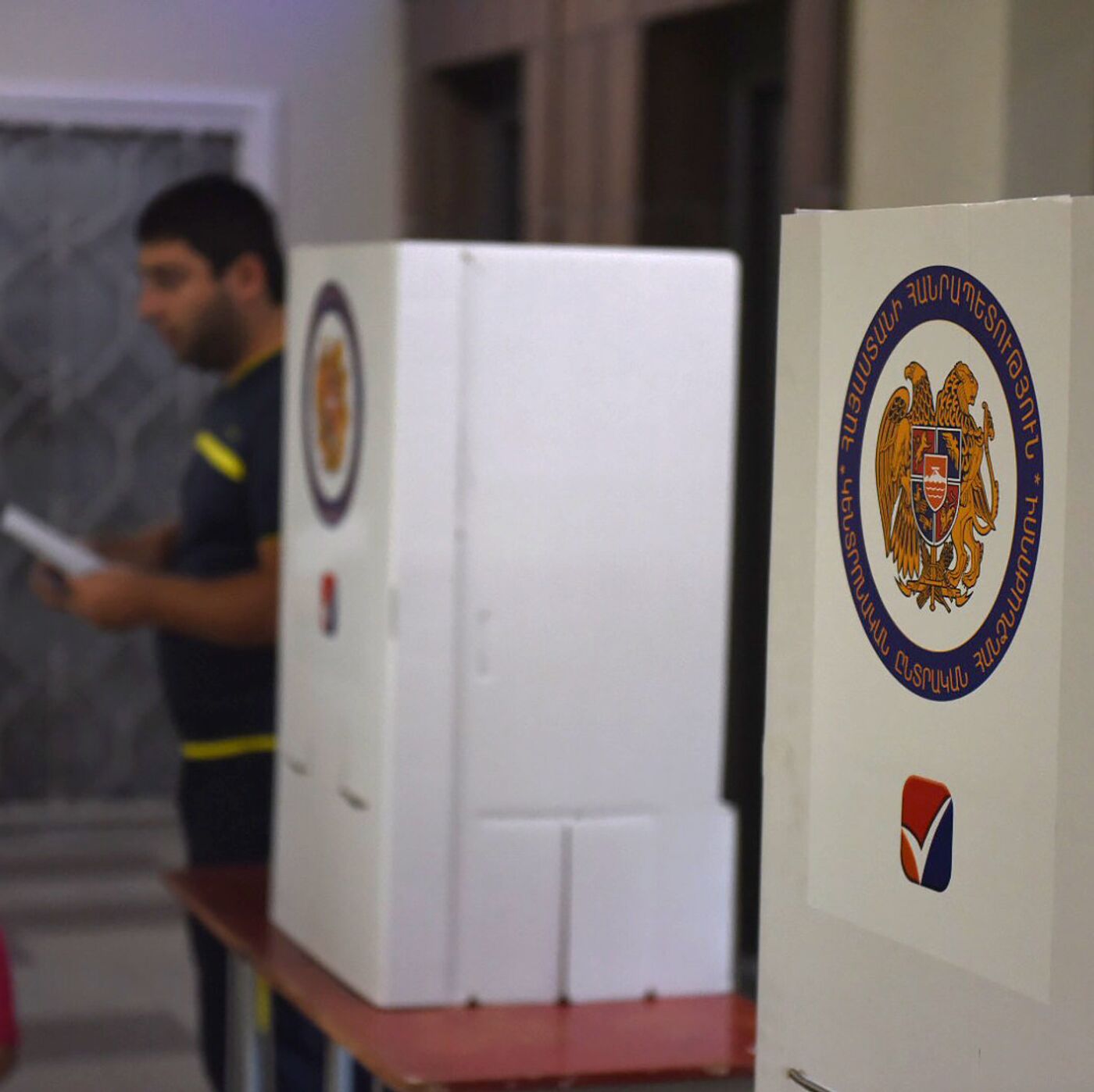
In the summer of 2026, Armenia
is expected to hold parliamentary elections that are no longer merely a
domestic political event but are turning into a battleground of external
interests and competing visions for the country’s future. In essence, these
elections are becoming a referendum on Armenia’s foreign policy orientation:
whether it will continue deepening cooperation with the West or attempt to
return to Russia’s sphere of influence.
Armenia,
having endured the devastating 44-day war and the forced displacement of the
population of Nagorno-Karabakh, has remained in a state of permanent turbulence
over the past five years. Azerbaijani military attacks on its sovereign
territory, a security system crisis, attempts at internal destabilization, and
the loss of trust in traditional allies have generated profound public
disillusionment — both with the government and the opposition.
According
to a survey conducted by the International Republican Institute (IRI) between
June 16 and 25, 2025, Prime Minister Nikol Pashinyan holds the highest trust
rating at 13%. Compared to the previous IRI survey, his rating has decreased by
three percentage points — from 16% in 2024. Approximately 1,500 Armenian
citizens participated in the poll.
The
survey data show that Foreign Minister Ararat Mirzoyan ranks second with 5%,
while former President Robert Kocharyan is in third place. As of June,
Kocharyan’s rating stands at 4%, compared to 2% recorded in September of the
previous year.
It is
also noteworthy that at the time of the survey, the leader of the “Mer Dzrevov”
(“In Our Own Way”) movement, Russian-Armenian billionaire Samvel Karapetyan,
had not yet announced his political participation, and his name was not
included among the respondents’ options.
At the
same time, 61% of respondents stated that they trust none of the political
leaders. The survey also revealed signs of growing political apathy among young
people: 37% of citizens aged 18 to 35 said they would not participate in the
vote.
The
Struggle of External Centers of Influence
The
political field is clearly polarizing. The incumbent authorities are
consistently strengthening ties with the EU, the United States, and other
Western partners, while a significant part of the opposition openly advocates a
“return to Russia” as the sole security guarantee. However, public
disappointment with Russia following the events of 2020–2023 remains extremely
high.
Meanwhile,
Russian and pro-Russian media are actively shaping an alternative narrative,
placing responsibility for all defeats and crises personally on Nikol Pashinyan
— from the lost war to the “loss of Artsakh” and the overall weakening of the
state.
The
thesis that the current government is leading Armenia toward “Turkification”
and the destruction of statehood through normalization with Azerbaijan and
Turkey is being widely circulated. Part of society perceives these claims as
plausible, making the information space particularly vulnerable.
Against
this backdrop, the 2026 elections are increasingly becoming an arena for
competition among external power centers. According to OC Media, citing Russian
sources, the Kremlin plans to allocate around $165 million to strengthen its
“soft power” in CIS countries, especially Armenia, with the process reportedly
coordinated by Sergey Kiriyenko. The strategic objective is to restore lost
influence ahead of the elections.
In
parallel, the European Union has announced €15 million in funding to counter
hybrid threats and protect Armenia’s democratic institutions. Thus, this is not
merely a classic electoral competition but a clash between two models of the
country’s future.
Moscow’s
Rhetoric
Between
December 2024 and January 2026, statements by Sergey Lavrov, Vladimir Solovyov,
and Alexander Dugin demonstrate a noticeable evolution in tone — from dissatisfaction
to direct threats, echoing rhetoric previously used regarding Ukraine and
Georgia on the eve of crises.
The
political dimension includes support for pro-Russian networks, opaque
financing, exploitation of the Karabakh tragedy, and attempts to organize
anti-Western street protests. Economic leverage remains a powerful tool as
well: energy dependence, remittances from migrant workers accounting for up to
15–20% of GDP, and potential trade restrictions.
The
information space is saturated with content from Russian media outlets such as
Sputnik Armenia and RT, as well as local pro-Russian channels. Bots and trolls
are actively used. The most widespread fakes include claims that Pashinyan is a
“traitor” and a “Western agent”, that the EU will “abandon Armenia,” and that
the EU monitoring mission consists of “spies and agents of influence”.
From
2023 to 2026, a series of cyberattacks targeting Armenian government and media
resources has been recorded. Experts link these attacks to groups associated
with Russian structures, including APT28 and APT29.
The
Western Response
In
contrast to Russia’s $165 million, the EU will provide €15 million to combat
hybrid attacks in Armenia. These funds are intended for demining training,
confidence-building in the region, and, most importantly, identifying,
analyzing, and responding to foreign interference.
EU
foreign policy chief Kaja Kallas stated that the EU would assist Armenia in
countering “harmful foreign interference” during the 2026 parliamentary
elections, as it did in Moldova. These remarks triggered an angry response from
Lavrov, who claimed that the Moldovan scenario involved “gross falsifications
at diaspora polling stations.”
Western
assistance includes OSCE/ODIHR observer missions, cybersecurity technical support,
media literacy programs, and fact-checking initiatives. However, the scale of
this support is significantly smaller than the resources Russia is prepared to
allocate to maintain its influence.
Expert
Opinions
Political
scientist Stepan Safaryan believes that the main outcome of the elections will
be the determination of Armenia’s geopolitical trajectory. “Russia’s interest
in this issue is growing by the day. Since its security leverage over Armenia
has weakened and there are currently no border attacks from Azerbaijan, hybrid
threats have intensified and will continue to intensify”, he notes. According
to him, the government’s response to hybrid attacks and disinformation has
accelerated in recent years.
He
argues that Russia will rely on forces within Armenia capable of preventing a
Western course — both openly pro-Russian and covert actors, including some
nominally pro-Western representatives.
“The
first group openly warns of the dangers of the West and the need to return to
Russia. The leader of this pole is former President Robert Kocharyan, who has
stated that Trump’s path poses a threat to Armenia. There are also forces that
do not openly oppose Western integration but prefer Russia and will do
everything to derail this path. This includes the force associated with Samvel
Karapetyan, who suggests that Russia and China should be involved in Trump’s
route. A third camp consists of pseudo-pro-Western forces that may attempt to
raise noise about election fraud,” Safaryan emphasized.
Political
analyst Hakob Badalyan notes that hybrid attacks and external influence have
accompanied every electoral process in Armenia. “Not only Armenia, but
essentially any state with limited capabilities becomes an object of
competition among major power centers,” he says. According to him, resilience
depends on the quality of elites and institutions — both of which Armenia
lacks, making external influence highly probable.
Warning
from Armenia’s Foreign Intelligence Service
Ahead
of the 2026 parliamentary elections, Armenia’s Foreign Intelligence Service
issued a report warning of intensified hybrid threats and a sharp increase in
external interference in domestic political processes. The document states that
the current year is likely to become a period of informational “preparation”
aimed at artificially imposing a false dilemma of an unavoidable geopolitical
choice on society.
According
to Hovsep Khurshudyan, head of the NGO “Free Citizen,” Russia is the primary
source of these threats. He points to statements by Vladimir Solovyov and
Alexander Dugin, who have suggested that Armenia “cannot be a sovereign state”.
Khurshudyan
believes Moscow is pursuing two objectives: at maximum, to change the
government in Armenia; at minimum, to delegitimize the election results and undermine
Armenia’s relations with the West.
Hidden
Lines of Influence and Pressure Scenarios
The
2026 parliamentary elections increasingly resemble not an ordinary electoral
cycle but a complex political-institutional test intertwining external
influence, elite fragmentation, and a crisis of trust.
Traditional
pro-Russian figures such as Robert Kocharyan and Serzh Sargsyan retain
recognition but struggle to mobilize broad support, as their names are
associated with corruption and past failures. Attempts are underway to
introduce less discredited actors — technocrats, former diplomats, and
second-tier managers — whose rhetoric emphasizes “realism” and “multi-vector
policy” while subtly echoing pro-Russian narratives.
So-called
“sleeper” media resources — regional websites, Telegram channels, YouTube
platforms, and Facebook pages — may be activated for coordinated information
campaigns. Some are registered outside Armenia, complicating oversight.
Beyond
the Karabakh trauma, new emotional triggers are being tested: narratives about
“loss of sovereignty,” demographic decline, youth emigration, rising prices,
and “cultural erosion.” Religious rhetoric has also intensified, portraying the
Church as the “last bastion of the nation”.
Party
financing remains a sensitive issue. Many political forces rely not on
membership fees but on external support, including business networks connected
to Russia. Even with expanded oversight powers granted to anti-corruption
bodies, full transparency over financial flows — including charitable
foundations and affiliated structures — remains difficult to achieve.
Pashinyan’s
Statement on the Church
Prime
Minister Nikol Pashinyan recently stated that there is information suggesting
that shadow funds are entering Armenia through structures of the Armenian
Apostolic Church for political purposes. He sharply criticized the
politicization of the Church, emphasizing the need for financial transparency
and accountability.
Vulnerable
Regions and Institutional Weaknesses
Regions
such as Shirak, Lori, parts of Aragatsotn and Kotayk, as well as border
settlements, are considered particularly vulnerable to manipulation due to
socio-economic challenges and migration patterns.
Delegitimization
Instead of Direct Fraud
The
primary threat is not necessarily ballot manipulation but an information
strategy aimed at undermining trust in the electoral process itself — creating
the perception of a stolen result regardless of the outcome.
The
Street as a Backup Scenario
Post-election
street mobilization is seen as a potential pressure mechanism, framed as a
defense of democracy or a protest against alleged fraud. Unlike previous
cycles, the focus may be on decentralized protest networks rather than a single
charismatic leader.
In sum, Armenia’s 2026 parliamentary elections are unfolding under multiple layers of pressure — external, institutional, and ideological. The contest is not only for power but for competing interpretations of the country’s future, with public trust in democratic procedures becoming the key battleground.
Journalist,
Marine Kharatyan


 Latest news
Latest news
Latest newsUkraine’s Battlefield Experience Opens New Opportunities in Asia’s Drone Market
19.Jun.2026
Azerbaijan’s Oil Trap: Why the Economy Is Standing Still
18.Jun.2026
Motorcycle Noise Seen as Obstacle to Air Defense Operations in Crimea
17.Jun.2026
Rising Wages and Euro Integration: Bulgaria Enters a New Economic Era
17.Jun.2026
Armenia After June 7: Pashinyan Remains in Power, Moscow Unhappy
17.Jun.2026
$300 Billion Deal: Iran Poised to Receive the Largest Investment Package in Modern Middle Eastern History
16.Jun.2026
Infrastructure Pressure: Putin Acknowledges the Economic Impact of Ukrainian Attacks
15.Jun.2026
Kyiv and Moscow Trade Blame After Damage Reported at Kyiv Pechersk Lavra
15.Jun.2026
IMF Raises Georgia’s Economic Growth Forecast to 6.5% for 2026
15.Jun.2026
EU Opens the Door to Ukraine and Moldova as First Membership Talks Begin
14.Jun.2026