
 14 Jul 2026









Iranian President Backs “3+3” Format as a Tool for Caucasus Settlement
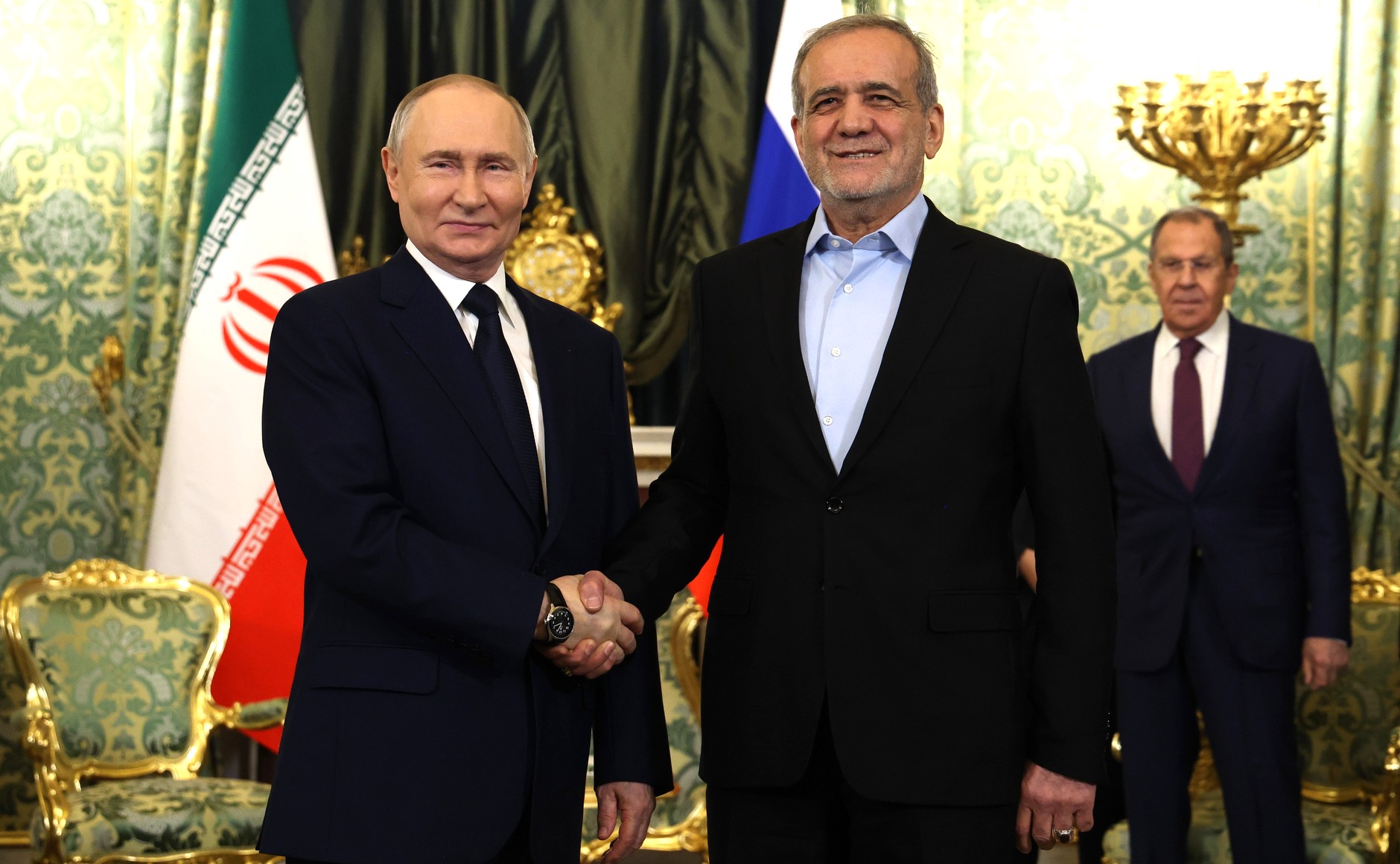
Iranian President Masoud Pezeshkian, in a phone conversation with Vladimir Putin, expressed support for the regional cooperation format “3+3” (Russia, Iran, Turkey + Armenia, Azerbaijan, Georgia). According to the Iranian leader, this mechanism could become “the most effective tool for resolving conflict situations in the South Caucasus.” Later, this position was confirmed by an official representative of the Iranian Foreign Ministry.
The “3+3” format was first proposed in 2020 as an alternative to Western negotiation platforms. Its goal is to resolve crises in the South Caucasus without the involvement of external actors such as the US or the EU. The idea is based on the principle that “regional problems should be solved by regional countries.” However, the initiative was long hindered by Georgia’s reluctance to participate, as Tbilisi refused to engage due to Russia’s occupation of part of its territory.
Pezeshkian’s support signals that Iran intends to strengthen its influence in the region at a time when Armenia and Azerbaijan are only beginning to build a new system of relations following the Washington peace deal.
Thus, Tehran seeks to prevent the South Caucasus from becoming a zone of US or EU dominance. Backing the “3+3” format allows Iran to counter Western initiatives, including the new TRIPP transport corridor project.
For Moscow, “3+3” is a chance to maintain its foothold in a region where its influence has declined noticeably after the 2020 Nagorno-Karabakh war and the Armenia–Azerbaijan agreement brokered by the US. By endorsing this model, which excludes the West, Pezeshkian effectively played into the Kremlin’s hands. Georgia, however, remains skeptical: Tbilisi fears that dialogue “on equal terms” with Moscow could legitimize the loss of Abkhazia and South Ossetia.
Against the backdrop of competing initiatives (TRIPP, the Middle Corridor, Western-led negotiation platforms), “3+3” is turning into a tool of struggle over who sets the rules in the region. For Iran, it is a chance to assert itself as a key player; for Russia, a way to hold on; for Turkey, an opportunity to consolidate its role as a regional leader.
Pezeshkian’s support for the “3+3” format is no accident: Iran aims to seize the initiative in Caucasus politics, limit Western influence, and strengthen its position alongside Turkey and Russia. Yet the project’s success will depend on the willingness of Armenia and Georgia to participate. For now, “3+3” remains less a functioning platform than an instrument of geopolitical competition.


 Latest news
Latest news
Latest newsUS Ready to Lift Sanctions on Turkiye and Restore Its Participation in the F-35 Program
09.Jul.2026
Trump Announces Transfer of License to Ukraine for Patriot Interceptor Missile Production
09.Jul.2026
The NATO Summit in Ankara Marked a New Stage in the Alliance's Transformation
08.Jul.2026
The war in Ukraine - the “liberation of Novorossiya” is a mission impossible
07.Jul.2026
Ursula von der Leyen's Visits to Baku and Yerevan Signal Brussels' New Strategy
07.Jul.2026
Putin's Approval Ratings Decline as Russians Grow Increasingly Concerned About the Economy and the War
06.Jul.2026
Erdogan and Radev Discuss Black Sea Security and Defense Cooperation
06.Jul.2026
OPEC+ Accelerates Output Recovery as Kazakhstan Increases Oil Production from August
05.Jul.2026
Georgia and Uzbekistan Elevate Relations to Strategic Partnership
05.Jul.2026
Iran Turns Khamenei Funeral into a Show of Strength as Week-Long National Mourning Begins
04.Jul.2026