
 24 Jun 2026









The National Security Strategy of Armenia: Analysis of Current Threats and Strategic Approaches
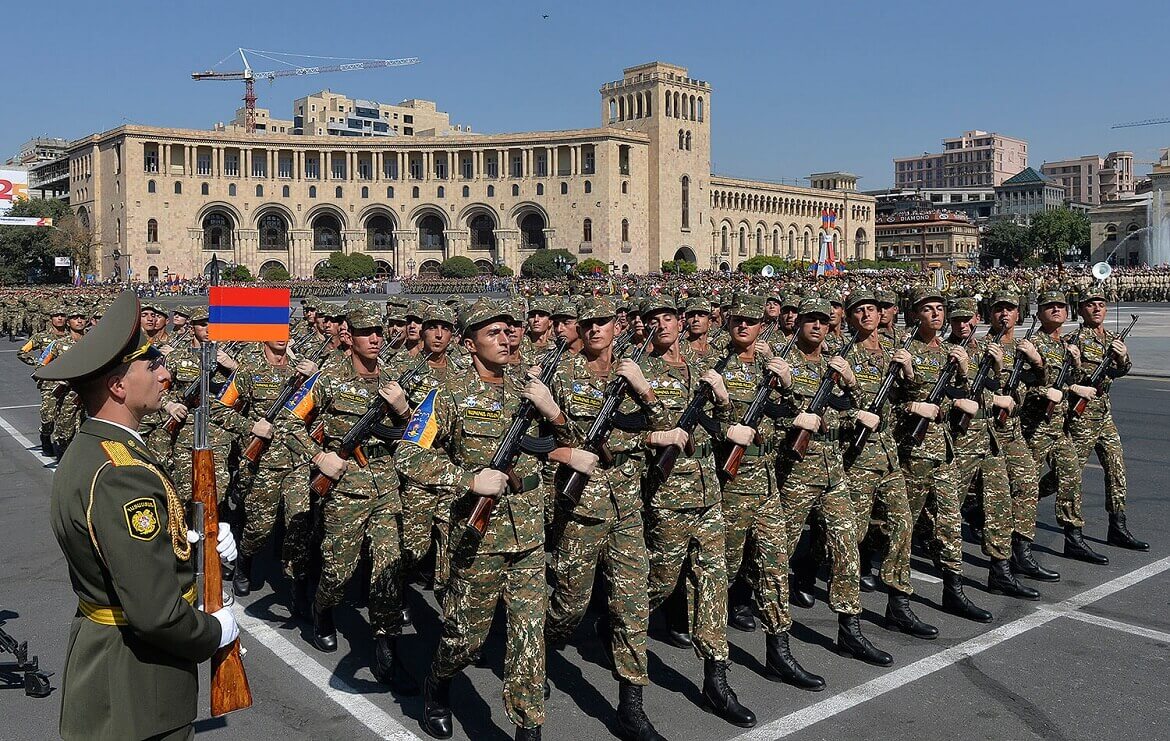
The current state of Armenia’s
national security is quite complex and multi-layered, as the country is
situated in a region where geopolitical challenges and regional conflicts
constantly affect its stability. The Caucasus, as a key strategic point in
Eastern Eurasia, is a unique crossroads of cooperation and contradictions,
involving global and regional actors such as Russia, Turkey, Iran, and
Azerbaijan. The purpose of this analysis is to present Armenia's security
situation by addressing the current threats and the strategic approaches that
must be developed to safeguard the country’s sovereignty and security.
Armenia's national security faces a
range of threats, which can be categorized into military, political, economic,
and social challenges:
1. Military threats are directly
linked to the ongoing tension with Azerbaijan. Azerbaijan, backed by Turkey,
continues to strengthen its military capabilities, which directly threatens
Armenia's territorial integrity.
2. Political threats are driven by
the changing dynamics between regional powers, with contradictions between
Russian and Western interests, as well as possible diplomatic missteps by
Armenia.
3. Social threats are tied to
domestic issues, including economic instability and the potential for political
and popular clashes resulting from public discontent.
4. Economic threats are primarily
related to Armenia’s external trade and energy dependency on Azerbaijan and
Turkey.
The closed borders imposed by
Turkey and Azerbaijan hinder the flow of essential goods and energy resources
into Armenia. Transport routes through Georgia or Iran further extend delivery
times and increase the cost of imports. As a result, Armenia is deprived of
short, cheap, and fast supply options, limiting its connection to foreign
markets and its competitiveness. Turkey and Azerbaijan control the region’s key
transport and energy corridors, including the Baku-Tbilisi-Kars railway and the
TANAP and TAP gas pipelines. This, in turn, severely limits Armenia’s energy
independence, leaving it dependent on Russia and Iran. Georgia, as a crucial
transport corridor, is also subject to economic and political pressures. It
shares open borders with both Turkey and Azerbaijan, meaning that in times of
political change, Georgia can influence Armenia’s situation. As a transit
country, it could be used to restrict Armenia’s economic maneuvering. Turkey and
Azerbaijan also control access to regional markets, which creates trade
pressures on Armenia. Additionally, Turkish goods dominate the local market,
leaving Armenian products at a disadvantage and raising concerns about local
producers' competitiveness. All of this obstructs the country’s economic growth
and development, limiting its opportunities and independence.
Armenia’s national security
strategy must be balanced and long-term. It is essential to respond to these
threats by developing a strategic policy that combines diplomatic and defense
tools. This should include not only the deepening of strategic allied relations
with Russia, but also the promotion of cooperation with other countries,
including Iran, Georgia, and European partners. Additionally, supporting the
South Caucasian countries can help Armenia strengthen its position in the
region. The aim of such a strategy is not only to maintain Armenia as a secure
country within the region but also to garner support from the international
community.
In military and diplomatic
relations, Armenia’s primary strategic ally remains Russia, one of the key
pillars of the country's security. However, as one of the world’s great powers,
Russia is also interested in building strategic relations with Turkey and Azerbaijan,
which can sometimes conflict with Armenia’s security interests. Therefore,
Armenia must develop a flexible diplomatic policy to avoid unilateral
dependence and maintain balance in its foreign relations. A serious diplomatic
strategy is also necessary with Iran, which, in addition to providing economic
support to Armenia, can play a significant role in the region in terms of
balancing power. More specifically, Armenia is an important ally for Russia as
it allows Russia to maintain its military bases in the Caucasus, particularly
in the Armenian city of Gyumri, which is critical to Russia’s strategic
interests. Armenia's geographical location, at the heart of the Caucasus,
allows Russia to maintain a certain degree of control in the region, especially
in terms of countering potential threats from Turkey and Iran, as well as
resisting the expansion of NATO or Turkish influence. For Russia, it is also
important that Armenia continues to remain a friendly ally, especially amidst
tensions with the West and Turkey. Russia is interested in a policy that
prevents Armenia from deepening anti-Russian stances and falling under Western
pressures. Russia also has significant influence in the Middle East,
particularly against the backdrop of Azerbaijan and Turkey’s joint policies,
where Armenia’s position again becomes a crucial strategic factor.
Economically, Russia is an important partner for Armenia, as a large portion of
Armenia’s energy market is under the control of Russian companies. Especially
in the energy sector, Russian investments allow Russia to maintain vital
economic ties with Armenia. Additionally, Russia continues to be Armenia’s main
trade partner, with the Russian market remaining the primary destination for
Armenian exports.
Azerbaijan is also an important
ally of Russia in the Caucasus, but as Armenia’s ally, Russia often finds
itself in conflict with Azerbaijan over the Nagorno-Karabakh issue. At the same
time, however, Russia follows a strategy aimed at maintaining its military
presence in the region, especially in light of Russian-Azerbaijani joint
military exercises. Russia cannot fully control Azerbaijan's military growth
due to Turkey’s influence, which plays an active role in the region. Therefore,
one of Russia's primary political interests is to keep Azerbaijan within its
sphere of influence, regardless of how compatible Azerbaijan's actions are with
those of Turkey. Azerbaijan’s independent oil and gas resources allow it to
pursue energy policies between the Caucasus and Europe, bypassing Russia's
monopoly. However, economic competition, particularly in the energy sector,
could create political tensions between both Russia and Azerbaijan, as well as
between Russia and Armenia, potentially complicating regional relations.
The joint actions of Turkey and
Azerbaijan are aimed at increasing Turkey’s regional influence in the Caucasus
and the Middle East. Therefore, the strategic alliance between the two
countries is directed at limiting Russian influence in the Caucasus. On the
Nagorno-Karabakh issue, Turkey fully supports Azerbaijan in both the political
and military arenas, making Turkey one of Armenia’s main adversaries. Turkey is
an important trade partner in the region, especially in joint energy and
transport projects with Georgia and Azerbaijan. However, Turkey seeks to
diversify its energy sources by creating a broader network for oil and gas
supply in order to achieve energy independence. In this regard, Turkey's
economic interests clash with those of Armenia and Russia.
Iran has long-standing historical
ties with Armenia within the framework of strategic partnership. Iran's
strategic interests for Armenia include a willingness to counterbalance the
influence of Turkey and Azerbaijan in the region. As Armenia's ally, Iran is
interested in preventing the growing influence of Turkey and Azerbaijan in the
Caucasus. This cooperation creates an opportunity for Iran to use Armenia as a
gateway into the Caucasus, helping to prevent a decline in its influence in the
region. Throughout the region, Iran seeks to maintain its political role while
avoiding the rising influence of the West, particularly the U.S. and Israel.
Armenia, as Iran's only ally in the Caucasus, allows Iran to maintain more
balanced relations by creating a counterweight to Turkey and Azerbaijan, who
are on the opposite side. Iran is also an important economic partner for
Armenia, especially in the energy sector. The two countries share joint energy
projects, including gas exchange and energy dependence. Iran is also interested
in using Armenia as a gateway to European markets, which is mutually beneficial
for both countries.
Georgia is Armenia's strategic
partner, but its strategic interests often also align with the West,
particularly regarding NATO membership and general security policies. In order
to preserve its independence, Georgia actively develops cooperation with the
West, while also avoiding conflicts with Russia by accepting Russian influence
in the region. While Georgia is Armenia's ally, occasional disagreements arise over
foreign policy and security strategies. Armenia maintains positive relations
with Georgia, especially in the face of occasional economic and political
pressures. Georgia is important for Armenia as a transport corridor, and the
two countries share common economic interests, particularly in the energy and
logistics sectors. Georgia also plays a strategic economic role, as it provides
a key export route for Armenia to Europe, acting as the main corridor.
Therefore, Armenia's strategy must take into account the political, military,
economic, and territorial interests of several external players, including
Russia, Azerbaijan, Turkey, Iran, and Georgia. Armenian diplomacy must be
flexible, supporting mutually beneficial relations while also ensuring the necessary
balance for national security.
Thus, Armenia's primary security
threat is the ongoing Nagorno-Karabakh conflict with Azerbaijan. However, this
tension is not limited to military threats alone; it also involves numerous
external actors who influence the nature and strategic direction of the
conflict. In order to achieve peace between Armenia and Azerbaijan, long-term
political compromises must be made, but their relationship is often hindered by
national and regional interests.
Therefore, Armenia's primary focus
must be on improving its armed forces through the integration of modern defense
technologies and enhanced strategic preparedness. Both military and diplomatic
strategies must include strengthening and modernizing Armenia's military
forces, with a focus on the development of air defense systems, cybersecurity,
and microelectronics. The defense policy should be geared towards strategic
deterrence, but also include preparedness to prevent the advance of an
adversary. In this context, Armenia's cooperation with NATO countries is also
crucial, as it could significantly enhance not only diplomatic opportunities
but also the modernization of the defense system.
Among the latest challenges,
Armenia faces hybrid threats related to information warfare and social media.
The information war, no less significant than military actions, involves the
use of media and social networks to influence public opinion. For this reason,
Armenia needs to not only implement strategic defense measures but also
establish integrated information security systems to counter not only military
threats but also manipulative actions conducted by media and news
organizations.
A broader strategy should include
actions to maintain Armenia’s internal stability, including prioritizing economic
and social reforms, which would enable improvements in Armenia’s defense
without internal instability. Domestic injustices, particularly economic
instability and social dissatisfaction, can lead to unhealthy political
situations, which will exacerbate internal security issues.
Thus, Armenia’s national security
strategy should include a balanced foreign policy, military modernization, and
the implementation of internal reforms, so that Armenia can not only
effectively counter external threats but also maintain internal stability and
popular support in the long run.
Journalist,
Adrine Torosyan


 Latest news
Latest news
Latest newsUkraine’s Battlefield Experience Opens New Opportunities in Asia’s Drone Market
19.Jun.2026
Azerbaijan’s Oil Trap: Why the Economy Is Standing Still
18.Jun.2026
Motorcycle Noise Seen as Obstacle to Air Defense Operations in Crimea
17.Jun.2026
Rising Wages and Euro Integration: Bulgaria Enters a New Economic Era
17.Jun.2026
Armenia After June 7: Pashinyan Remains in Power, Moscow Unhappy
17.Jun.2026
$300 Billion Deal: Iran Poised to Receive the Largest Investment Package in Modern Middle Eastern History
16.Jun.2026
Infrastructure Pressure: Putin Acknowledges the Economic Impact of Ukrainian Attacks
15.Jun.2026
Kyiv and Moscow Trade Blame After Damage Reported at Kyiv Pechersk Lavra
15.Jun.2026
IMF Raises Georgia’s Economic Growth Forecast to 6.5% for 2026
15.Jun.2026
EU Opens the Door to Ukraine and Moldova as First Membership Talks Begin
14.Jun.2026