
 14 Jul 2026









Rumen Radev Resigns: A Political Risk Taken for the Country’s Stability
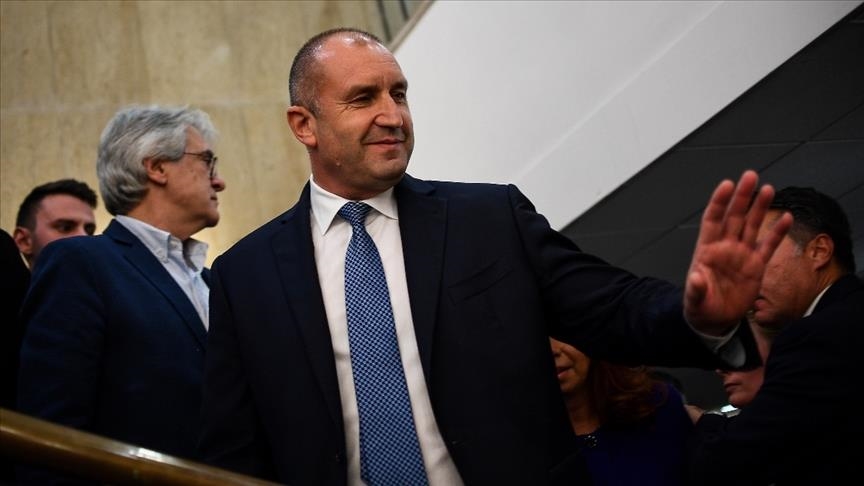
On January 19, 2026, Bulgarian President Rumen Radev resigned, officially announcing his decision and submitting the relevant заявление to the country’s Constitutional Court. In accordance with Bulgaria’s constitutional procedure, it is the Constitutional Court that must confirm the legality of the resignation and its entry into force, after which the mechanism for the temporary transfer of presidential powers is triggered.
It is worth noting that Rumen Radev has held the office of president since 2017 and was re-elected for a second term, remaining one of the most recognizable and influential figures in Bulgarian politics. Throughout his presidency, he repeatedly emerged as a key actor during periods of parliamentary crisis, appointed caretaker governments, and represented the country internationally in the absence of a stable cabinet. His presidency coincided with a period of deep political fragmentation, mass protests, and a series of snap parliamentary elections.
 Bulgarian President Rumen Radev submitted a resignation letter to the Constitutional Court
Contrary to initial impressions, Radev’s resignation may turn out to be not a blow, but an opportunity for Bulgaria — a rare moment when a political crisis opens a window for renewal rather than another dead end. In a country weary of endless elections, caretaker governments, and parties unable to reach agreements, this step appears to be an attempt to move the system out of stagnation.
In recent years, the presidency remained the main pillar of state stability. Radev repeatedly assumed responsibility at moments when parliament and political parties proved incapable of compromise. His decision to step down now can be seen as a deliberate gesture: instead of endlessly patching a broken structure, he is effectively inviting the political class and society to move to the next stage — a more honest and direct conversation about power and responsibility.
The possibility of interim leadership by Vice President Iliana Yotova adds an additional positive dimension to the situation. Her assumption of the role of acting head of state would become an important symbol of Bulgaria’s institutional maturity and a confirmation that the transfer of power is taking place strictly within the constitutional framework, without shocks or the personalization of the state. In times of uncertainty, calm, predictability, and respect for procedure serve the national interest.
Most importantly, Radev’s resignation removes the artificial constraints on his political role. If he chooses to return to active politics not as a non-partisan arbiter but as a leader with a clear program, voters may finally receive what they have long lacked: a clear choice and personal accountability. Instead of blurred coalitions and temporary compromises, a political project focused on stable governance, social cohesion, and the restoration of trust in institutions may emerge.

President Rumen Radev flew on an F-16 fighter jet
For Bulgaria, this represents an opportunity for a reset. Under these conditions, a new electoral cycle ceases to be a mechanical repetition of past mistakes and becomes a chance to form a more stable majority capable not only of winning elections but of governing the country. Even short-term turbulence, in this case, works toward a long-term result — an exit from the chronic crisis of governance.
Ultimately, the significance of this step will be determined not by the resignation itself, but by what follows. If political forces seize the moment for renewal and society is offered clear alternatives and fair competition of programs, Bulgaria may emerge from its prolonged political stagnation stronger, more stable, and more confident in its future.
Expert Group CCBS


 Latest news
Latest news
Latest newsUS Ready to Lift Sanctions on Turkiye and Restore Its Participation in the F-35 Program
09.Jul.2026
Trump Announces Transfer of License to Ukraine for Patriot Interceptor Missile Production
09.Jul.2026
The NATO Summit in Ankara Marked a New Stage in the Alliance's Transformation
08.Jul.2026
The war in Ukraine - the “liberation of Novorossiya” is a mission impossible
07.Jul.2026
Ursula von der Leyen's Visits to Baku and Yerevan Signal Brussels' New Strategy
07.Jul.2026
Putin's Approval Ratings Decline as Russians Grow Increasingly Concerned About the Economy and the War
06.Jul.2026
Erdogan and Radev Discuss Black Sea Security and Defense Cooperation
06.Jul.2026
OPEC+ Accelerates Output Recovery as Kazakhstan Increases Oil Production from August
05.Jul.2026
Georgia and Uzbekistan Elevate Relations to Strategic Partnership
05.Jul.2026
Iran Turns Khamenei Funeral into a Show of Strength as Week-Long National Mourning Begins
04.Jul.2026