
 14 Jul 2026









F‑16 vs F‑35? Why the Alliance Uses Both
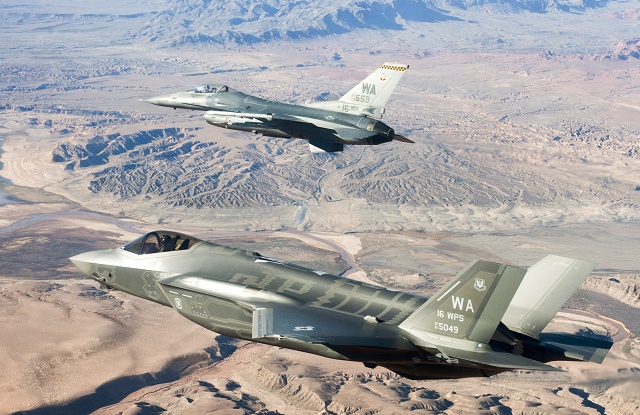
When
discussing the modern air forces of NATO, the debate over which is “better” —
the F-16 or the F-35 — misses the point. These aircraft are not competitors,
but different instruments, each performing a critical function within the same
strategic mission.
The F-16 was born in an era defined by different
priorities: maneuverability, ease of maintenance, reliability, and the ability
to be produced in large numbers. It was an aircraft that pilots could operate
at high intensity, that air bases could support without overly complex
infrastructure, and that coalition forces could sustain logistically across
multiple theaters of operation. It proved remarkably versatile, demonstrating
its effectiveness in numerous conflicts — from Kosovo to Iraq and Syria — and
became almost synonymous with “combat reliability” and day-to-day operational
readiness.
But the world has changed. Modern air warfare is no longer
defined solely by close-range dogfights or high-speed aerial maneuvers. It is,
above all, an information war: who detects first, who processes data faster,
who coordinates actions in real time. This is where the F-35 enters the
picture. It is structured in a fundamentally different way. It resembles less a
traditional fighter and more a high-tech node within an integrated information
network, where the aircraft itself functions as a flying system for collecting,
filtering, and distributing data.
Its stealth capabilities, advanced sensors, and network
interfaces transform it into an asset that enhances not only the pilot’s
situational awareness but that of the entire allied formation. The aircraft can
operate in heavily defended environments with dense air defense systems and
neutralize the most protected targets, reducing risk for the rest of the air
component. Stealth is not simply about invisibility on radar — it is about
controlling the tempo and conditions of engagement when the cost of error is
high.
If described metaphorically, the F-16 represents the
“muscle” of allied aviation, while the F-35 is its “brain.” The scale of F-16
fleets allows sustained pressure on an adversary, continuous air presence, and
a high sortie rate across diverse conditions without excessive expense. Its
relatively economical operation and transparent logistics make it particularly
valuable for nations with limited defense budgets.
The F-35, by contrast, is the instrument for missions where
the stakes are highest: deep strikes into heavily defended territory, suppression
of sophisticated air defense systems, and large-scale intelligence gathering in
support of the entire alliance. The data it generates increases the
effectiveness of all allied forces, not just the aircraft that collected it.
These two concepts complement one another and explain why
the alliance cannot abandon either the “old school” platform or the
cutting-edge technological advantage. A force composed solely of F-35s would
possess extraordinary intelligence capabilities, but high operating costs and
limited fleet size would make sustained, widespread pressure difficult. Relying
only on F-16s would provide numbers and resilience, yet sacrifice the ability
to dominate in the most dangerous environments where modern air defense systems
make traditional operations highly risky.
Current NATO practice reflects this strategic balance: on
the eastern flank, air policing and reconnaissance missions increasingly
involve F-35 deployments — for example, in Poland under continuous readiness
missions — strengthening airspace protection against potential threats from
Russia.
At the same time, countries continue to procure and upgrade F-16 fleets. Their widespread adoption, effective modernization programs, and comparatively straightforward maintenance ensure that they remain an indispensable “workhorse” in both peacetime and conflict.
Looking ahead, NATO’s objective is not to completely replace the F-16 with the F-35, but to integrate the strengths of both platforms in harmony. Where mass, endurance, and persistent presence are required — the F-16 delivers. Where stealth, network integration, and information dominance are decisive — the F-35 takes the lead. Together, they form a balanced air power structure capable of responding to a wide spectrum of threats and preserving strategic superiority in an increasingly complex security environment.


 Latest news
Latest news
Latest newsUS Ready to Lift Sanctions on Turkiye and Restore Its Participation in the F-35 Program
09.Jul.2026
Trump Announces Transfer of License to Ukraine for Patriot Interceptor Missile Production
09.Jul.2026
The NATO Summit in Ankara Marked a New Stage in the Alliance's Transformation
08.Jul.2026
The war in Ukraine - the “liberation of Novorossiya” is a mission impossible
07.Jul.2026
Ursula von der Leyen's Visits to Baku and Yerevan Signal Brussels' New Strategy
07.Jul.2026
Putin's Approval Ratings Decline as Russians Grow Increasingly Concerned About the Economy and the War
06.Jul.2026
Erdogan and Radev Discuss Black Sea Security and Defense Cooperation
06.Jul.2026
OPEC+ Accelerates Output Recovery as Kazakhstan Increases Oil Production from August
05.Jul.2026
Georgia and Uzbekistan Elevate Relations to Strategic Partnership
05.Jul.2026
Iran Turns Khamenei Funeral into a Show of Strength as Week-Long National Mourning Begins
04.Jul.2026