
 26 Jun 2026









Drone Swarms: A New Era of Warfare and Technology
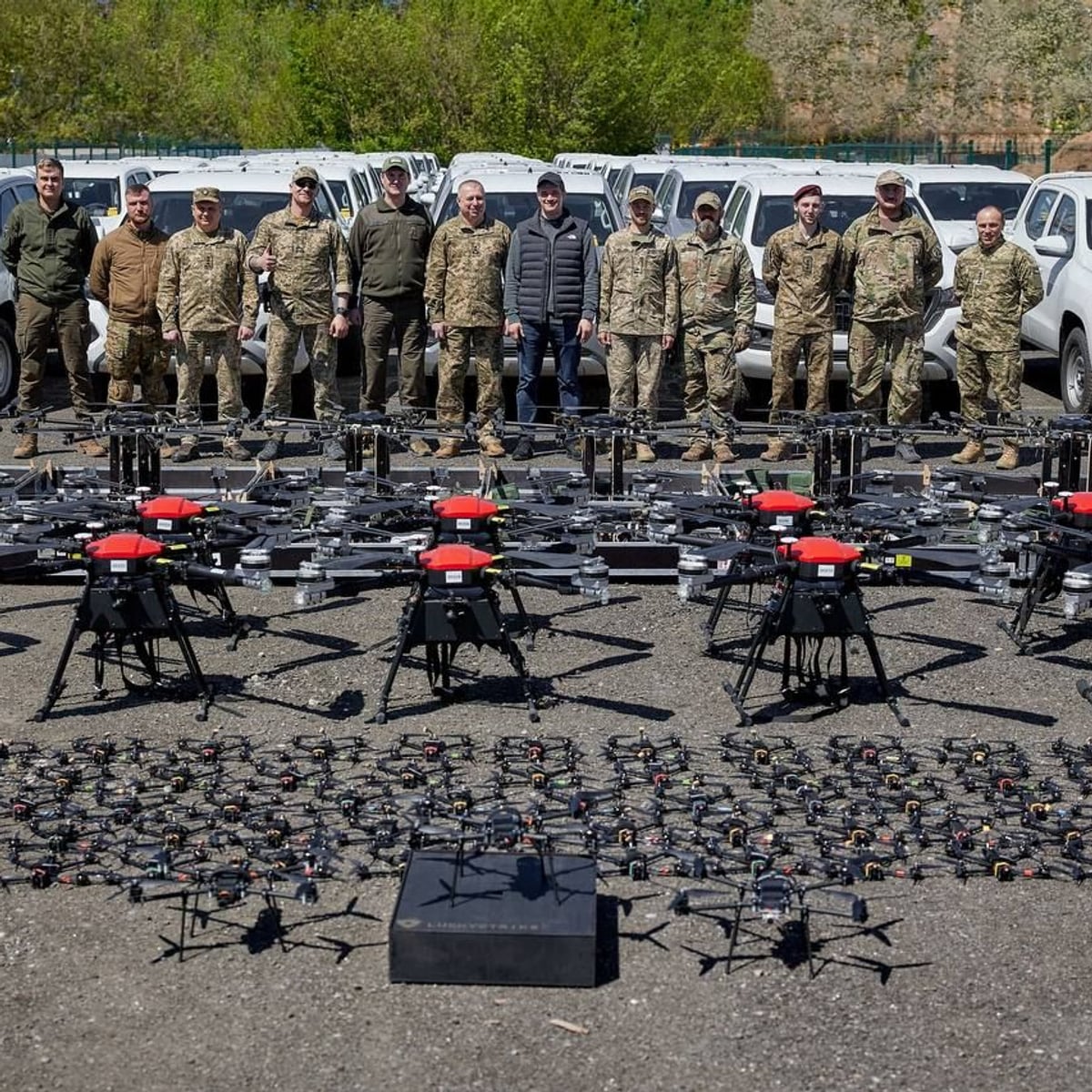
Until recently, unmanned aerial vehicles were primarily viewed as tools for reconnaissance or precision strikes against individual targets. However, advances in electronics, artificial intelligence, communication systems, and computing technologies have led to the emergence of a concept capable of fundamentally changing modern warfare. This concept is known as drone swarms — groups of unmanned aircraft that operate in coordination as a single system.
The principle behind a drone swarm is based on the collective interaction of a large number of aircraft. Each drone performs its own task while simultaneously taking into account the actions of other members of the group. Some drones may conduct reconnaissance and transmit information, others may function as communication relays, some may serve as decoys to distract air defense systems, while others carry out direct attacks on targets. Thanks to this distribution of roles, a swarm can be far more effective than the same number of drones operating independently.
Military interest in this technology is largely driven by its ability to overwhelm air defense systems. Modern air defense networks are designed to detect and engage aircraft, helicopters, and missiles, but they face significant challenges when confronted with dozens or even hundreds of small targets simultaneously. If part of the swarm acts as decoys while another part attacks from different directions and altitudes, the workload placed on both operators and automated defense systems increases dramatically. Under such conditions, the likelihood that at least some drones will penetrate the defenses rises considerably.
Economics also plays a crucial role. Many small drones can be produced at a fraction of the cost of modern interceptor missiles. As a result, defenders may find themselves spending far more resources on protection than attackers spend on the offensive systems. This imbalance has prompted governments and defense industries to seek new countermeasures, including directed-energy weapons, electronic warfare systems, and automated short-range interception technologies.
The development of artificial intelligence provides additional capabilities for drone swarms. Modern algorithms enable drones to recognize objects, select optimal routes, avoid obstacles, and coordinate actions with minimal human intervention. In the future, such systems may be able to redistribute tasks within the swarm in real time. If one drone is lost, its responsibilities could automatically be assigned to other members of the group, allowing the mission to continue with little disruption.
Despite their impressive potential, creating fully functional drone swarms remains a complex engineering challenge. One of the primary difficulties is maintaining reliable communication among large numbers of drones in environments where electronic warfare systems may disrupt or jam signals. Navigation presents another major obstacle, particularly in areas where satellite positioning systems can be denied or manipulated. To address these issues, researchers are developing inertial navigation systems, computer vision technologies, and autonomous terrain-based navigation algorithms.
Today, research into swarm technologies is being conducted in many countries around the world. Military organizations and defense companies regard these systems as one of the most promising directions in the future development of military capabilities. Moreover, the concept extends beyond aerial vehicles. Similar coordination principles are being explored for ground robots, unmanned maritime systems, and even spacecraft. In the long term, this could lead to the emergence of integrated autonomous formations capable of carrying out a wide range of missions with limited human involvement.
At the same time, technological progress has intensified debates about the legal and ethical implications of such systems. Many experts argue that decisions involving the use of lethal force should remain under meaningful human control, even if autonomous systems can operate faster and more efficiently. Questions surrounding accountability, algorithmic reliability, and the prevention of unintended escalation are becoming increasingly important as autonomous technologies continue to advance.
Drone swarms have already moved beyond the realm of science fiction and are gradually becoming one of the defining factors in twenty-first-century military development. Their emergence is reshaping concepts of defense, force organization, and battlefield operations. Like many technological revolutions before them, this transformation is only beginning, but it is already clear that coordinated autonomous systems will play an increasingly significant role in the future of security and defense.


 Latest news
Latest news
Latest newsThe war in Ukraine – Russia is loosing its logistics fleet
21.Jun.2026
Ukraine Brings the War to Moscow: Exchange of Strikes Reshapes the Nature of the Conflict
20.Jun.2026
Satellites, Soldiers, and Sanctions: The Cost of Russia’s Ambitions Is Rising
20.Jun.2026
Ukraine’s Battlefield Experience Opens New Opportunities in Asia’s Drone Market
19.Jun.2026
Azerbaijan’s Oil Trap: Why the Economy Is Standing Still
18.Jun.2026
Motorcycle Noise Seen as Obstacle to Air Defense Operations in Crimea
17.Jun.2026
Rising Wages and Euro Integration: Bulgaria Enters a New Economic Era
17.Jun.2026
Armenia After June 7: Pashinyan Remains in Power, Moscow Unhappy
17.Jun.2026
$300 Billion Deal: Iran Poised to Receive the Largest Investment Package in Modern Middle Eastern History
16.Jun.2026
Infrastructure Pressure: Putin Acknowledges the Economic Impact of Ukrainian Attacks
15.Jun.2026