
 26 Jun 2026









Bucharest Backs Initiative on Possible Unification with Moldova
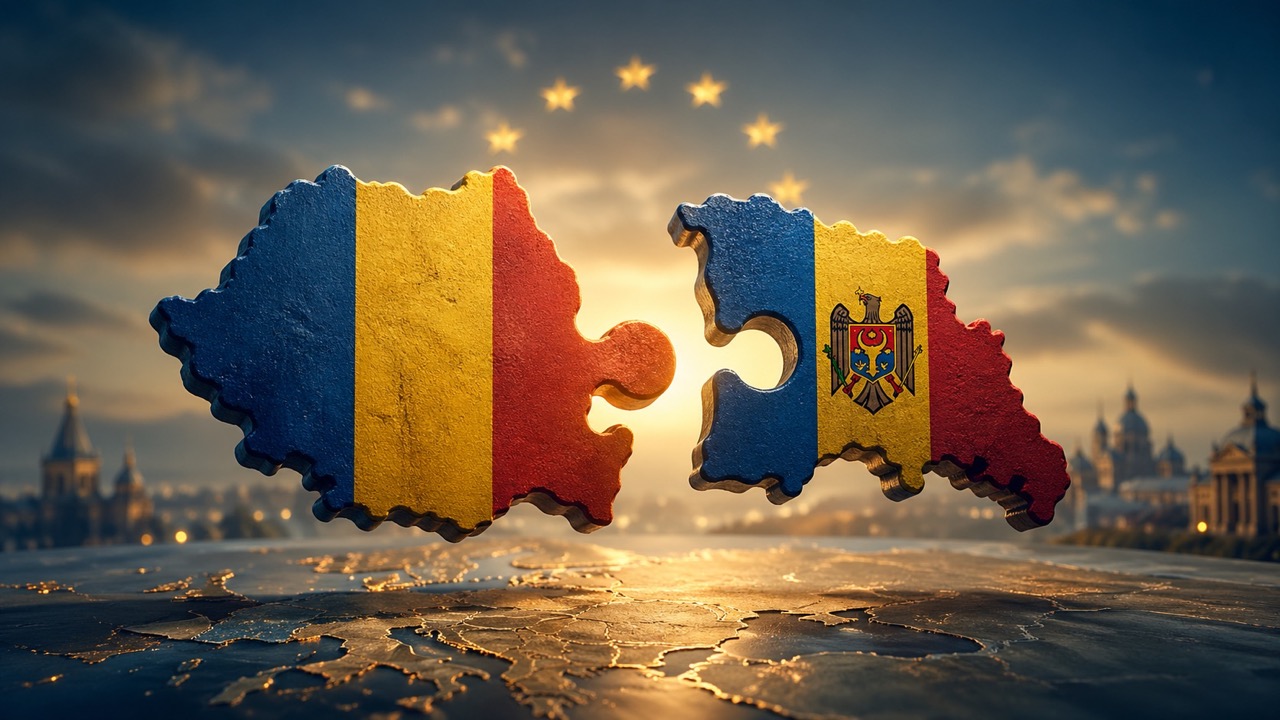
The lower house of Romania’s Parliament has unexpectedly elevated one of the most sensitive issues in contemporary Eastern European politics — the question of unification with Moldova. The Chamber of Deputies effectively approved a draft law that would initiate the process of unification between the two states. However, this was not the result of a formal vote: the bill passed through the procedure known as “tacit approval,” because lawmakers failed to review and reject it within the legally prescribed 45-day period. The initiative has now been forwarded to the Senate, which must make the final decision.
The draft law was introduced by members of the nationalist party S.O.S. România. It proposes that the Romanian Parliament officially declare its intention to pursue unification with the Republic of Moldova and authorize the government to begin negotiations with Chișinău on the mechanisms of possible integration between the two countries. The authors of the bill cite the provisions of the OSCE Helsinki Final Act, which allows for changes to state borders through peaceful and diplomatic means. The text also mentions the need to inform international partners, including the EU, NATO, the UN, and the United States, should the process be launched.
Despite the political impact of the move, it is still far too early to speak of imminent unification. A key detail is that the initiative has not received support from the Romanian government, while the relevant parliamentary committees issued negative opinions on the proposal. For this reason, many experts view the current development more as a political signal than the beginning of a genuine unification process.
Nevertheless, the issue of unification has gained noticeable momentum in recent months. In January, Moldovan President Maia Sandu stated that she would personally support unification with Romania if such a question were put to a referendum. At the same time, she emphasized that there is no official policy aimed at abolishing Moldovan statehood and that the country’s primary objective remains accession to the European Union as an independent state.
Analysts note that the renewed interest in unionism is driven by several factors. First, there is the ongoing war in Ukraine and growing concerns about regional security. Second, Moldova’s accelerated European integration and the gradual convergence of the two countries’ legal, economic, and cultural systems have brought them closer together. In recent years, Chișinău has steadily distanced itself from its Soviet legacy, including abandoning the concept of a separate “Moldovan language” in favor of officially recognizing Romanian as the state language.
However, the main challenge for supporters of unification remains public opinion. While the idea enjoys strong support in Romania, Moldovan society remains divided on the issue. According to recent surveys, supporters of unification still account for less than half of Moldova’s population, while a significant share of citizens prefer the path of EU integration without relinquishing national sovereignty. Therefore, the Romanian Chamber of Deputies’ decision should primarily be viewed as a symbolic political step reflecting changing sentiments across the region. Even if the bill is ultimately rejected by the Senate or never implemented, the very fact that it passed through the lower house demonstrates that the idea of Romanian–Moldovan unification is no longer merely a historical or fringe issue. Increasingly, it is becoming part of mainstream political debate in both Bucharest and Chișinău.


 Latest news
Latest news
Latest newsThe war in Ukraine – Russia is loosing its logistics fleet
21.Jun.2026
Ukraine Brings the War to Moscow: Exchange of Strikes Reshapes the Nature of the Conflict
20.Jun.2026
Satellites, Soldiers, and Sanctions: The Cost of Russia’s Ambitions Is Rising
20.Jun.2026
Ukraine’s Battlefield Experience Opens New Opportunities in Asia’s Drone Market
19.Jun.2026
Azerbaijan’s Oil Trap: Why the Economy Is Standing Still
18.Jun.2026
Motorcycle Noise Seen as Obstacle to Air Defense Operations in Crimea
17.Jun.2026
Rising Wages and Euro Integration: Bulgaria Enters a New Economic Era
17.Jun.2026
Armenia After June 7: Pashinyan Remains in Power, Moscow Unhappy
17.Jun.2026
$300 Billion Deal: Iran Poised to Receive the Largest Investment Package in Modern Middle Eastern History
16.Jun.2026
Infrastructure Pressure: Putin Acknowledges the Economic Impact of Ukrainian Attacks
15.Jun.2026