
 13 Oct 2026









Iran and Armenia Strengthen Strategic Partnership: Focus on the “North–South” Transport Corridor
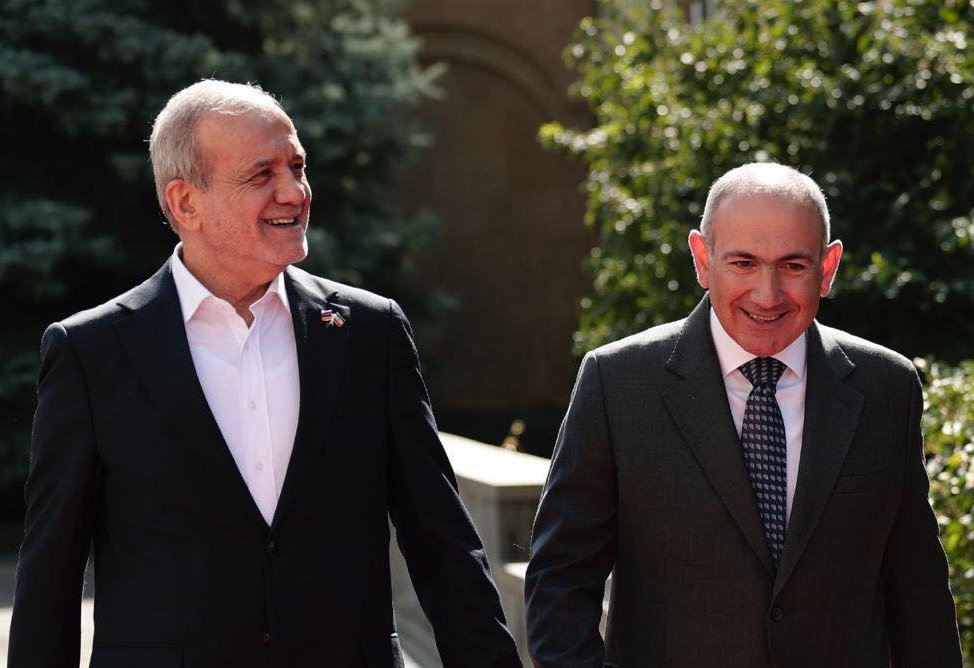
Iranian President Masoud Pezeshkian, during his official visit to Yerevan, described the talks with the Armenian leadership as “productive” and emphasized the importance of strengthening bilateral relations. According to the Iranian leader, Yerevan managed to allay Tehran’s concerns regarding the growing presence of foreign forces in the South Caucasus.
At the same time, Secretary of Iran’s Supreme National Security Council Ali Larijani confirmed that Tehran “strongly rejects the interference of any external players in regional affairs”. He noted that a key area of cooperation with Armenia will be the development of the international transport corridor “North-South”, which will connect the Persian Gulf with the Black Sea.
According to experts, Armenia’s support for this project holds strategic significance for Iran. First and foremost, it will help diversify trade routes and reduce dependence on paths passing through unstable regions. Secondly, Yerevan is becoming an important partner for Tehran amid growing pressure from the United States and the European Union. Finally, Iran seeks to consolidate its role as one of the key guarantors of security in the Caucasus, countering the influence of Turkey and the West.
Analysts note that the rapprochement between Armenia and Iran may become a balancing factor in the context of a changing regional architecture. The peace agreement signed in August between Armenia and Azerbaijan under the auspices of the United States has already set new rules of the game in the region, where Russia’s role has weakened.
Thus, Pezeshkian’s visit to Yerevan was not just a protocol trip, but part of Iran’s broader strategy to strengthen its position in the South Caucasus.


 Latest news
Latest news
Latest newsGeorgia’s Constitutional Court Continues Case on Banning Opposition Parties: Political Pluralism at Stake
12.Oct.2026
Azerbaijan and Iran Step Up Security Contacts Amid Hijab Protests
12.Oct.2026
Personnel Shortages Complicate Ukrainian Forces’ Rotation: Ukraine Faces Long-Term Challenges on the Front Line
11.Oct.2026
Trump Eases Sanctions on Russian Fuel After Talks with Putin: Kyiv Fears Boost to Moscow’s War Revenues
10.Oct.2026
Putin Seeks to Strengthen Russia’s Influence in the Post-Soviet Space Through the CIS
10.Oct.2026
Russia and the South Caucasus: External Pressure, Political Competition and a Crisis of Trust
10.Oct.2026
Peaceful Settlement Between Armenia and Azerbaijan: Moving from Declarations to Implementation
10.Oct.2026
Moldova Ready to Accept as Many Ukrainians as Necessary if Situation Worsens This Winter
09.Oct.2026
Turkmenistan Turns Avaza into a Regional Diplomatic Hub as Caspian, Central Asian and CIS Agendas Converge
08.Oct.2026
Romania Scrambles Spanish F-18s After Aerial Targets Detected Near Ukrainian Border
07.Oct.2026
Berlin Deepens Defence Partnership with Kyiv: Germany to Provide Ukraine with €1 Billion in Military Aid
07.Oct.2026
European Parliament Against Georgian Dream: EU Prepares New Response to Tbilisi
06.Oct.2026
Bulgarian Foreign Minister to Discuss European Security and International Law in the Netherlands
05.Oct.2026
Rheinmetall in Bulgaria: Sofia Emerges as a New NATO Defence-Industrial Hub in the Balkans
05.Oct.2026
The Cost of a Long War: Moscow Expands Spending Plans Through 2029
05.Oct.2026