
 13 Oct 2026









Georgia Rejects OSCE PA Criticism, Calls Resolution Politically Motivated
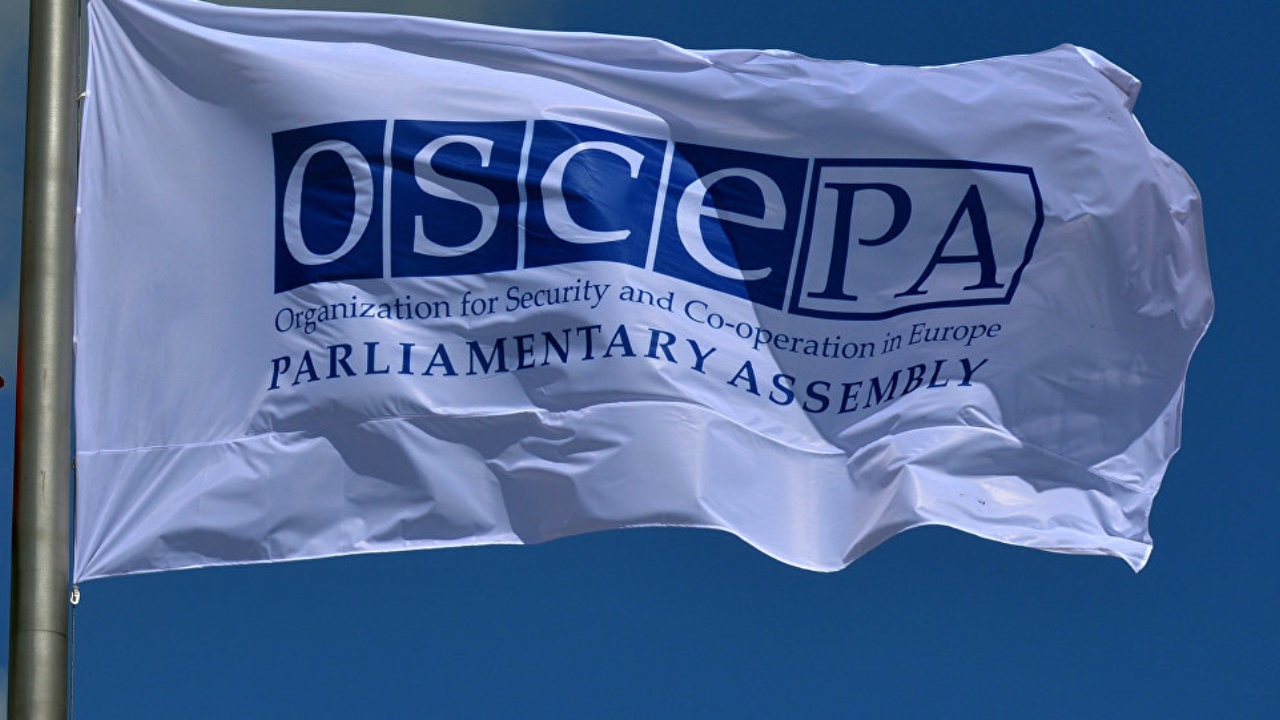
Georgia's
ruling Georgian Dream party has strongly
criticized a resolution adopted by the Parliamentary Assembly of the
Organization for Security and Co-operation in Europe (OSCE PA), which expresses
concern over the state of democracy, the electoral process, and civil liberties
in the country. Government representatives described the document as
politically motivated and argued that it does not reflect the actual situation
in Georgia.
According
to the ruling party, international organizations are increasingly relying on
political assessments rather than objective analysis, thereby exerting pressure
on sovereign states. Georgian Dream officials stated that the government
remains committed to implementing reforms in line with Georgia's national interests
and rejects what it considers attempts at external interference in the
country's domestic political affairs.
Earlier,
the OSCE Parliamentary Assembly adopted a declaration expressing concern about
the development of democratic institutions in Georgia. The document calls on
the authorities to safeguard judicial independence, ensure media freedom,
provide equal conditions for political competition, and investigate allegations
of pressure on civil society representatives. It also urges Georgia to intensify
efforts to fulfill the commitments necessary for advancing its European
integration process.
The
criticism from the OSCE PA is the latest episode in the ongoing deterioration
of relations between Tbilisi and several Western partners. In recent months,
representatives of the European Union, the Council of Europe, and a number of
individual countries have repeatedly voiced concerns about Georgia's political
environment, pointing to issues related to the rule of law, electoral
standards, and the protection of democratic institutions.
For
its part, the Georgian government insists that such assessments are based on
double standards and are being used as a tool of political pressure. Officials
from the ruling party maintain that Georgia's strategic goal of European
integration remains unchanged, but argue that cooperation with international
partners should be based on respect for national sovereignty and the principle
of non-interference in domestic affairs.
Political
analysts note that the continuing disagreements between the Georgian government
and Western institutions could further complicate the country's path toward
European integration. Although Tbilisi continues to declare EU membership a
strategic priority, dialogue with its Western partners remains strained, with
concerns over democracy, the rule of law, and civil liberties continuing to
dominate the bilateral agenda.


 Latest news
Latest news
Latest newsGeorgia’s Constitutional Court Continues Case on Banning Opposition Parties: Political Pluralism at Stake
12.Oct.2026
Azerbaijan and Iran Step Up Security Contacts Amid Hijab Protests
12.Oct.2026
Personnel Shortages Complicate Ukrainian Forces’ Rotation: Ukraine Faces Long-Term Challenges on the Front Line
11.Oct.2026
Trump Eases Sanctions on Russian Fuel After Talks with Putin: Kyiv Fears Boost to Moscow’s War Revenues
10.Oct.2026
Putin Seeks to Strengthen Russia’s Influence in the Post-Soviet Space Through the CIS
10.Oct.2026
Russia and the South Caucasus: External Pressure, Political Competition and a Crisis of Trust
10.Oct.2026
Peaceful Settlement Between Armenia and Azerbaijan: Moving from Declarations to Implementation
10.Oct.2026
Moldova Ready to Accept as Many Ukrainians as Necessary if Situation Worsens This Winter
09.Oct.2026
Turkmenistan Turns Avaza into a Regional Diplomatic Hub as Caspian, Central Asian and CIS Agendas Converge
08.Oct.2026
Romania Scrambles Spanish F-18s After Aerial Targets Detected Near Ukrainian Border
07.Oct.2026
Berlin Deepens Defence Partnership with Kyiv: Germany to Provide Ukraine with €1 Billion in Military Aid
07.Oct.2026
European Parliament Against Georgian Dream: EU Prepares New Response to Tbilisi
06.Oct.2026
Bulgarian Foreign Minister to Discuss European Security and International Law in the Netherlands
05.Oct.2026
Rheinmetall in Bulgaria: Sofia Emerges as a New NATO Defence-Industrial Hub in the Balkans
05.Oct.2026
The Cost of a Long War: Moscow Expands Spending Plans Through 2029
05.Oct.2026