
 13 Oct 2026









Burgas Selected to Host the 71st Eurovision Song Contest in 2027
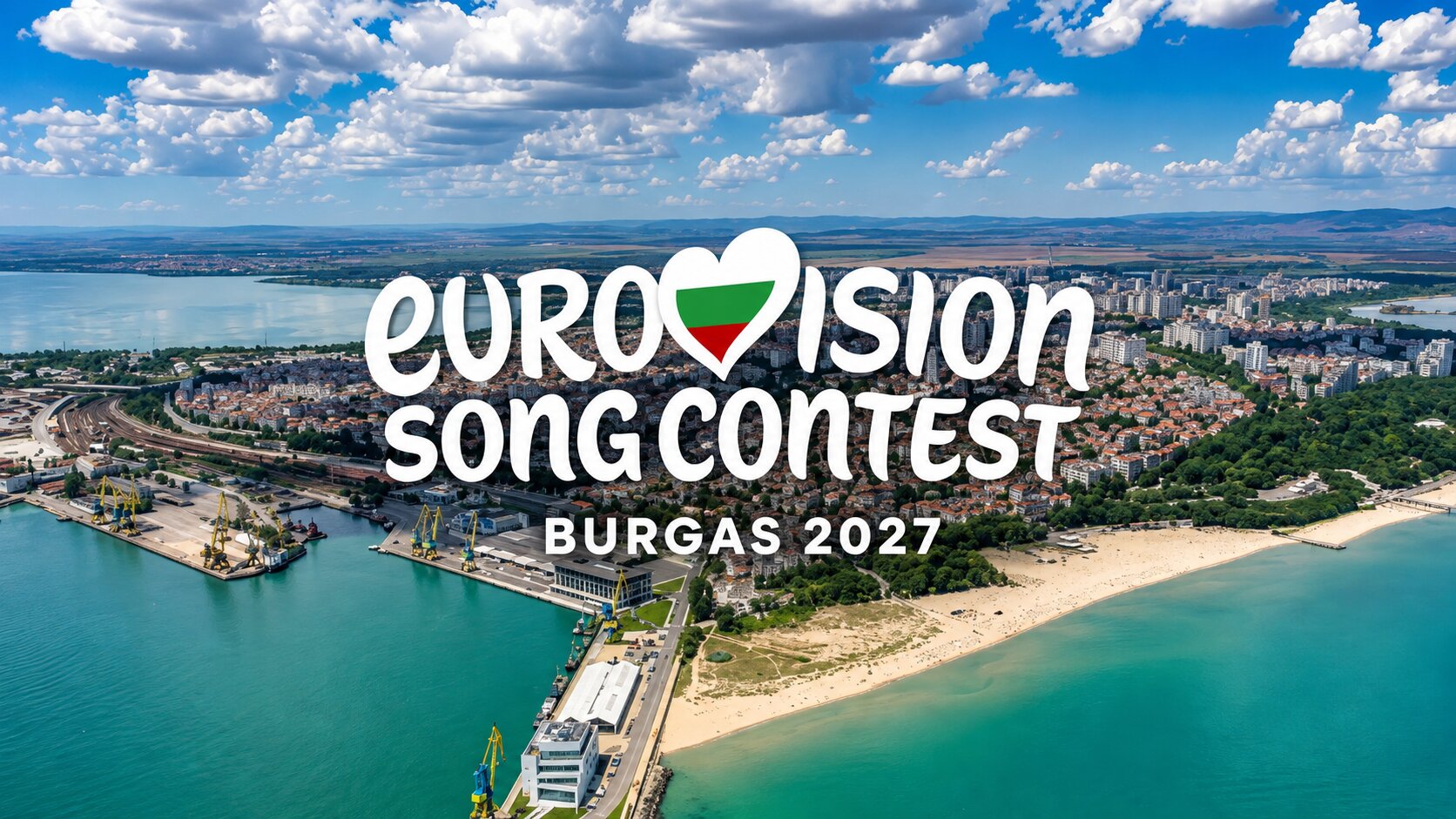
The
Bulgarian Black Sea city of Burgas has been selected to host the 71st Eurovision Song Contest,
which will take place in May 2027. The decision was announced on August 13 by
the European Broadcasting Union and
the Bulgarian National Television.
The contest will be held at Arena Burgas, one of Bulgaria’s
largest modern sports and entertainment complexes. The semi-finals will take
place on May 11 and 13, 2027,
while the grand final is scheduled for May 15. Burgas will therefore host Europe’s premier music
competition for the first time, while Bulgaria will host the Eurovision Song
Contest for the first time in its history.
Bulgaria won the right to host the competition following
the historic victory of singer DARA at Eurovision 2026 in Vienna with the song “Bangaranga”. It was Bulgaria’s first victory in the
history of the contest.
Burgas was selected through a competitive bidding process
that initially involved four Bulgarian cities. In addition to Burgas, Sofia, Plovdiv, and Varna
submitted bids. Burgas and Sofia reached the final stage, with the Black Sea
city ultimately being selected.
One of the key factors behind the choice of Burgas was the
city’s infrastructure, including hotel capacity, transport accessibility,
international connections, the readiness of the municipal authorities, and the
city’s ability to accommodate large numbers of international visitors. Arena Burgas,
which opened in 2023, can accommodate up to 15,000 spectators for concert
events. Organizers consider the venue suitable for a large-scale television
production that attracts millions of viewers worldwide every year.
Hosting Eurovision could be particularly important for
Bulgaria’s tourism sector. Burgas is one of the country’s largest cities on the
Black Sea and an important tourist destination. The city is expected to welcome
large numbers of foreign tourists, national delegations, journalists, and
Eurovision fans during the competition.
Organizers also intend to use Eurovision to promote not
only Burgas but Bulgaria as a whole. Related events will be held in other major
cities, including Sofia,
Plovdiv, and Varna. The contest is therefore expected to become
a nationwide cultural and tourism event.
Burgas Mayor Dimitar Nikolov said that hosting the contest would
provide an opportunity to showcase not only the city but Bulgaria as a whole to
a European audience. According to him, preparations will involve
municipalities, government institutions, universities, schools, cultural
organizations, artists, volunteers, and local businesses.
For Burgas, hosting Eurovision could also become an
important tool for further developing the city as an international tourism and
cultural center. In addition to direct revenues from accommodation,
transportation, restaurants, and other services, the city will have an
opportunity to increase its international visibility.
At the same time, hosting the contest will require
extensive preparations. Over the coming months, authorities and organizers will
need to coordinate issues related to security, transportation, accommodation for delegations, fan zones,
television infrastructure, and the cultural program.
Thus, Eurovision 2027 will be not only Bulgaria’s largest music event but
also an important tourism and image-building project. The selection of
Burgas shifts the focus of the contest from a traditional capital-city venue to
Bulgaria’s Black Sea coast, giving the country an opportunity to showcase its
tourism potential to a European audience.


 Latest news
Latest news
Latest newsGeorgia’s Constitutional Court Continues Case on Banning Opposition Parties: Political Pluralism at Stake
12.Oct.2026
Azerbaijan and Iran Step Up Security Contacts Amid Hijab Protests
12.Oct.2026
Personnel Shortages Complicate Ukrainian Forces’ Rotation: Ukraine Faces Long-Term Challenges on the Front Line
11.Oct.2026
Trump Eases Sanctions on Russian Fuel After Talks with Putin: Kyiv Fears Boost to Moscow’s War Revenues
10.Oct.2026
Putin Seeks to Strengthen Russia’s Influence in the Post-Soviet Space Through the CIS
10.Oct.2026
Russia and the South Caucasus: External Pressure, Political Competition and a Crisis of Trust
10.Oct.2026
Peaceful Settlement Between Armenia and Azerbaijan: Moving from Declarations to Implementation
10.Oct.2026
Moldova Ready to Accept as Many Ukrainians as Necessary if Situation Worsens This Winter
09.Oct.2026
Turkmenistan Turns Avaza into a Regional Diplomatic Hub as Caspian, Central Asian and CIS Agendas Converge
08.Oct.2026
Romania Scrambles Spanish F-18s After Aerial Targets Detected Near Ukrainian Border
07.Oct.2026
Berlin Deepens Defence Partnership with Kyiv: Germany to Provide Ukraine with €1 Billion in Military Aid
07.Oct.2026
European Parliament Against Georgian Dream: EU Prepares New Response to Tbilisi
06.Oct.2026
Bulgarian Foreign Minister to Discuss European Security and International Law in the Netherlands
05.Oct.2026
Rheinmetall in Bulgaria: Sofia Emerges as a New NATO Defence-Industrial Hub in the Balkans
05.Oct.2026
The Cost of a Long War: Moscow Expands Spending Plans Through 2029
05.Oct.2026