
 13 Oct 2026









Ukrainian Counterstrike in the Southeast: Kyiv Says 26 Settlements Have Been Retaken
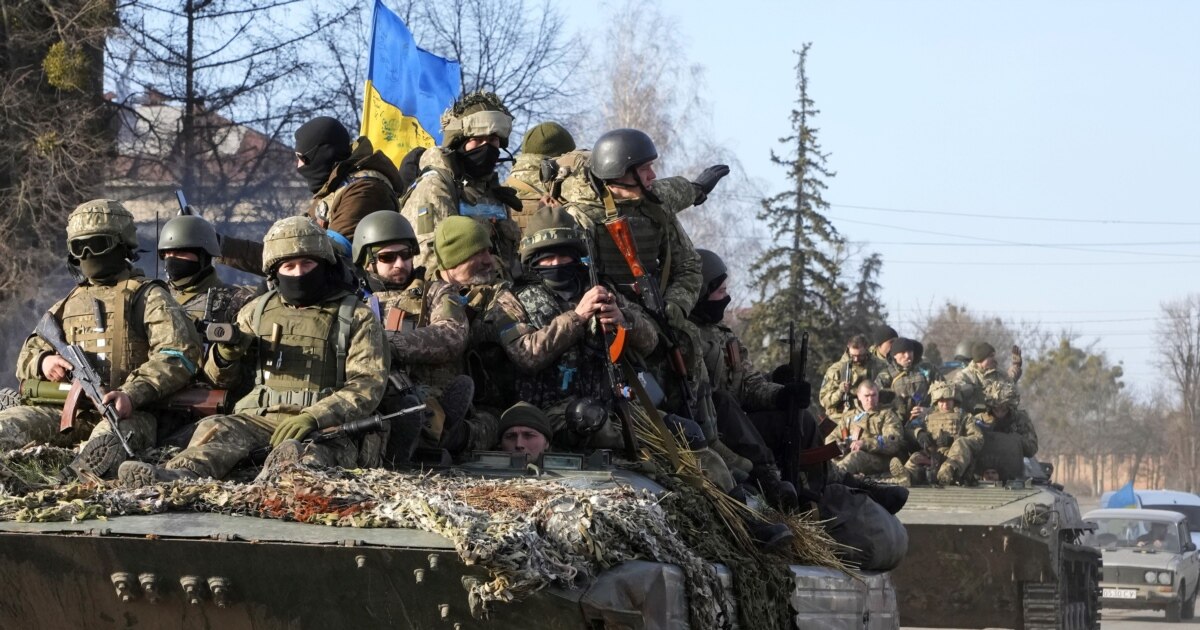
Since the beginning of 2026, Ukrainian forces
have regained control of 745 square kilometers of territory and 26 settlements in
the Oleksandrivka sector — a section of the front at the junction of the
Dnipropetrovsk, Donetsk and Zaporizhzhia regions. President of Ukraine
Volodymyr Zelenskyy reported this on August 12 following a briefing
by the military leadership on the results of a months-long offensive operation.
According to Zelenskyy, the operation lasted
from January through August and was carried out by units of Ukraine’s Air
Assault Forces together with other elements of the Defense Forces. The
president described it as a carefully planned operation, stating that Ukrainian
forces had acted “exactly according to plan.” The territories regained by
Ukraine stretch along approximately a 60-kilometer section of the front, where the borders of
the three regions meet.
According to the Ukrainian side, of the 26 settlements
retaken, 12 are located in Dnipropetrovsk
region, 10 in Donetsk region, and four in Zaporizhzhia region.
Ukrainian units also conducted operations to identify and destroy Russian
groups that had infiltrated rear areas. According to the Ukrainian General
Staff, such operations were conducted across an area of more than 300 square kilometers.
At the same time, the independent Ukrainian OSINT project DeepState
provides a more cautious assessment of the immediate territorial changes. As of
August 12, the project’s analysts had confirmed the liberation of 19 settlements,
as well as Ukrainian advances in six additional areas.
Thus, the figures provided by the Ukrainian military
leadership and those recorded by DeepState do not fully coincide. This is partly due to the
difference between operational assessments by military commanders and the
confirmation of territorial changes based on open-source information. Reuters also notes that video footage released
by the Ukrainian military showing Ukrainian flags being raised in the areas
reportedly retaken has not yet been independently verified.
The Ukrainian military leadership claims that Russian
forces suffered approximately 9,500 personnel killed and another 6,600 wounded during
the operation. These figures are Ukrainian estimates and have not been
independently verified.
Kyiv views the operation not only as an effort to regain
territory but also as an attempt to disrupt Russia’s plans to advance in the
southern part of Donbas. The Oleksandrivka sector is strategically important
because of its location between several key sections of the front and its
proximity to Dnipropetrovsk region.
The operation is particularly significant because Ukrainian
forces have achieved notable gains not through a single localized assault, but as part of a campaign that
has continued for several months. According to the Institute for the Study of War (ISW),
Ukrainian actions in the Oleksandrivka sector demonstrate the ability of the
Ukrainian Armed Forces to conduct relatively significant tactical advances and
to once again employ limited elements of mechanized maneuver on selected parts
of the front.
This is taking place against the backdrop of a slowdown in
Russia’s territorial gains. According to Russia Matters, during the week of
August 4–11, Russian forces recorded a net territorial loss in Ukraine after
several previous weeks of limited advances. However, this does not indicate a
general shift in the balance on the battlefield: Russian forces continue
offensive operations, primarily in Donetsk region.
Despite the Ukrainian gains in the southeast, Russian
forces continue to maintain pressure in eastern Ukraine. Donetsk region, in
particular, remains one of the main areas of Russian military efforts, while
Moscow continues to demand control over the region as one of the conditions for
a potential settlement. Kyiv rejects this demand.
At the same time, it would be premature to describe the
developments as a full-scale Ukrainian strategic counteroffensive. For now, the
operation should primarily be viewed as a large-scale localized offensive on one section of
the front. Its operational significance could increase if
Ukrainian forces manage to consolidate their gains, expand the area under their
control, and force the Russian command to redeploy reserves from other sectors.
At the same time, the figure of 745 square kilometers requires careful interpretation: the Ukrainian side attributes to the operation territory regained since January, while the DeepState OSINT map currently confirms 19 settlements and advances in several additional areas. Therefore, the actual scale of the changes to the frontline should be assessed by taking both estimates into account.
Overall, the operation in the Oleksandrivka sector has emerged as one of the most notable Ukrainian successes of 2026. If Ukrainian forces manage to hold the positions they have regained and continue applying pressure, this could complicate Russia’s advance toward Dnipropetrovsk region and force Moscow to redistribute resources among several fronts. However, there is not yet sufficient evidence to speak of a strategic turning point in the war.


 Latest news
Latest news
Latest newsGeorgia’s Constitutional Court Continues Case on Banning Opposition Parties: Political Pluralism at Stake
12.Oct.2026
Azerbaijan and Iran Step Up Security Contacts Amid Hijab Protests
12.Oct.2026
Personnel Shortages Complicate Ukrainian Forces’ Rotation: Ukraine Faces Long-Term Challenges on the Front Line
11.Oct.2026
Trump Eases Sanctions on Russian Fuel After Talks with Putin: Kyiv Fears Boost to Moscow’s War Revenues
10.Oct.2026
Putin Seeks to Strengthen Russia’s Influence in the Post-Soviet Space Through the CIS
10.Oct.2026
Russia and the South Caucasus: External Pressure, Political Competition and a Crisis of Trust
10.Oct.2026
Peaceful Settlement Between Armenia and Azerbaijan: Moving from Declarations to Implementation
10.Oct.2026
Moldova Ready to Accept as Many Ukrainians as Necessary if Situation Worsens This Winter
09.Oct.2026
Turkmenistan Turns Avaza into a Regional Diplomatic Hub as Caspian, Central Asian and CIS Agendas Converge
08.Oct.2026
Romania Scrambles Spanish F-18s After Aerial Targets Detected Near Ukrainian Border
07.Oct.2026
Berlin Deepens Defence Partnership with Kyiv: Germany to Provide Ukraine with €1 Billion in Military Aid
07.Oct.2026
European Parliament Against Georgian Dream: EU Prepares New Response to Tbilisi
06.Oct.2026
Bulgarian Foreign Minister to Discuss European Security and International Law in the Netherlands
05.Oct.2026
Rheinmetall in Bulgaria: Sofia Emerges as a New NATO Defence-Industrial Hub in the Balkans
05.Oct.2026
The Cost of a Long War: Moscow Expands Spending Plans Through 2029
05.Oct.2026