
 09 Nov 2026









What to expect from Armenia’s snap election
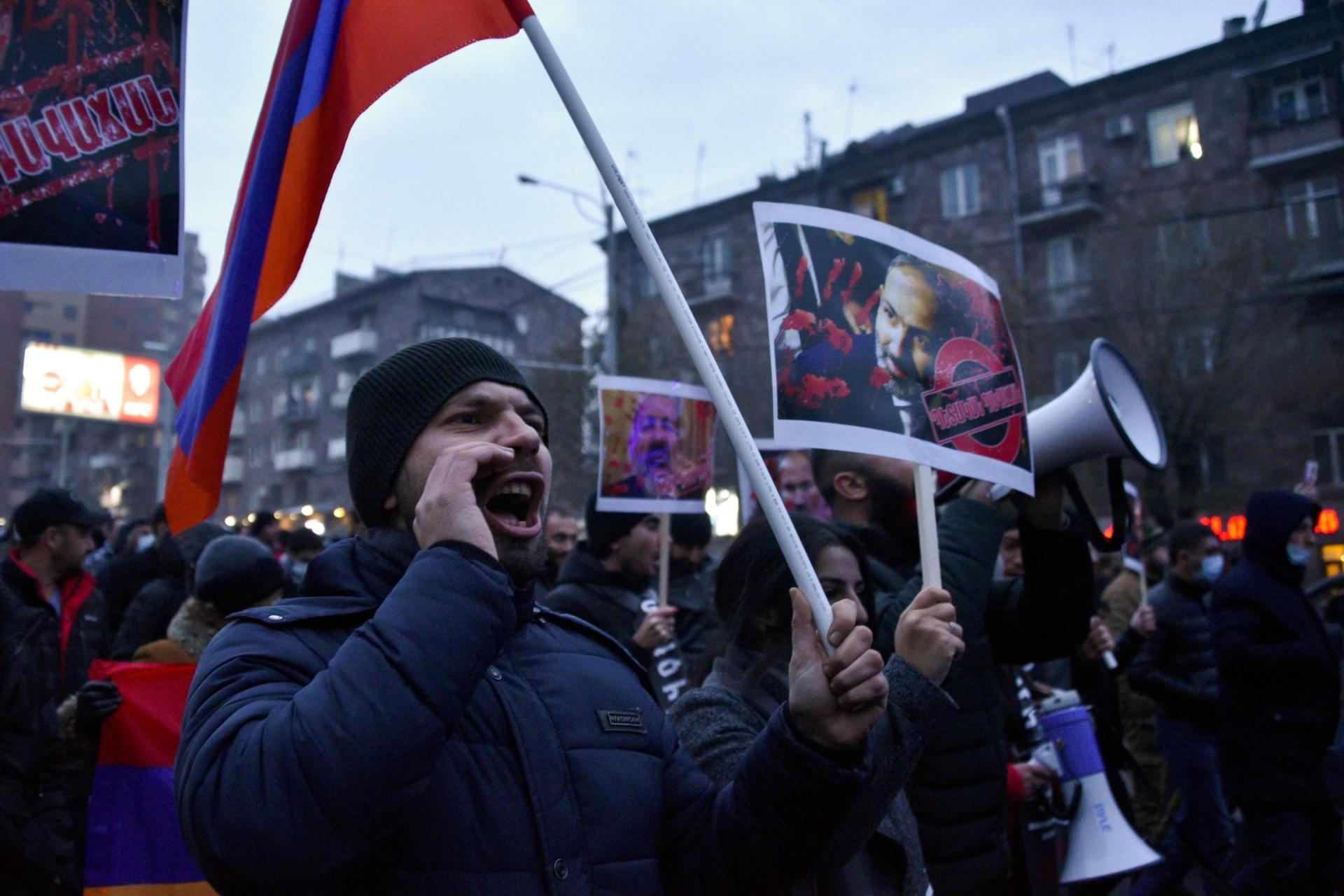
The announcement on March 18 by Armenian Prime Minister Nikol Pashinyan that a snap parliamentary election would be held in June has presented some hope for a peaceful resolution to the country’s months-long political crisis, Emerging Europe writes. Pashinyan also announced that he would be stepping down in April to fulfill the parliamentary and constitutional requirements for holding snap elections, but would continue to rule as interim prime minister until the elections are over.
Pashinyan and his My Step party have been under considerable pressure since a disastrous defeat to Azerbaijan in the most recent fighting over the disputed region of Nagorno-Karabakh. The prime minister has been accused of mishandling the conflict and failing to adequately prepare the Armenian military for war. Protesters from the Homeland Salvation Movement, a political alliance led by elements of previous Armenian governments, have been occupying the streets leading to the Armenian parliament since January. They have been calling for the government to step down and to be replaced by an interim government led by Vazgen Manukyan, the first prime minister of Armenia after it declared independence from the Soviet union. In February, following the dismissal of the deputy chief of staff of the military, more than 40 high-ranking military officers sent an open letter demanding Mr Pashinyan resign.
The decision to hold snap elections – set for June 20 – was made after talks between Pashinyan and the leaders of the two main opposition parties, Gagik Tsarukyan and Edmon Marukyan. Although holding the election falls short of the demands of the Homeland Salvation Movement, it was welcomed by civil society as an opportunity to finally put the paralysing political crisis to bed through modern, diplomatic and democratic means. The election will be the third parliamentary vote held in Armenia in just four years.
Pashinyan came to power on the coattails of 2018’s Velvet Revolution which forced former prime minister Serzh Sargsyan and his government to resign. Initially hailed for his liberal outlook, commitment to dialogue and overtures towards the West (at the expense of Russia), Pashinyan and his My Step party have seen much goodwill evaporate since then. The recent war showed that Armenia cannot rely on the goodwill of the West to protect itself. As such, there has been increasing consensus among the Armenian public that Russia is the only country with the will and the political capital to effectively protect Armenia. There have been escalating talks about deepening Armenia’s integration with the Commonwealth of Independent States, dominated by Russia. Some have even broached the prospect of a union state with Russia. Even previously pro-European parties have begun calling for closer ties to Russia.
Since December, Edmon Marukyan, the western-educated leader of the moderate Bright Armenia party has advocated for creating a new Russian military base in the southern province of Syunik. Armenia’s Shirak province already hosts a Russian military base. Furthermore, Russia brokered the November 9 ceasefire, under which 2,000 Russian peacekeepers were deployed to Nagorno-Karabakh.
Gagik Tsarukyan, leader of Prosperous Armenia, the largest opposition group currently in parliament, has espoused openly pro-Russia and eurosceptic views. An oligarch and arm wrestling world champion, Tsarukyan has been under investigation since 2019 for vote buying, fraud and illegal land appropriation. This, however, is not going to prevent him and his party from running in the election. Robert Kocharyan meanwhile, a former president who was ousted following the Velvet Revolution, has since January expressed his intention to run in the next elections.
Another issue which has been raised ahead of the vote is that of electoral reform. Since March 23, Pashinyan and his My Step party have floated the possibility of changing the open proportional system which critics say gives too much power to individual personalities within parties. Other amendments include lowering the five per cent threshold for entering parliament, banning covert vote-buying though PR stunts and criminalising forcing employees to attend political rallies.
The fact that the Armenian government is demonstrating its intentions to resolve the political deadlock through peaceful, amicable and democratic means is certainly reason for optimism amidst the negativity which has engulfed the country since the defeat to Azerbaijan.
Although Pashinyan has failed to live up to much of what was expected of him back in 2018, paving the way for a peaceful transition of power bodes well for the country’s democratic future, if the elections pass without major controversies. And although Armenia and its people still remain powerless in the face of geopolitical machinations – closer ties with Russia seem inevitable, for example – the elections could consolidate the work done since 2018 to create a vibrant democratic culture. At the very least, this would be an upgrade on the pre-Velvet Revolution days.


 Latest news
EU Commissioner Marta Kos to Discuss Moldova’s Next Steps Towards European Integration in Chișinău
09.Nov.2026
France Expands Intelligence-Gathering Presence in the Black Sea: NATO Strengthens Maritime Surveillance
08.Nov.2026
Abu Dhabi May Host a New Round of Diplomatic Talks on Ukraine: Prospects for Negotiations Remain Uncertain
08.Nov.2026
Mykhailo Samus: The Russia–Ukraine War Is Reshaping the Balance of Power in the Black Sea and the Regional Security Architecture
08.Nov.2026
Armenia Strengthens Its European Course: EU Enlargement and Declining Russian Influence Reshape the Geopolitical Landscape of the South Caucasus
07.Nov.2026
Bulgaria Presents Draft 2027 State Budget: Increased Pensions and Investment in Development
07.Nov.2026
Russian Gerbera-2 Drone Discovered and Destroyed on Bulgaria’s Black Sea Coast
07.Nov.2026
Sofia and Washington Discuss Black Sea Security and the Future of Europe's Security Architecture
07.Nov.2026
Green Energy Corridor: a Strategic Opportunity or an Overly Costly Project?
07.Nov.2026
Kremlin Calls for European Involvement in Security Talks without Offering a Concrete Framework
06.Nov.2026
The Caspian Bridge between Azerbaijan and Kazakhstan: Ambitious Plans without Guarantees of Implementation
05.Nov.2026
Armenia Outlines Prospects for Applying for EU Membership in 2027–2028
04.Nov.2026
Moscow Seeks to Maintain Its Influence in the South Caucasus through the “3+3” Format
03.Nov.2026
Kazakhstan Resumes Oil Transit through Russia after Drone Attack
03.Nov.2026
Iliana Yotova's Victory Strengthens Political Stability and Bulgaria's Position in the Black Sea Region
02.Nov.2026