
 07 Nov 2026









Bulgaria Presents Draft 2027 State Budget: Increased Pensions and Investment in Development
The Bulgarian government has
presented its draft state budget for 2027, which provides for an increase in
the minimum wage, higher pensions, expanded social support for families, and
additional investment in science, education and defence. At the same time, the
government aims to reduce the budget deficit and gradually stabilise public
finances while maintaining the conditions necessary for further economic
development.
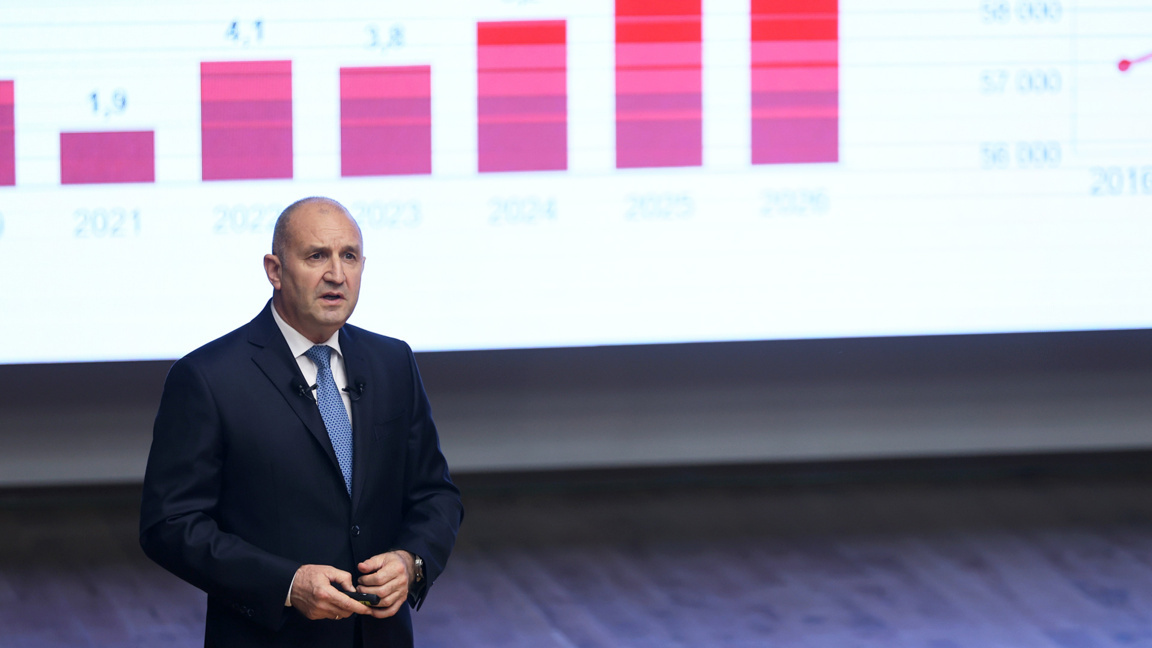
On 6 November 2026, Bulgarian
Prime Minister Rumen Radev and Deputy Prime Minister and Minister of Finance
Galab Donev presented the main parameters of the draft state budget for 2027.
The presentation took place at the University of National and World Economy in
Sofia, with representatives of the government, parliament, employers'
organisations, trade unions and the expert community in attendance.
The proposed budget reflects
the authorities' intention to balance the state's social commitments with the
need for fiscal consolidation. One of the government's key objectives is to
gradually reduce the budget deficit, improve the efficiency of public spending
and establish a more sustainable financial foundation for long-term economic
growth.

According to the draft, the
budget deficit in 2027 is projected to reach 3.5% of GDP, or approximately EUR
4.9 billion. New government borrowing is expected to amount to EUR 8.6 billion.
The government plans to gradually reduce the deficit to 3.1% of GDP in 2028 and
2.4% in 2029. Thus, the proposed budget policy is intended not only to address
current social and economic challenges but also to strengthen the country's
long-term fiscal sustainability.
Increasing household incomes
is one of the key priorities of the draft budget. The monthly minimum wage is
expected to rise to EUR 660 in 2027, compared with the current EUR 620.
Salaries for public-sector employees are set to increase by 5%, while teachers'
salaries are expected to rise by 7.5%. At the same time, the government plans
to optimise public administration expenditure, including reducing personnel
costs in a number of state institutions.
Particular attention is also
being given to pensioners and families with children. From 1 July 2027,
pensions are expected to be adjusted under the so-called Swiss formula, with an
estimated increase of approximately 8%. The maximum monthly pension is planned
to rise to EUR 1,874. An additional EUR 72.5 million is earmarked for family
support. The monthly childcare allowance for parents during the second year of
parental leave is expected to increase to EUR 450. The government is also
proposing to expand tax relief for parents according to the number of children
in their families.
The social component of the
budget also includes additional assistance for vulnerable groups. A total of
EUR 132.6 million is allocated for heating assistance. In addition, the
government plans to increase funding for scholarships, student accommodation
and university canteens. Separate allocations are intended to support salary
increases for young doctors undergoing specialist training, which should help
strengthen the human resources capacity of Bulgaria's healthcare system.
The development of science,
education and advanced technologies is emerging as one of the strategic
priorities of the budget policy. According to Prime Minister Rumen Radev,
funding for scientific research is expected to increase by almost 100%, with an
additional EUR 62 million allocated. Among the initiatives outlined are the
establishment of the country's first artificial intelligence gigafactory, the
development of digital infrastructure, cooperation with the European Space
Agency and participation in NATO technology initiatives. These priorities are
important for expanding Bulgaria's innovation capacity, training highly
qualified specialists and enhancing the competitiveness of the national
economy.
Defence funding is another
important area of the proposed budget. According to the presented parameters,
defence expenditure is expected to exceed EUR 3 billion. Against the backdrop
of continued instability in the Black Sea region, Russia's war against Ukraine
and changes in the European security architecture, strengthening defence
capabilities is particularly important for Bulgaria as a member of NATO and the
European Union. The development of military infrastructure, the modernisation
of the armed forces and enhanced preparedness for emerging threats remain
essential components of national security.
The economic projections
underpinning the budget envisage GDP growth of 2.5% in 2027, with inflation
expected to reach approximately 4%. The government also expects the share of
public expenditure in GDP to decline from 43.5% in 2026 to 39.6% in 2027. This
is expected to be accompanied by the optimisation of administrative structures
and improvements in the efficiency of public spending.
At the same time, implementing
the proposed budget will require addressing several complex challenges. New
government borrowing, the need to contain the deficit, the maintenance of
social commitments and increased defence spending will require a careful
balance between economic growth and fiscal discipline. Particular attention
will also need to be paid to the business environment, investment activity and
the preservation of household purchasing power.
The draft budget also
envisages changes to tax and administrative policies, including measures to
increase tax revenues, optimise public expenditure and revise certain tax
exemptions. These provisions may become subjects of discussion between the
government, employers and trade unions during the subsequent consultation and
approval process.
The next stage will involve
consideration of the draft budget by the National Council for Tripartite
Cooperation, followed by the procedures stipulated by law. The final budget
parameters will depend on the outcome of consultations and parliamentary
deliberations.


 Latest news
Bulgaria Presents Draft 2027 State Budget: Increased Pensions and Investment in Development
07.Nov.2026
Russian Gerbera-2 Drone Discovered and Destroyed on Bulgaria’s Black Sea Coast
07.Nov.2026
Sofia and Washington Discuss Black Sea Security and the Future of Europe's Security Architecture
07.Nov.2026
Green Energy Corridor: a Strategic Opportunity or an Overly Costly Project?
07.Nov.2026
Kremlin Calls for European Involvement in Security Talks without Offering a Concrete Framework
06.Nov.2026
The Caspian Bridge between Azerbaijan and Kazakhstan: Ambitious Plans without Guarantees of Implementation
05.Nov.2026
Armenia Outlines Prospects for Applying for EU Membership in 2027–2028
04.Nov.2026
Moscow Seeks to Maintain Its Influence in the South Caucasus through the “3+3” Format
03.Nov.2026
Kazakhstan Resumes Oil Transit through Russia after Drone Attack
03.Nov.2026
Iliana Yotova's Victory Strengthens Political Stability and Bulgaria's Position in the Black Sea Region
02.Nov.2026
France Expands Military Surveillance Activities in the Black Sea: Romania Gains Strategic Importance
01.Nov.2026
Georgia Brings Black Sea Security to the UN Security Council Agenda
01.Nov.2026
Ukrainian Drone Attacks on Russian Oil Refineries: Russia’s Energy Infrastructure Faces Growing Risks
31.Oct.2026
Who will Pay to Protect Nature? A Council of Europe Expert’s Perspective
31.Oct.2026
OTS Expands Its Defence Agenda: Ankara’s Initiative Raises Questions About the Militarisation of the Organisation
31.Oct.2026