
 07 Nov 2026









Armenia Outlines Prospects for Applying for EU Membership in 2027–2028
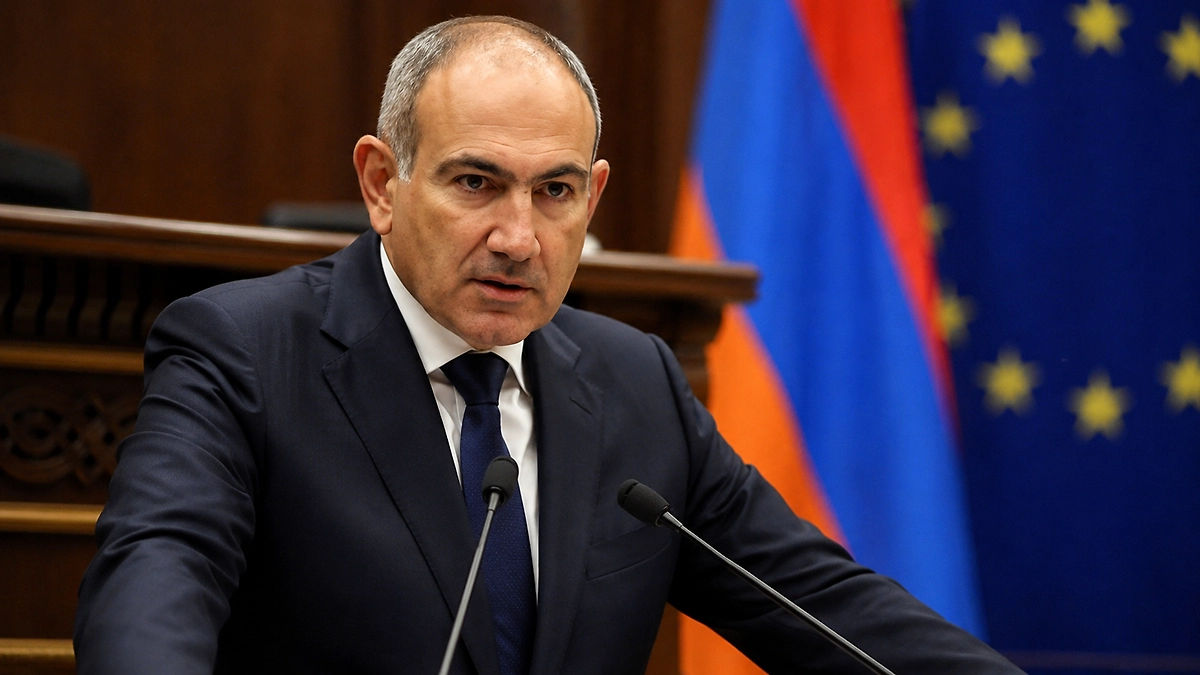
Yerevan views European
integration as an important instrument for strengthening national sovereignty,
developing democratic institutions and expanding the country's international
opportunities. Prime Minister Nikol Pashinyan has stated that submitting an
official application for Armenia to join the European Union in 2027 or 2028 is
a realistic prospect. At the same time, the Armenian leadership continues to
pursue the diversification of its foreign policy and economic relations,
emphasizing that the country's future should be determined by its citizens.
On November 3, 2026, speaking
at the European Union Enlargement Summit in Brussels, organized by Euronews,
Armenian Prime Minister Nikol Pashinyan stated that the country could
officially submit an application to join the EU as early as 2027. He also
indicated that 2028 remains a realistic timeframe.
According to the head of the
Armenian government, Yerevan has already begun a process aimed at reaching a
final decision on submitting an application for full membership in the European
Union. Pashinyan emphasized that this is not merely a formal diplomatic step,
but also involves preparing the political and institutional conditions
necessary to determine the country's future European direction.
The Armenian prime minister
identified strengthening democracy and ensuring the resilience of state
institutions as key arguments in favour of European integration. According to
him, Armenia's democratic choice is not a temporary political consideration,
but a strategic direction for the country's development. The European Union, in
turn, remains one of Armenia's key partners in implementing democratic reforms.
Pashinyan also highlighted the
need to provide Armenian society with genuine foreign policy alternatives. In
his assessment, for a long time there was a perception that Armenia had
virtually no choice between different integration frameworks. Yerevan's current
policy is aimed at expanding these options and strengthening the country's
autonomy in international relations.
At the same time, the Armenian
leadership recognizes the existing economic and institutional contradictions
between membership in the Eurasian Economic Union and the prospect of joining
the European Union. Pashinyan confirmed that full membership in both
organizations simultaneously is impossible, and that the final decision
regarding Armenia's future integration path should be made by its citizens.
On November 5, the prime
minister provided further clarification, stating that the current stage does
not mean the beginning of direct EU accession negotiations or preparations for
withdrawing from the EAEU. According to him, the government is primarily
fulfilling its commitment to create an alternative for the country and
establish the necessary conditions for a subsequent public and political
choice.
Visa liberalization remains an
important practical area of cooperation with Brussels. Armenia is engaged in a
relevant dialogue with the European Commission, while the government's stated
objective is to achieve visa liberalization by 2029. Progress in this area
would represent a separate stage in Armenia's rapprochement with European
institutions and expand opportunities for Armenian citizens in education,
professional development and business relations with EU member states.
Armenia's European prospects
are also gaining additional significance amid the transformation of the
regional security architecture. In recent years, Yerevan has been reassessing
its traditional approaches to national security, seeking to expand
international cooperation and diversify its external relations. In this
context, developing relations with the EU is viewed not only as a political and
economic priority, but also as an element in strengthening the resilience of
Armenian statehood.
Pashinyan devoted particular
attention to the peace process with Azerbaijan. According to him, the
understanding reached between the two countries has already been put into
practice, but the next step is to institutionalize peace through the signing
and ratification of a peace agreement. The Armenian prime minister stressed
that, amid international instability, consolidating the arrangements already
reached is particularly important.
In this regard, Armenia's
European integration and the normalization of relations with Azerbaijan
represent interconnected dimensions of regional policy. Sustainable peace could
create additional opportunities for the development of transport links,
economic cooperation and broader international connectivity across the South
Caucasus.
Pashinyan also highlighted the
importance of Georgia's European prospects for Armenia. According to him,
progress in Georgia's European aspirations is significant for how Armenian
society perceives the opportunities offered by European integration. He reaffirmed
Yerevan's readiness to support Tbilisi's European aspirations, emphasizing that
the South Caucasus should be viewed as an interconnected region.
The proposed timeline for
submitting an EU membership application indicates that Armenia's European foreign
policy direction is entering a more concrete phase of discussion. However, the
prospects for membership will depend on further reforms, the European
institutions' readiness for enlargement, the alignment of economic and legal
requirements, and the decision of Armenian society itself.
In the long term, the
realization of Armenia's European aspirations could become one of the factors
shaping the geopolitical configuration of the South Caucasus and expanding the
country's opportunities in international affairs.


 Latest news
Bulgaria Presents Draft 2027 State Budget: Increased Pensions and Investment in Development
07.Nov.2026
Russian Gerbera-2 Drone Discovered and Destroyed on Bulgaria’s Black Sea Coast
07.Nov.2026
Sofia and Washington Discuss Black Sea Security and the Future of Europe's Security Architecture
07.Nov.2026
Green Energy Corridor: a Strategic Opportunity or an Overly Costly Project?
07.Nov.2026
Kremlin Calls for European Involvement in Security Talks without Offering a Concrete Framework
06.Nov.2026
The Caspian Bridge between Azerbaijan and Kazakhstan: Ambitious Plans without Guarantees of Implementation
05.Nov.2026
Armenia Outlines Prospects for Applying for EU Membership in 2027–2028
04.Nov.2026
Moscow Seeks to Maintain Its Influence in the South Caucasus through the “3+3” Format
03.Nov.2026
Kazakhstan Resumes Oil Transit through Russia after Drone Attack
03.Nov.2026
Iliana Yotova's Victory Strengthens Political Stability and Bulgaria's Position in the Black Sea Region
02.Nov.2026
France Expands Military Surveillance Activities in the Black Sea: Romania Gains Strategic Importance
01.Nov.2026
Georgia Brings Black Sea Security to the UN Security Council Agenda
01.Nov.2026
Ukrainian Drone Attacks on Russian Oil Refineries: Russia’s Energy Infrastructure Faces Growing Risks
31.Oct.2026
Who will Pay to Protect Nature? A Council of Europe Expert’s Perspective
31.Oct.2026
OTS Expands Its Defence Agenda: Ankara’s Initiative Raises Questions About the Militarisation of the Organisation
31.Oct.2026