
 07 Nov 2026









The Caspian Bridge between Azerbaijan and Kazakhstan: Ambitious Plans without Guarantees of Implementation
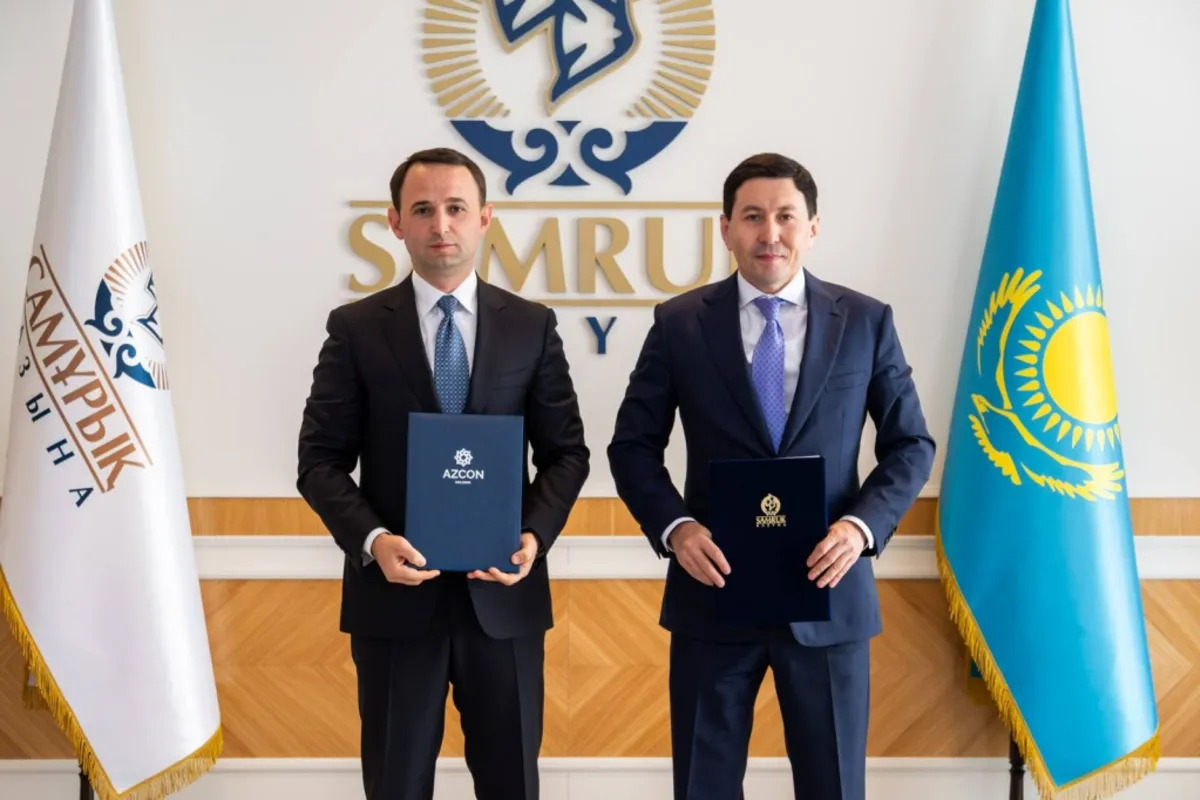
On November 2, 2026,
negotiations were held in Kazakhstan between representatives of Azerbaijan's
AZCON Holding and Kazakhstan's sovereign wealth fund Samruk-Kazyna. The talks
resulted in the signing of two documents aimed at developing transport and
logistics cooperation. The first provides for the preparation of the Caspian
Bridge project, also known as Super Ferry — a new freight ferry system
connecting the ports of Alat in Azerbaijan and Kuryk in Kazakhstan. The second
document establishes the main terms of cooperation between the two countries'
railway operators on the creation of a joint intermodal freight terminal at the
Baku International Sea Trade Port.
According to the announced
plans, Caspian Bridge is expected to ensure regular operations of modern,
high-capacity ferries. The vessels are intended to transport railway wagons
directly across the Caspian Sea, eliminating the need to unload cargo
beforehand and subsequently transfer it to another mode of transport. Such a
system could potentially reduce the number of intermediate handling operations,
shorten cargo processing times and improve the predictability of transit
shipments.
Kazakhstan's Ministry of
Transport has outlined a target capacity of 8 million tonnes of cargo annually,
with the possibility of subsequently increasing it to 10–12 million tonnes.
However, these figures should currently be regarded as project targets rather
than the confirmed operational capacity of the future system.
The issue of financing
deserves particular attention. The documents signed by AZCON Holding and
Samruk-Kazyna establish a framework for cooperation in preparing and
implementing the project, but do not in themselves constitute a final
investment decision. A similar situation applies to the terminal at the Port of
Alat: Azerbaijan Railways and Kazakhstan Temir Zholy have signed a document
outlining the principal terms of its establishment, while the investment model
and financing mechanisms are expected to be determined at a subsequent stage
following technical and economic assessments.
This is where the main risk of
the current agreements becomes apparent: political support and announced
targets are moving ahead of specific implementation parameters. The final
project cost, sources of financing, construction and commissioning schedules,
as well as detailed technical specifications for the future ferries and
terminal, have not been disclosed. Without this information, it is difficult to
assess the economic viability of Caspian Bridge and its actual impact on the
capacity of the Middle Corridor.
An additional challenge is
that the development of maritime infrastructure does not automatically resolve
all the constraints affecting the Trans-Caspian route. The efficiency of
transportation depends on the coordination of railway tariffs, train schedules,
the availability of wagons and containers, port capacities, customs procedures
and cooperation between operators across several countries. Even an increase in
the number of ferries does not guarantee shorter overall delivery times if
bottlenecks remain along railway and port sections of the route.
Kazakhstan and Azerbaijan are
already taking steps to expand the Caspian region's transport capabilities. In
particular, the construction of new dry cargo vessels at the Baku Shipyard is
under discussion, alongside the development of a joint terminal network. These
initiatives demonstrate the two countries' intention to establish a more
sustainable infrastructure base for transportation between Central Asia, the
South Caucasus and European markets. However, achieving the stated objectives
will require coordination not only between the two countries but also among all
participants in the Middle Corridor, including Georgia and Turkiye.
The project's geopolitical
significance is also evident. Against the backdrop of efforts by European
states and Central Asian countries to diversify transport routes that pass
through Russia, the Middle Corridor is acquiring additional strategic
importance.
At the same time, the route's
economic attractiveness will be determined not by political declarations but by
the competitiveness of transportation costs and delivery times. The Middle
Corridor must compete with alternative land and maritime routes. Therefore,
increasing its capacity without reducing overall logistics costs will not
automatically lead to higher cargo volumes.
The agreements between Baku
and Astana provide an organizational foundation for further preparations for
Caspian Bridge and the joint terminal. However, they do not yet justify claims
that a new, fully operational transport system is taking shape.


 Latest news
Bulgaria Presents Draft 2027 State Budget: Increased Pensions and Investment in Development
07.Nov.2026
Russian Gerbera-2 Drone Discovered and Destroyed on Bulgaria’s Black Sea Coast
07.Nov.2026
Sofia and Washington Discuss Black Sea Security and the Future of Europe's Security Architecture
07.Nov.2026
Green Energy Corridor: a Strategic Opportunity or an Overly Costly Project?
07.Nov.2026
Kremlin Calls for European Involvement in Security Talks without Offering a Concrete Framework
06.Nov.2026
The Caspian Bridge between Azerbaijan and Kazakhstan: Ambitious Plans without Guarantees of Implementation
05.Nov.2026
Armenia Outlines Prospects for Applying for EU Membership in 2027–2028
04.Nov.2026
Moscow Seeks to Maintain Its Influence in the South Caucasus through the “3+3” Format
03.Nov.2026
Kazakhstan Resumes Oil Transit through Russia after Drone Attack
03.Nov.2026
Iliana Yotova's Victory Strengthens Political Stability and Bulgaria's Position in the Black Sea Region
02.Nov.2026
France Expands Military Surveillance Activities in the Black Sea: Romania Gains Strategic Importance
01.Nov.2026
Georgia Brings Black Sea Security to the UN Security Council Agenda
01.Nov.2026
Ukrainian Drone Attacks on Russian Oil Refineries: Russia’s Energy Infrastructure Faces Growing Risks
31.Oct.2026
Who will Pay to Protect Nature? A Council of Europe Expert’s Perspective
31.Oct.2026
OTS Expands Its Defence Agenda: Ankara’s Initiative Raises Questions About the Militarisation of the Organisation
31.Oct.2026