
 07 Nov 2026









Sofia and Washington Discuss Black Sea Security and the Future of Europe's Security Architecture
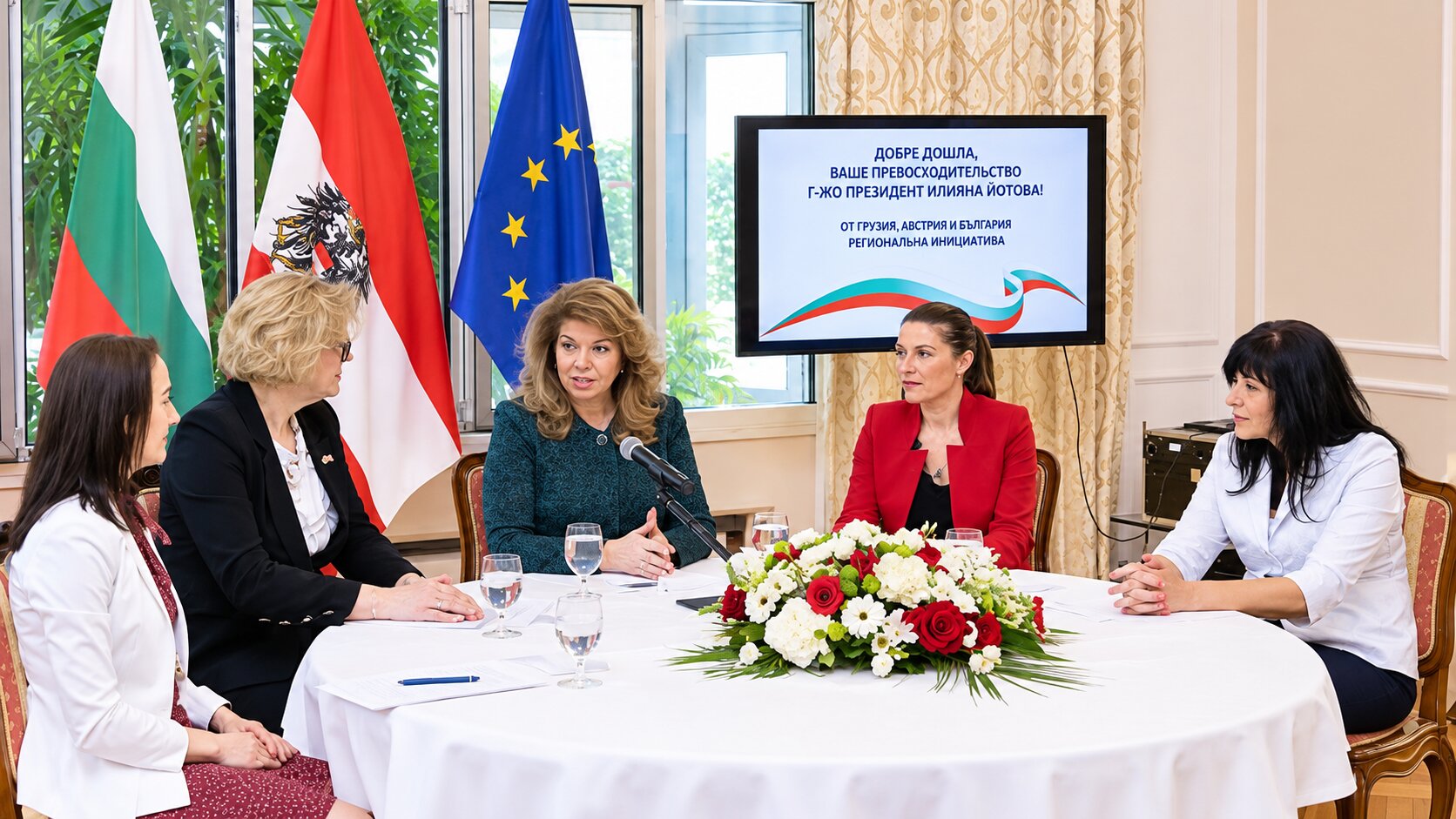
Bulgaria is seeking to
strengthen international security cooperation amid the widening repercussions
of the Russia-Ukraine war and growing threats to maritime infrastructure in the
Black Sea. On 6 November, President Iliana Iotova met with representatives of
the US National Defense University who were visiting Bulgaria as part of the
Capstone programme. Discussions focused on the security situation in the Black
Sea, prospects for a peaceful settlement of the war in Ukraine, the role of the
European Union and the further development of the strategic partnership between
Sofia and Washington.
The meeting took place at the
presidential residence on Dondukov Boulevard in Sofia as part of the American
delegation's visit to Bulgaria. Participants in the Capstone programme
discussed key international security challenges with the Bulgarian head of
state, including the consequences of the ongoing war in Ukraine and the
changing military and political environment in Europe.
Iliana Iotova drew attention
to the scale of contemporary armed conflicts, noting that more than 60 armed
conflicts were recorded in 2025, the highest number since the Second World War,
according to her assessment. The President described the current situation as a
serious challenge for individual states and the international community.
Particular attention was paid
to the Russia-Ukraine war. Iotova emphasised that the conflict had already
extended beyond Ukraine's borders and that continuing a war of attrition could
not be regarded as a viable solution. In her view, an end to the confrontation
can be achieved through diplomacy and peace negotiations, in which Europe
should play an active role.
The Bulgarian President stated
that sustainable peace cannot be achieved without the participation of European
countries. She called on the European Union to put forward concrete proposals
for resolving the conflict in Ukraine and developing a security architecture
capable of ensuring stability and predictability across the European continent.
Iotova described the negotiations scheduled to take place in Abu Dhabi in the
coming days as a positive step towards a diplomatic settlement.
Black Sea security was one of
the central topics of the meeting. According to Iotova, attacks on vessels
create not only immediate military risks but also serious economic and
financial consequences. Particular concerns include threats to European energy
security and to food security in Asian and African countries that depend on
stable maritime trade routes.
In this context, the President
outlined the measures Bulgaria is taking to strengthen regional security. In
particular, the Consultative Council for National Security was convened to
discuss the necessary response measures. Sofia has also held a series of
consultations with its partners in the European Union and NATO, as well as with
neighbouring Romania and Turkiye, to strengthen coordination on Black Sea
security.
Of particular interest is
Iotova's proposal to organise an international forum on Black Sea security
involving the six coastal states: Bulgaria, Romania, Turkiye, Georgia, Ukraine
and Russia. According to the President, one of the objectives of such a format
could be to reach an agreement on a moratorium on military operations in the
Black Sea basin. The initiative reflects Sofia's intention to expand diplomatic
mechanisms for regional security. However, its practical implementation would
require reconciling the positions of countries with substantially different
interests and approaches to the ongoing conflict.
Iotova also emphasised
Bulgaria's growing importance in European and regional affairs. She identified
the development of infrastructure, energy and digital corridors as key factors
enhancing the country's strategic role. These areas are important not only for
the economic integration of Southeast Europe but also for ensuring the
resilience of cross-border connections amid geopolitical instability.
Another issue discussed was
the strengthening of the strategic partnership between Bulgaria and the United
States, as well as the expansion of cooperation in security and defence.
Against the backdrop of NATO's increased focus on its eastern flank,
cooperation between Sofia and Washington has acquired additional significance
for security in the Black Sea region.
Notably, Bulgarian Prime
Minister Rumen Radev also met with the same American delegation on 6 November.
During the talks, he reaffirmed the strategic importance of relations with the
United States and expressed Sofia's interest in further developing defence
cooperation, including the development and modernisation of critical military
capabilities. The Prime Minister also stressed the importance of timely
planning, coordination and preparedness to respond to contemporary threats. The
modernisation of the armed forces and the development of national defence
capabilities were identified as government priorities.
The meetings between
representatives of the US National Defense University and Bulgaria's President
and Prime Minister highlighted the broad range of issues shaping the agenda of
US-Bulgarian cooperation. At the same time, Bulgaria is seeking to maintain a
diplomatic role in discussions on the future of the Black Sea and Europe's
security architecture.


 Latest news
Bulgaria Presents Draft 2027 State Budget: Increased Pensions and Investment in Development
07.Nov.2026
Russian Gerbera-2 Drone Discovered and Destroyed on Bulgaria’s Black Sea Coast
07.Nov.2026
Sofia and Washington Discuss Black Sea Security and the Future of Europe's Security Architecture
07.Nov.2026
Green Energy Corridor: a Strategic Opportunity or an Overly Costly Project?
07.Nov.2026
Kremlin Calls for European Involvement in Security Talks without Offering a Concrete Framework
06.Nov.2026
The Caspian Bridge between Azerbaijan and Kazakhstan: Ambitious Plans without Guarantees of Implementation
05.Nov.2026
Armenia Outlines Prospects for Applying for EU Membership in 2027–2028
04.Nov.2026
Moscow Seeks to Maintain Its Influence in the South Caucasus through the “3+3” Format
03.Nov.2026
Kazakhstan Resumes Oil Transit through Russia after Drone Attack
03.Nov.2026
Iliana Yotova's Victory Strengthens Political Stability and Bulgaria's Position in the Black Sea Region
02.Nov.2026
France Expands Military Surveillance Activities in the Black Sea: Romania Gains Strategic Importance
01.Nov.2026
Georgia Brings Black Sea Security to the UN Security Council Agenda
01.Nov.2026
Ukrainian Drone Attacks on Russian Oil Refineries: Russia’s Energy Infrastructure Faces Growing Risks
31.Oct.2026
Who will Pay to Protect Nature? A Council of Europe Expert’s Perspective
31.Oct.2026
OTS Expands Its Defence Agenda: Ankara’s Initiative Raises Questions About the Militarisation of the Organisation
31.Oct.2026