
 07 Nov 2026









OTS Expands Its Defence Agenda: Ankara’s Initiative Raises Questions About the Militarisation of the Organisation
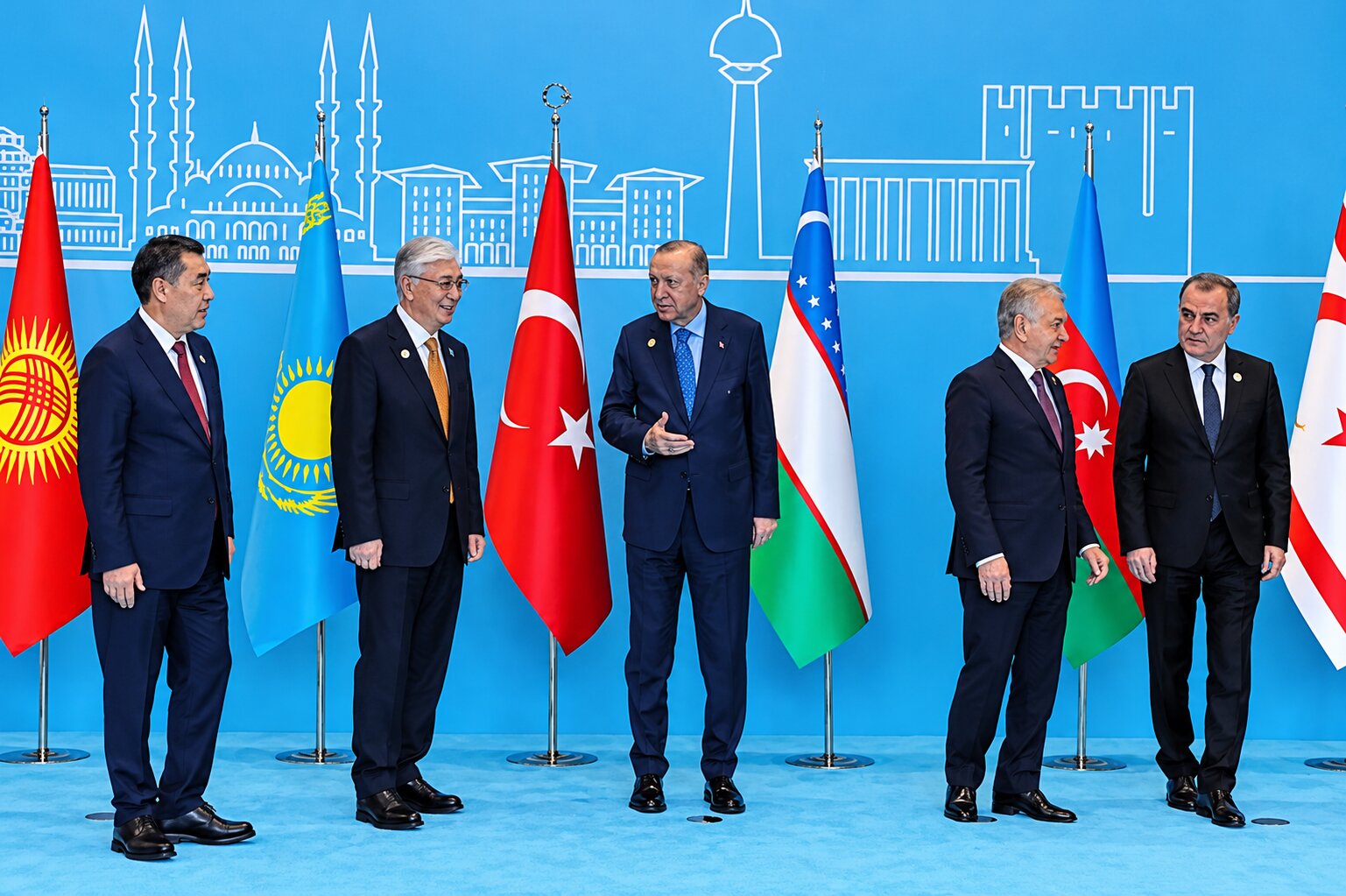
The 13th summit of the Organisation of Turkic States (OTS), held in Ankara under the chairmanship of Turkish President Recep Tayyip Erdogan, marked a further expansion of the organisation’s agenda beyond political and cultural cooperation. The Ankara Declaration, adopted at the conclusion of the summit and comprising 163 provisions, outlines plans to strengthen cooperation in defence, cybersecurity, energy and transport infrastructure. However, the growing emphasis on military and technological cooperation raises questions about the organisation’s future role, its institutional autonomy and the potential implications for the regional balance of power.
One of the most notable initiatives announced at the summit was the proposal to establish an OTS Defence Industry College in Turkiye. The institution is expected to focus on training specialists and facilitating the exchange of technological expertise among member states. Turkiye also assumed the organisation’s chairmanship, giving Ankara an additional opportunity to shape its priorities and future direction.
Defence Cooperation and the Risk of Shifting Priorities
The expansion of defence cooperation reflects a gradual shift in the OTS’s institutional focus. While the organisation initially concentrated primarily on cultural, linguistic and economic ties, military-technical cooperation and security issues are now becoming increasingly prominent on its agenda.
Such a transformation requires a clearer definition of the organisation’s mandate, decision-making procedures and the responsibilities of its member states. Questions remain about how the proposed defence cooperation will be aligned with the national security strategies of OTS members and their commitments within other international frameworks.
Ankara’s Growing Influence
Turkiye’s assumption of the chairmanship and its initiative to establish the Defence Industry College on its territory strengthen Ankara’s position within the organisation. At the same time, these developments raise questions about the balance between the collective interests of member states and Turkiye’s own foreign policy priorities.
The development of shared defence infrastructure could increase the technological dependence of other member states on Turkish industrial and educational platforms, particularly if key mechanisms for specialist training, technology transfer and industrial cooperation become concentrated primarily in Turkiye. The extent to which other members will participate on equal terms will depend on the specific conditions governing the implementation of these initiatives.
Uncertainty Surrounding Implementation Mechanisms
Despite the scope of the Ankara Declaration, the adoption of a document containing 163 provisions does not, in itself, establish a fully functioning system of multilateral cooperation. Key issues will include funding arrangements, the distribution of responsibilities, transparency in defence projects and oversight of their implementation.
Without clear institutional safeguards, the expansion of the military-technical agenda could result in political declarations of collective cooperation outpacing the actual mechanisms for coordination among member states.
According to the CCBS assessment, the outcomes of the summit demonstrate Ankara’s intention to expand its influence within the OTS and give the organisation a more pronounced military-political dimension. However, the growing defence component also raises questions about equality among member states, the independence of their foreign policy decisions and transparency in the proposed cooperation mechanisms.
The transition from a primarily cultural and economic organisation towards a broader security framework could change how the OTS is perceived beyond the region. Amid an increasingly complex geopolitical environment, this transformation may not only strengthen cooperation among its members but also create additional sources of regional tension and foreign policy competition.


 Latest news
Bulgaria Presents Draft 2027 State Budget: Increased Pensions and Investment in Development
07.Nov.2026
Russian Gerbera-2 Drone Discovered and Destroyed on Bulgaria’s Black Sea Coast
07.Nov.2026
Sofia and Washington Discuss Black Sea Security and the Future of Europe's Security Architecture
07.Nov.2026
Green Energy Corridor: a Strategic Opportunity or an Overly Costly Project?
07.Nov.2026
Kremlin Calls for European Involvement in Security Talks without Offering a Concrete Framework
06.Nov.2026
The Caspian Bridge between Azerbaijan and Kazakhstan: Ambitious Plans without Guarantees of Implementation
05.Nov.2026
Armenia Outlines Prospects for Applying for EU Membership in 2027–2028
04.Nov.2026
Moscow Seeks to Maintain Its Influence in the South Caucasus through the “3+3” Format
03.Nov.2026
Kazakhstan Resumes Oil Transit through Russia after Drone Attack
03.Nov.2026
Iliana Yotova's Victory Strengthens Political Stability and Bulgaria's Position in the Black Sea Region
02.Nov.2026
France Expands Military Surveillance Activities in the Black Sea: Romania Gains Strategic Importance
01.Nov.2026
Georgia Brings Black Sea Security to the UN Security Council Agenda
01.Nov.2026
Ukrainian Drone Attacks on Russian Oil Refineries: Russia’s Energy Infrastructure Faces Growing Risks
31.Oct.2026
Who will Pay to Protect Nature? A Council of Europe Expert’s Perspective
31.Oct.2026
OTS Expands Its Defence Agenda: Ankara’s Initiative Raises Questions About the Militarisation of the Organisation
31.Oct.2026