
 07 Nov 2026









France Expands Military Surveillance Activities in the Black Sea: Romania Gains Strategic Importance
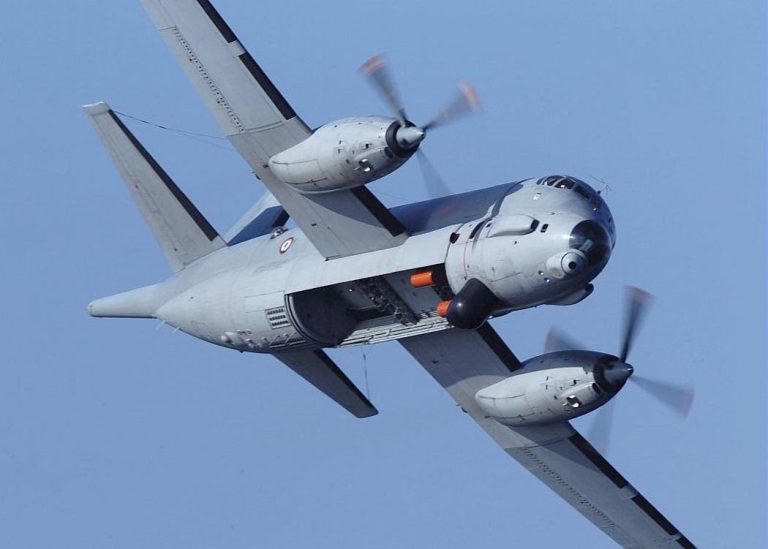
Growing threats to commercial shipping and critical infrastructure in the western Black Sea are prompting NATO member states to strengthen aerial surveillance and military coordination. The deployment of a French Atlantique 2 maritime patrol aircraft to Romania reflects growing attention to the protection of maritime routes and the security of Europe’s eastern flank.
On 27 October 2026, Romania’s Ministry of National Defence announced the temporary deployment of a French Atlantique 2 maritime patrol aircraft to Mihail Kogălniceanu Air Base. The aircraft was deployed to Romania on 18 October at Bucharest’s request. The French Navy aircraft is scheduled to conduct reconnaissance and surveillance missions over the western Black Sea until 6 November.
According to the Romanian defence authorities, the operation is primarily aimed at identifying potential threats to maritime traffic and strengthening the protection of critical infrastructure within Romania’s Exclusive Economic Zone. The flights are being planned and coordinated in cooperation with the Romanian Naval Forces and the Maritime Rescue Coordination Centre (MRCC).
Paris’s decision comes amid a deteriorating security environment in the western Black Sea. According to Reuters, at least eight cargo vessels came under attack near the coasts of Romania and Bulgaria over a three-week period. Approximately 34 sailors were reported dead or missing. Additional concerns have been raised by drone-related incidents, including the interception of two Russian drones by Romanian F-16 fighter jets over the country’s territorial waters on 17 October.
The French mission complements measures already being undertaken by the Romanian armed forces. In particular, Romanian naval units have increased the frequency of patrols using warships, IAR-330 Puma Naval helicopters and unmanned systems. Civilian vessels are also being informed about potential navigational hazards and recommended routes.
Strengthening Maritime Surveillance and NATO Coordination
The deployment of the Atlantique 2 should be viewed within the broader context of efforts to strengthen maritime surveillance capabilities in the Black Sea. Following a series of attacks on commercial vessels, NATO announced plans to increase its surveillance activities in the region through the deployment of additional maritime patrol aircraft, radar systems and unmanned platforms. The French mission represents a complementary national contribution to the wider efforts to improve maritime domain awareness.
The Mihail Kogălniceanu Air Base holds particular strategic importance, as it is assuming an increasingly significant role in military logistics and operational cooperation among NATO allies on the Alliance’s eastern flank. Its geographical position allows Romanian territory to serve as an important platform for supporting aerial surveillance over the western Black Sea and facilitating coordination with naval forces.
The Atlantique 2 is equipped with specialised maritime patrol, reconnaissance and surveillance capabilities, enabling it to monitor extensive maritime areas and identify potential threats. Its deployment complements the capabilities of coastal radar systems and naval surveillance assets, providing a more comprehensive picture of the maritime operational environment.
The Black Sea Becomes a Test for Europe’s Security Architecture
The expansion of French surveillance activities demonstrates that the consequences of the Russia-Ukraine war are increasingly affecting the security of NATO member states bordering the Black Sea. Threats to civilian shipping, the risk of damage to energy infrastructure and the growing use of unmanned technologies are creating additional demands for early-warning capabilities and coordinated responses.
However, enhanced surveillance alone cannot guarantee the physical protection of commercial vessels and critical infrastructure. The effectiveness of these measures will depend on the Allies’ ability to exchange intelligence in a timely manner, coordinate maritime and aerial patrols, and ensure an effective operational response to emerging threats.
In the long term, Romania could further strengthen its role in NATO’s maritime surveillance and security framework in the Black Sea region. This would increase the strategic importance of the Romanian coastline and the country’s military infrastructure within the Alliance’s eastern-flank defence system, with broader implications for European security.
The French mission demonstrates that Black Sea security is gradually extending beyond the boundaries of a purely regional issue. Protecting commercial shipping routes and critical infrastructure is becoming an increasingly important component of the broader European security architecture, in which Romania is assuming a more significant operational role.


 Latest news
Bulgaria Presents Draft 2027 State Budget: Increased Pensions and Investment in Development
07.Nov.2026
Russian Gerbera-2 Drone Discovered and Destroyed on Bulgaria’s Black Sea Coast
07.Nov.2026
Sofia and Washington Discuss Black Sea Security and the Future of Europe's Security Architecture
07.Nov.2026
Green Energy Corridor: a Strategic Opportunity or an Overly Costly Project?
07.Nov.2026
Kremlin Calls for European Involvement in Security Talks without Offering a Concrete Framework
06.Nov.2026
The Caspian Bridge between Azerbaijan and Kazakhstan: Ambitious Plans without Guarantees of Implementation
05.Nov.2026
Armenia Outlines Prospects for Applying for EU Membership in 2027–2028
04.Nov.2026
Moscow Seeks to Maintain Its Influence in the South Caucasus through the “3+3” Format
03.Nov.2026
Kazakhstan Resumes Oil Transit through Russia after Drone Attack
03.Nov.2026
Iliana Yotova's Victory Strengthens Political Stability and Bulgaria's Position in the Black Sea Region
02.Nov.2026
France Expands Military Surveillance Activities in the Black Sea: Romania Gains Strategic Importance
01.Nov.2026
Georgia Brings Black Sea Security to the UN Security Council Agenda
01.Nov.2026
Ukrainian Drone Attacks on Russian Oil Refineries: Russia’s Energy Infrastructure Faces Growing Risks
31.Oct.2026
Who will Pay to Protect Nature? A Council of Europe Expert’s Perspective
31.Oct.2026
OTS Expands Its Defence Agenda: Ankara’s Initiative Raises Questions About the Militarisation of the Organisation
31.Oct.2026