
 07 Nov 2026









Who will Pay to Protect Nature? A Council of Europe Expert’s Perspective
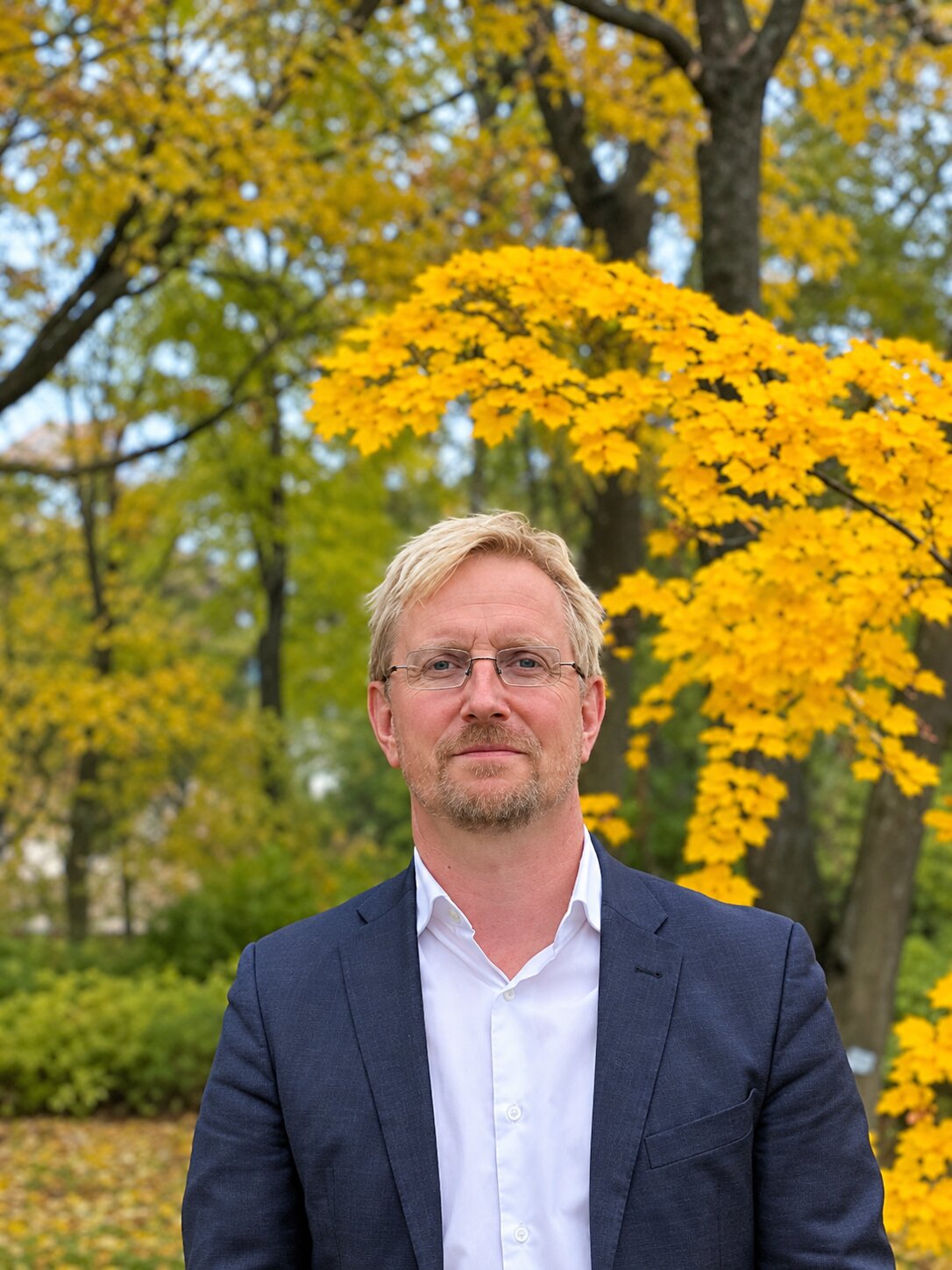
Local authorities must play a central role in protecting biodiversity, but limited funding, competing economic interests and a lack of public involvement can make action difficult. In a new report, the Council of Europe’s Congress of Local and Regional Authorities calls for local biodiversity strategies, better integration of nature into municipal planning and bud geting, and greater access to funding.
Speaking to CCBS News on the sidelines of COP17 in Yerevan, the report’s co-rapporteur, Hermanni Backer Johnsen of Finland, explained how municipalities can protect natural assets while supporting economic development. He also shared his views on public trust, social unrest and the importance of bringing people together.
Local action is essential to protect biodiversity
CCBS News: Your report stresses that urgent local action is needed to stop biodiversity loss. What are the most important steps local authorities should take?
Hermanni Backer Johnsen: We recommend developing local action plans dedicated to biodiversity. I think this is a good way to highlight the issue and involve citizens in discussions about what can actually be done in their communities and how much it would cost.
We also advocate better integration of nature-related issues into budgeting and accounting systems. This would allow citizens and municipalities to understand the natural values and biodiversity within their territory and calculate the value they generate for the community. Nature should not be seen only as a cost.
CCBS News: Many municipalities have limited budgets. How can they obtain funding to protect biodiversity?
Hermanni Backer Johnsen: There are various mechanisms that can support European projects, as well as international financing instruments. However, in many cases, these funding opportunities involve substantial amounts of money, meaning that projects also need to be relatively large.
In Finland, there have been initiatives in which municipalities facing similar problems join forces to develop joint projects. This can help them access funding opportunities that require relatively large overall budgets.
CCBS News: What about smaller countries such as Armenia, where municipalities may have very limited financial resources?
Hermanni Backer Johnsen: I am not fully familiar with the situation in Armenia, but in many countries, local authorities have very limited funding, while some resources are available at the national level. International financing instruments may also offer opportunities.
One possibility would be for international organisations to establish mechanisms that make funding more accessible, allowing municipalities, for example in Armenia, to apply directly for support in addition to national funding.
Small municipalities do not necessarily need to develop large projects individually. They can work together, and a group of small municipalities can become a larger entity capable of undertaking a joint project.
Biodiversity must be integrated into municipal planning
CCBS News: Your report calls for local biodiversity strategies and action plans. What should these plans include to make a real difference?
Hermanni Backer Johnsen: First, municipalities need mechanisms to identify and understand the biodiversity and natural assets they have. They can cooperate with universities or local non-governmental organisations, which may help them gather the necessary information without relying entirely on potentially expensive consultants.
The plans should then include a targeted list of actions specific to each municipality. Every municipality has a different context, so the more concrete the actions, the better.
For example, a municipality may identify a forest or another valuable natural area that needs protection. It can give such areas legal status and ensure that large construction projects are not permitted there, or that special precautions are required.
It is also essential to involve spatial planning and transport planning departments. Biodiversity objectives should be incorporated into their work rather than addressed only by environmental departments.
CCBS News: How can local authorities balance economic development with the need to protect nature?
Hermanni Backer Johnsen: Balancing economic development and nature protection does not necessarily mean accepting a trade-off in which economic benefits must be sacrificed. In some cases, protecting nature can create new opportunities to generate income.
For example, instead of cutting down an entire forest and selling the timber, it may be possible to harvest some trees while preserving the forest. The remaining natural environment can attract visitors and generate recreational value.
If the forest is completely removed, these other values are lost. Municipalities and businesses should therefore look for ways to generate economic benefits without destroying their natural capital.
This is an important change in how we think about development, and companies also have a role to play in finding more sustainable ways of doing business.
Citizens must be involved in decisions
CCBS News: Your report highlights the importance of public participation. How can local communities and citizens help protect biodiversity?
Hermanni Backer Johnsen: Citizens, community groups and young people are important in identifying what matters most for biodiversity in their local areas. They should be involved in defining priorities and deciding what needs to be done.
It is also important to involve businesses, including those whose activities may have had a destructive impact on nature. Dialogue can help identify ways to change existing practices.
Local and regional action plans provide a useful framework for bringing different groups together. By involving a broad range of people in the process, municipalities can also build trust in the plans and the decisions that follow.
CCBS News: What lessons from your report could Armenia and other South Caucasus countries apply to improve biodiversity protection at the local level?
Hermanni Backer Johnsen: There are many examples of approaches that could be useful, and some may not be particularly expensive to implement. Often, the starting point is to make better use of information that is already available.
However, I have not examined all the details of the situation in Armenia, so I would not want to prescribe specific measures without knowing the local context.
Protecting biodiversity requires effort and courage everywhere, including in Finland and other European countries. Taking real action often means changing established ways of doing things, and that is never easy for people.
France: Public trust and the challenges facing local authorities
CCBS News: France has experienced protests, social unrest and incidents of vandalism. What do these developments reveal about the challenges local authorities face in maintaining public trust?
Hermanni Backer Johnsen: The situation can be quite different in large cities and smaller communities, where people know each other. I come from a small community, and I think trust can be stronger in such places.
For me, this highlights the importance of involving citizens, especially young people, in decision-making processes and ensuring that they feel part of society rather than feeling that society is working against them.
CCBS News: What can local authorities do to address public discontent and prevent social tensions from escalating into violence?
Hermanni Backer Johnsen: I find it difficult to give a definitive answer, particularly because I am not an expert on the situation in France. But I think trust and a sense of belonging are important.
When people feel that they are part of society, they may be less likely to engage in violent behaviour. Today, some people may feel increasingly disconnected from others. Smartphones and digital environments can contribute to this if people spend less time meeting and interacting with one another in person.
When you talk to your neighbours and get to know them, you may discover that they are good people. In large cities, however, people often do not know their neighbours, and this lack of contact can contribute to suspicion and mistrust.
I think a similar dynamic can occur in society more broadly. It is important to maintain personal connections and opportunities for people to meet, discuss their concerns and understand one another. Unfortunately, these kinds of everyday interactions seem to be becoming less common.
Journalist
Marine KHARATYAN


 Latest news
Bulgaria Presents Draft 2027 State Budget: Increased Pensions and Investment in Development
07.Nov.2026
Russian Gerbera-2 Drone Discovered and Destroyed on Bulgaria’s Black Sea Coast
07.Nov.2026
Sofia and Washington Discuss Black Sea Security and the Future of Europe's Security Architecture
07.Nov.2026
Green Energy Corridor: a Strategic Opportunity or an Overly Costly Project?
07.Nov.2026
Kremlin Calls for European Involvement in Security Talks without Offering a Concrete Framework
06.Nov.2026
The Caspian Bridge between Azerbaijan and Kazakhstan: Ambitious Plans without Guarantees of Implementation
05.Nov.2026
Armenia Outlines Prospects for Applying for EU Membership in 2027–2028
04.Nov.2026
Moscow Seeks to Maintain Its Influence in the South Caucasus through the “3+3” Format
03.Nov.2026
Kazakhstan Resumes Oil Transit through Russia after Drone Attack
03.Nov.2026
Iliana Yotova's Victory Strengthens Political Stability and Bulgaria's Position in the Black Sea Region
02.Nov.2026
France Expands Military Surveillance Activities in the Black Sea: Romania Gains Strategic Importance
01.Nov.2026
Georgia Brings Black Sea Security to the UN Security Council Agenda
01.Nov.2026
Ukrainian Drone Attacks on Russian Oil Refineries: Russia’s Energy Infrastructure Faces Growing Risks
31.Oct.2026
Who will Pay to Protect Nature? A Council of Europe Expert’s Perspective
31.Oct.2026
OTS Expands Its Defence Agenda: Ankara’s Initiative Raises Questions About the Militarisation of the Organisation
31.Oct.2026